
Contents
The Mardi Himal trek typically takes 5-7 days to complete.
However, time-constrained trekkers can reach Mardi Base Camp in just three days using a condensed itinerary. This shortened route delivers stunning Himalayan views, pristine trails, and mountain immersion without requiring a full week off work.
The 3-day Mardi trek climbs from Pokhara's lakeside at 850 meters to Mardi Base Camp at 4,500 meters. The route follows steep trails through rhododendron forests, crosses alpine meadows, and reaches viewpoints surrounded by Annapurna South, Hiunchuli, and Machhapuchhre peaks. Daily walking times range from 6-8 hours with significant elevation gain each day.
This guide explains two complete 3-day itineraries, analyzes costs, addresses difficulty levels, and discusses whether the compressed schedule suits your fitness and experience. Proper planning determines success on this rapid ascent route.
Overview of the 3-Day Mardi Himal Trek
The standard Mardi Himal trek spans 5-7 days with gradual altitude gain and cultural village stops. The 3-day version eliminates lower-elevation walking and focuses exclusively on reaching base camp quickly. This compressed itinerary suits experienced trekkers with limited vacation time who accept higher physical demands.
Total trekking distance covers approximately 40 kilometers over three days. Daily elevation gains range from 800-1,000 meters, significantly higher than standard trekking recommendations. The rapid ascent increases altitude sickness risk compared to longer routes. Physical fitness, proper acclimatization strategies, and realistic expectations become essential.
Two starting points exist: Pokhara via Kande, or Dhampus village. Both routes converge at Forest Camp and follow identical trails to base camp. Starting from Pokhara offers direct access from the city. Starting from Dhampus provides quieter trails with less traffic.
3-Day Mardi Trek Itinerary from Pokhara
Day 1: Pokhara to Forest Camp (2,520m)
Elevation: 850m to 2,520m
Distance: 12-14 kilometers
Walking Time: 6-7 hours
Accommodation: Tea house at Forest Camp
The trek begins with a 45-minute drive from Pokhara to Kande at 1,770 meters. This roadhead eliminates the lower trail section from Phedi to Kande, saving one full day compared to the standard route. From Kande, the trail climbs steadily through dense forest.
The path ascends through rhododendron, oak, and pine forest. These trees bloom brilliant red and pink during March and April, creating spectacular displays. The trail passes through Deurali village after 2-3 hours, offering the last shops and restaurants before Forest Camp. Basic tea shops serve snacks, drinks, and simple meals.
Beyond Deurali, the forest becomes denser and trails steeper. Stone steps appear frequently, climbing through switchbacks. The elevation gain from Kande (1,770m) to Forest Camp (2,520m) totals 750 meters. This represents manageable daily gain for most trekkers with basic fitness.
Forest Camp sits in a small clearing surrounded by tall trees. Several tea houses provide accommodation—simple rooms with twin beds and shared bathrooms. No electricity exists; lodges use solar panels for limited lighting. Hot water comes from wood-burning heaters for extra charge. Meals include dal bhat, noodles, and soup. The forest setting creates peaceful atmosphere with bird calls and rustling leaves.
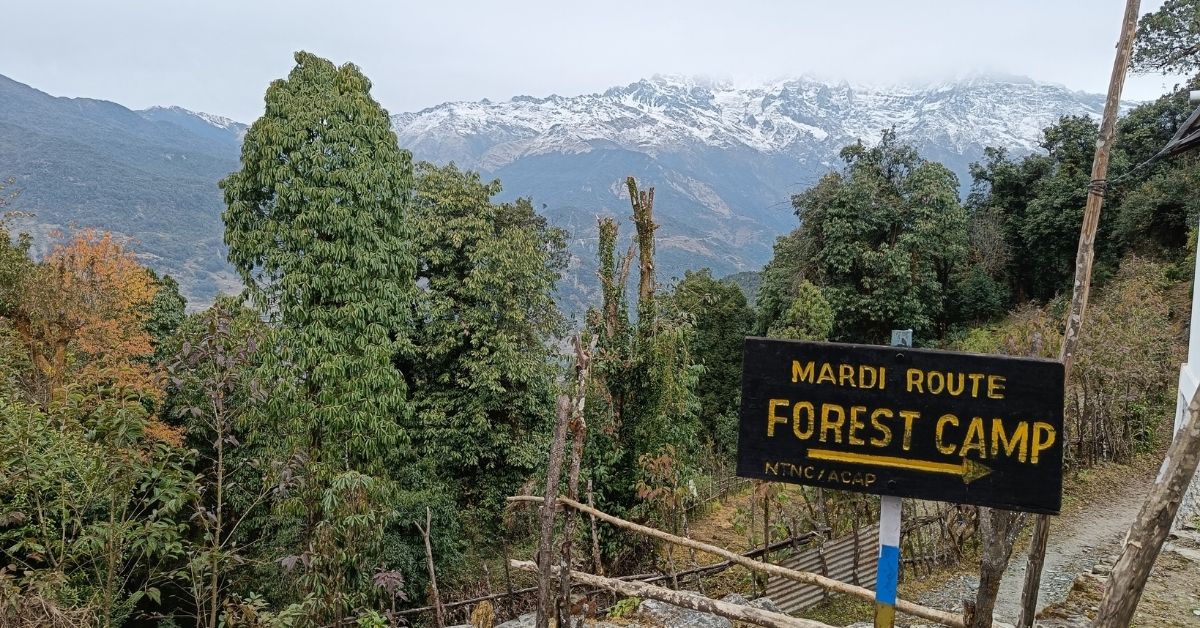
Day 1 trekking signpost to Forest Camp, Mardi region
Day 2: Forest Camp to High Camp (3,780m)
Elevation: 2,520m to 3,780m
Distance: 8-10 kilometers
Walking Time: 6-7 hours
Accommodation: Tea house at High Camp
Day two covers the trek's largest single-day elevation gain at 1,260 meters. This rapid ascent significantly increases altitude sickness risk. Walking slowly, drinking plenty of water, and monitoring symptoms become critical.
The trail continues climbing through forest for the first 2-3 hours. Trees gradually thin as elevation increases. Low Camp appears at 3,050m after approximately three hours. This small settlement offers tea shops for rest breaks. Some trekkers choose to stay overnight at Low Camp rather than pushing to High Camp, creating a safer four-day itinerary.
Beyond Low Camp, the forest transitions to alpine zone. Rhododendron trees become smaller and more twisted. Views open toward surrounding peaks. The landscape shifts from green forest to brown and gray rocky terrain. Prayer flags begin appearing, marking significant viewpoints and rest areas.
Middle Camp sits at 3,200 meters after four hours from Forest Camp. Tea houses here provide another overnight option for trekkers concerned about rapid altitude gain. Continuing to High Camp adds another 580 meters elevation over 2-3 hours.
The final climb to High Camp follows a steep ridge with spectacular views. Annapurna South (7,219m) dominates the northern horizon. Hiunchuli (6,441m) rises to the west. Machhapuchhre (6,993m) appears to the east. The trail becomes more exposed with drop-offs on both sides in sections.
High Camp sits on a narrow ridge at 3,780 meters. Several tea houses cluster together for shelter against wind. Facilities remain very basic—simple beds, outdoor toilets, no hot showers. Water comes from melted snow or collected rainwater. Meals consist of dal bhat, noodles, and soup. Dining halls feature wood stoves providing essential warmth as temperatures drop below freezing overnight.
Altitude effects become noticeable at this elevation. Breathing requires more effort. Sleep quality may decrease. Headaches, nausea, or unusual fatigue signal potential altitude sickness. Proper hydration (3-4 liters daily), slow movement, and adequate rest help minimize symptoms.
Day 3: High Camp to Mardi Base Camp (4,500m) and Return to Pokhara
Elevation: 3,780m to 4,500m to 850m
Distance: 5 kilometers up, 17 kilometers down
Walking Time: 10-12 hours total
Accommodation: Return to Pokhara
The final day starts before dawn (typically 4:00-5:00 AM) to reach Mardi Base Camp for sunrise. Early start provides several advantages: calmer weather, better visibility, and sufficient time for the long descent.
The climb from High Camp to Mardi Base Camp covers 720 vertical meters over approximately 2.5 kilometers. The trail ascends steep rocky slopes with loose scree in sections. Fixed ropes assist passage on particularly exposed areas. Progress slows significantly due to altitude, oxygen levels drop to roughly 60% of sea level at base camp.
The climb takes 2-3 hours depending on fitness and acclimatization. Frequent rest breaks become necessary. Breathing deeply and slowly helps maintain oxygen delivery. Each step requires deliberate effort as thin air reduces physical capacity.
Mardi Base Camp sits in a high valley at 4,500 meters surrounded by towering peaks. Annapurna South rises directly overhead. Machhapuchhre's distinctive fish-tail peak dominates the eastern view. Hiunchuli and Mardi Himal create a dramatic backdrop to the west and north. The 360-degree mountain panorama creates one of Nepal's most spectacular viewpoints.
Sunrise illuminates the peaks in orange and pink light. These brief minutes offer the best photography conditions. Clear weather provides sharp mountain views. Clouds or snow reduce visibility and increase cold stress. Time at base camp should remain limited—one hour maximum due to extreme altitude and lack of shelter.
The descent begins immediately after sunrise viewing. Retracing the route to High Camp takes 1-1.5 hours. After a brief rest, the descent continues through Middle Camp, Low Camp, and Forest Camp to Kande. Total descent covers 3,650 vertical meters—the trek's most physically demanding section.
Descending feels easier on the cardiovascular system but harder on knees and ankles. Trekking poles significantly reduce joint impact. The long downhill creates cumulative strain. Proper footwork prevents slips on loose stones and steep sections.
Reaching Kande by late afternoon allows vehicles to return to Pokhara. Total day time ranges 10-12 hours from pre-dawn start to evening arrival in Pokhara. Physical exhaustion by evening is normal and expected after such intensive effort.
Alternative: 3-Day Mardi Trek from Dhampus
Day 1: Dhampus to Forest Camp (2,520m)
Elevation: 1,650m to 2,520m
Distance: 10-12 kilometers
Walking Time: 5-6 hours
Accommodation: Tea house at Forest Camp
Starting from Dhampus offers quieter trails with fewer trekkers. A 45-minute drive from Pokhara reaches Dhampus village at 1,650 meters. This traditional Gurung settlement features stone houses, terraced fields, and mountain views.
The trail from Dhampus climbs through farmland and forest. Terraced fields surround lower sections. Local farmers grow corn, millet, and vegetables. Traditional villages appear along the route with tea shops and rest stops. Cultural interaction exceeds the Kande route as more villages exist on this path.
The route joins the main Mardi trail near Pothana village. From this junction, the path follows identical terrain to Forest Camp as the Kande route. The slightly lower starting elevation (1,650m vs 1,770m) creates minimal difference in total climbing.
Day 2-3: Same as Pokhara Itinerary
From Forest Camp onward, the Dhampus route follows identical paths, elevations, and timing as the Pokhara/Kande itinerary. Day two climbs to High Camp. Day three reaches base camp and descends to Dhampus for vehicle return to Pokhara.
Why a 4-Day Itinerary Works Better
The 3-day Mardi trek creates significant challenges that reduce safety and enjoyment. The rapid altitude gain from 850m to 4,500m in three days allows minimal acclimatization. Daily elevation gains exceeding 1,000 meters surpass standard trekking recommendations. Long walking hours (10-12 hours on day three) increase injury risk from fatigue.
A 4-day itinerary solves most of these problems while adding only one extra day. The additional day allows overnight stay at Middle Camp (3,200m) between Forest Camp and High Camp. This breaks the 1,260-meter climb into two moderate sections: 680 meters from Forest Camp to Middle Camp, then 580 meters from Middle Camp to High Camp.
Recommended 4-Day Itinerary:
- Day 1: Pokhara to Forest Camp (2,520m)
- Day 2: Forest Camp to Middle Camp (3,200m)
- Day 3: Middle Camp to High Camp (3,780m) to Mardi Viewpoint/Base Camp (4,500m) to Middle Camp
- Day 4: Middle Camp to Kande and return to Pokhara
This schedule provides better acclimatization, shorter daily walking times, and safer altitude progression. The fourth day allows descending from base camp to Middle Camp rather than all the way to Kande, reducing joint strain. Morning departure from Middle Camp completes the descent to Kande comfortably.
For those seeking comprehensive mountain experience without rushing, the standard 5-7 day Mardi Himal trek remains the best choice. This extended version includes cultural village stops, gradual acclimatization, and comfortable daily distances.
Cost Breakdown for 3-Day Mardi Trek
Total costs range from $110 to $250 per person depending on group size and starting point. Larger groups reduce per-person costs through shared guide and transportation fees.
Cost Components
Transportation:
- Pokhara to Kande: $30-40 (private jeep)
- Dhampus to Pokhara: $25-35 (private jeep)
- Shared jeep: $10-15 per person
Permits:
- ACAP (Annapurna Conservation Area Permit): $30 per person
- TIMS Card: $10 per person
- Total Permits: $40 per person
Accommodation and Meals:
- Tea house rooms: $3-5 per night
- Breakfast: $3-5 per meal
- Lunch: $4-6 per meal
- Dinner: $5-7 per meal
- Total food and accommodation: $20-25 per day
Guide Services (Optional):
- Guide: $25-30 per day
- Porter: $20-25 per day
Budget Estimates by Group Size
Solo Trekker: $220-250 from Pokhara, $200-220 from Dhampus
2 Persons: $160-180 from Pokhara, $140-160 from Dhampus
3-4 Persons: $130-150 from Pokhara, $120-140 from Dhampus
5+ Persons: $110-120 from Pokhara, $100-110 from Dhampus
Costs increase at higher elevations where supplies become more expensive. Base camp area charges premium prices due to difficult access. Budget extra funds for hot showers ($3-5), device charging ($2-3), and emergency expenses.
Difficulty Level Assessment
The 3-day Mardi trek rates moderate to challenging difficulty. Several factors combine to create physical and mental demands.
Physical Challenges
- Daily walking: 6-12 hours over steep, uneven terrain
- Elevation gain: 3,650 meters total ascent over three days
- Rapid altitude: Minimal acclimatization time increases risk
- Long descent: 3,650-meter descent strains knees significantly
- Pack weight: Even with porter, daypack carries essentials
Altitude Challenges
Rapid ascent to 4,500 meters creates significant altitude sickness risk. The compressed timeline allows the body minimal adaptation time. Approximately 40-50% of trekkers experience mild altitude symptoms above 3,500m. Headaches, nausea, dizziness, and fatigue commonly appear.
Proper strategies reduce risk:
- Drink 3-4 liters water daily
- Walk slowly at conversation pace
- Avoid alcohol above 3,000m
- Monitor symptoms continuously
- Descend immediately if severe symptoms appear
Technical Difficulty
The trail requires no technical climbing skills. No rope work, ice axes, or scrambling occurs. However, steep sections demand attention. Exposed ridges near High Camp require careful footing. Loose rocks create slip hazards. Trekking poles improve stability and reduce joint strain.
Who Should Attempt This Trek
Well-Suited Candidates:
- Previous trekking experience at moderate altitude
- Good cardiovascular fitness
- Ability to walk 6-8 hours daily
- Comfort with basic lodge facilities
- Flexibility for weather-related changes
Poorly-Suited Candidates:
- First-time trekkers with no altitude experience
- Limited pre-trek fitness training
- Medical conditions affecting altitude tolerance
- Expectation of comfortable accommodation
- Inflexible schedules unable to add extra days
Essential Packing List
Clothing
- Base layers: 2 sets synthetic or merino wool
- Fleece jacket: 1 mid-weight
- Down jacket: 1 for high camps
- Waterproof jacket and pants: 1 set
- Trekking pants: 2 pairs
- Warm hat and sun hat
- Gloves: Liner and insulated pairs
Footwear
- Trekking boots: Broken-in with good ankle support
- Camp shoes: Lightweight sandals or slippers
- Trekking socks: 4-5 pairs
Equipment
- Backpack: 30-40 liter daypack
- Trekking poles: Essential for descent
- Sleeping bag: -10°C rating minimum
- Headlamp: With spare batteries
- Water bottles: 2 liters capacity minimum
- Sunglasses: UV protection essential
First Aid and Medications
- Altitude medication: Diamox if prescribed
- Pain relievers: Ibuprofen or paracetamol
- Anti-diarrheal medication
- Blister treatment supplies
- Personal prescriptions
- Hand sanitizer
Documents
- Passport
- ACAP and TIMS permits
- Travel insurance documents
- Emergency contact information
- Cash: Nepali rupees for expenses
Best Season for 3-Day Mardi Trek
Spring (March-May)
Spring provides excellent conditions for the short Mardi trek. Clear skies dominate with minimal precipitation. Rhododendron forests bloom spectacularly during March and April. Temperature ranges from 15-20°C in lower forests to -5°C at base camp. Mornings offer best mountain visibility before afternoon clouds develop.
Trail conditions stay dry and firm. Stream crossings present no difficulty. Crowds increase during April as peak season arrives. Lodge availability becomes tighter—advance planning helps.
Autumn (September-November)
Autumn ranks as the most popular trekking season due to stable weather and crystal-clear visibility. Monsoon rains end in late September, leaving trails dry. October and November provide the year's best mountain views.
Temperature ranges from 10-18°C in valleys to -10°C at base camp. Clear weather continues through November despite dropping temperatures. Trail conditions remain ideal throughout autumn. October sees maximum crowds; November offers quieter trails with colder conditions.
Winter (December-February)
Winter presents challenges for the 3-day trek. Heavy snow affects areas above 3,500 meters. Temperatures drop to -15°C at base camp with severe wind chill. Most tea houses close for winter season, though some remain open at Forest Camp and Low Camp.
Winter demands expedition-grade equipment including four-season sleeping bags and heavy insulation. Shorter daylight hours limit trekking time. However, crystal-clear visibility and complete solitude reward experienced winter trekkers.
Monsoon (June-August)
Monsoon brings heavy rainfall to lower elevations. Trails become muddy and slippery. Leeches appear in forests below 3,000 meters. Cloud cover obscures mountain views for extended periods. However, areas above 3,500m receive less rain. The landscape turns brilliantly green with wildflowers blooming.
Monsoon trekking suits only experienced adventurers comfortable with uncertain conditions and limited visibility.
Safety Considerations
Altitude Sickness Prevention
Monitor symptoms continuously: headache, nausea, dizziness, unusual fatigue, poor appetite, difficulty sleeping. Mild symptoms affect most trekkers but usually resolve with rest and hydration. Moderate symptoms require halting ascent. Severe symptoms demand immediate descent.
Never ascend with worsening symptoms. Descent provides the only reliable treatment for serious altitude illness. Carry basic medications but understand their limitations. Diamox may help acclimatization but doesn't replace proper pacing.
Emergency Procedures
Helicopter evacuation from Mardi Himal costs $3,000-5,000 depending on weather and pickup location. Comprehensive travel insurance covering helicopter evacuation up to 5,000m is mandatory. Verify policy details before departure.
Weather can delay evacuations by hours or days. Helicopter flights require good visibility and calm winds. Serious illness or injury may require days of waiting before evacuation becomes possible.
Weather Hazards
Sudden weather changes create multiple dangers at high altitude. Temperature drops, heavy snowfall, and strong winds occur with minimal warning. Proper clothing layers and weather monitoring reduce risks.
Afternoon thunderstorms develop during shoulder seasons. Lightning danger increases above treeline. Avoid ridge walking during storms. Snow and ice on trails increase fall risk above 3,500m.
Comparing Short Treks Near Pokhara
Several short treks near Pokhara offer 3-5 day adventures for time-constrained travelers. The Mardi Himal 3-day trek represents one of the most challenging options due to rapid altitude gain.
Poon Hill Trek (3-4 days): Easier trek reaching 3,210m maximum elevation. Better acclimatization profile with gradual ascent. Popular sunrise viewpoint attracts large crowds.
Dhampus-Sarangkot Trek (2-3 days): Gentle trek staying below 2,000m. No altitude concerns. Cultural village experience with mountain views. Suitable for beginners and families.
Khopra Ridge Trek (4-5 days): Moderate difficulty reaching 3,660m. Better acclimatization than Mardi 3-day. Quieter trails with fewer tourists. Similar mountain views.
For trekkers seeking a variety of best short treks in Nepal, options exist throughout the country catering to different fitness levels and interests. The Mardi 3-day trek suits experienced trekkers specifically seeking rapid high-altitude challenges near Pokhara.
Why Choose Mountain Routes for Short and Other Group-Join Treks
Professional guide services significantly improve safety and success rates on compressed itineraries like the 3-day Mardi trek. Mountain Routes provides experienced guides with extensive Annapurna region knowledge and emergency response training.
Guides monitor health continuously, watching for altitude sickness symptoms and adjusting pace when necessary. They recognize warning signs trekkers often miss or dismiss. This vigilance prevents minor symptoms from developing into serious conditions requiring evacuation.
Cultural and natural interpretation enriches the experience. Guides identify peaks, explain local plant species, and share knowledge about Gurung cultural traditions. Emergency protocols and communication systems enable rapid response to medical situations.
Flexible itinerary management accommodates weather changes or altitude symptoms. Extra rest days can be added if needed. Routes can be modified if conditions deteriorate. This flexibility reduces risk while maintaining adventure quality.
Frequently Asked Questions
Can beginners complete the 3-day Mardi trek?
The 3-day itinerary is not recommended for beginners. The rapid altitude gain and long daily walking times demand previous trekking experience. First-time trekkers should choose the standard 5-7 day Mardi trek or easier alternatives like Poon Hill. Building experience on lower-altitude treks prepares beginners for future challenging routes.
Is a guide necessary for Mardi Himal?
While the trail is well-marked and many trekkers go independently, hiring a guide significantly improves safety on the 3-day route. The compressed schedule increases altitude sickness risk. Guides monitor symptoms, manage emergencies, and coordinate evacuations if needed. Solo trekking requires extensive preparation, altitude experience, and emergency self-sufficiency.
What fitness level is required?
Good cardiovascular fitness and leg strength are essential. You should comfortably walk 6-8 hours daily carrying a daypack. Training should include hill hiking, stair climbing, and aerobic exercise for 45-60 minutes, 4-5 times weekly for 2-3 months before departure. Previous multi-day trekking experience helps gauge personal capabilities.
Can the trek be done in 2 days?
Attempting Mardi Base Camp in 2 days is extremely dangerous. The altitude gain from 850m to 4,500m in two days creates severe altitude sickness risk. No acclimatization time exists. The physical exertion would be extreme. Even experienced mountaineers should not attempt this compressed schedule.
What happens if I get altitude sickness?
Mild symptoms usually improve with rest, hydration, and stopping ascent. Moderate symptoms require descending to lower elevation and waiting for improvement. Severe symptoms demand immediate descent and potential evacuation. Guides carry basic medications and coordinate emergency responses. Travel insurance covering evacuation is mandatory.

No comments yet. Be the first to share your thoughts!