
Pashupatinath Temple stands as Nepal's most sacred Hindu site dedicated to Lord Shiva.
Located 5 kilometers northeast of Kathmandu's city center on the banks of the Bagmati River, this UNESCO World Heritage Site attracts millions of devotees and travelers annually. Since 1979, UNESCO has recognized the temple complex for its outstanding cultural and religious significance.
A sprawling religious complex, Pashupatinath encompasses numerous temples, ashrams, images, and inscriptions developed over centuries. Master Hindu architects created structures showcasing pinnacle craftsmanship in religious architecture. Beyond spiritual importance, visitors come to admire intricate wood carvings, observe traditional cremation ceremonies, and experience authentic Hindu rituals still practiced daily.
Mahashivaratri festival transforms the temple into a vibrant celebration. During this annual event, millions of devotees from Nepal and India gather to worship Lord Shiva. Sadhus (holy men) covered in ash perform rituals throughout the night. Religious processions, music, and prayer create an extraordinary atmosphere impossible to experience elsewhere in Nepal.
Origin and Legends of Pashupatinath
Discovery Legend
Popular legend explains how Pashupatinath Temple came into existence. According to traditional stories, a cow mysteriously visited a specific spot daily, pouring her milk onto the ground. Her shepherd noticed this unusual behavior and grew suspicious. One day he dug at the location and discovered a Jyotirlinga (sacred lingam) of Lord Shiva buried underground.
News of the discovery spread quickly through surrounding villages. Devotees began gathering at the site to perform rituals and worship. Gradually, the location transformed from a simple discovery into a major pilgrimage center. Over centuries, additional structures arose around the original lingam creating today's extensive complex.
Lord Shiva as Deer
Another beloved story involves Lord Shiva and Goddess Parvati visiting Kathmandu Valley during their travels. Upon reaching the Bagmati River banks, they decided to rest. Shiva became so enchanted by the forest's beauty and peaceful surroundings that he proposed remaining longer.
Wanting to explore freely, Shiva and Parvati transformed themselves into deer. In these forms, they roamed the lush forests covering the valley. Various locations throughout Kathmandu Valley still bear markings where Shiva supposedly wandered during this time. Local beliefs identify specific trees, stones, and clearings connected to this divine visit.
Eventually, other gods discovered Shiva's whereabouts and convinced him to return to his duties. However, the forest where he spent time became sacred ground. Devotees believe Pashupatinath Temple arose at the exact spot where Shiva finally revealed his true form before departing.
Pashupatinath Bagmati Aarti Ceremony
Evening aarti at Pashupatinath ranks among Nepal's most mesmerizing religious spectacles. Each evening around 6:00 PM, priests gather along the Bagmati River to perform this sacred ritual. Brass oil lamps illuminate the gathering dusk as ceremonial proceedings begin.
Priests dressed in traditional attire stand at designated spots along the riverbank. Multiple large brass lamps filled with ghee (clarified butter) get lit simultaneously. Moving in synchronized circular motions, priests offer the sacred flames to the divine. Each movement follows precise patterns passed down through generations.
Devotional bhajans (religious songs) accompany the visual ceremony. Musicians play traditional instruments including harmonium, tabla drums, and cymbals. Singers' voices rise in praise of Lord Shiva and other deities. Devotees join in singing, creating powerful communal worship experience.
Crowds gather on both riverbanks to witness the ceremony. Locals and tourists sit on stone steps leading to the water. Some devotees light their own small oil lamps, setting them to float down the river. Hundreds of flickering flames drift downstream creating magical atmosphere. Photography captures stunning scenes as fire reflects on water against temple backdrop.
Anyone can attend the aarti without special permission or fees. Arriving 30 minutes early secures good viewing positions. Respectful behavior and modest dress show appropriate reverence. Many consider this evening ritual Pashupatinath's most accessible and moving experience for non-Hindu visitors.
Arya Ghat: Sacred Cremation Site
Hindu cremation ceremonies occur openly at Pashupatinath's ghats (riverside platforms). Arya Ghat holds particular significance as the most sacred cremation location. According to Hindu belief, dying at Pashupatinath and receiving cremation here guarantees moksha (liberation from the cycle of rebirth).
Multiple cremation platforms line the Bagmati River. Families bring deceased relatives for final rites performed by priests. Wood pyres get constructed on stone platforms. Bodies wrapped in colored cloth get placed atop the wood. Priests chant mantras while the eldest son lights the pyre.
Cremations occur throughout the day as families arrange ceremonies. Witnessing these rituals provides profound insight into Hindu death customs. While deeply serious, cremations happen as natural community events. Families gather, priests conduct rituals, and life continues along the riverbank.
Visitors can observe cremations from the opposite bank and elevated areas. Photographing cremation ceremonies is strictly prohibited and culturally insensitive. Respectful distance and quiet observation show appropriate behavior. Understanding these are real families mourning real losses prevents treating the scene as tourist spectacle.
Smoke from cremation fires often hangs over the temple complex. While initially unsettling for some visitors, this represents sacred process rather than morbidity. For Hindus, dying at Pashupatinath represents fortunate end ensuring spiritual liberation.
Kirateshwar Temple and Surroundings
On the Bagmati River's northeastern bank stands Kirateshwar Mahadev Temple. Less crowded than the main complex, this temple offers peaceful worship atmosphere. Traditional Nepali music concerts occur here during full moon nights. Local musicians perform classical compositions in the temple courtyard creating enchanting environment.
Nearby, Surya Ghat cave cuts into riverside cliffs. Some sadhus and yogis use these caves for meditation retreats. Visitors can explore accessible cave areas while respecting any occupants' privacy and practices.
Kailash Hill rises behind Kirateshwar Temple. A steep staircase climbs to the hilltop offering panoramic views across the entire Pashupatinath complex. From this elevation, the temple's vast scale becomes evident. Multiple temple roofs, the winding Bagmati River, cremation ghats, and surrounding forests spread below. Sunrise and sunset provide particularly beautiful lighting for viewing and photography.
Raj Rajeshwari Temple Complex
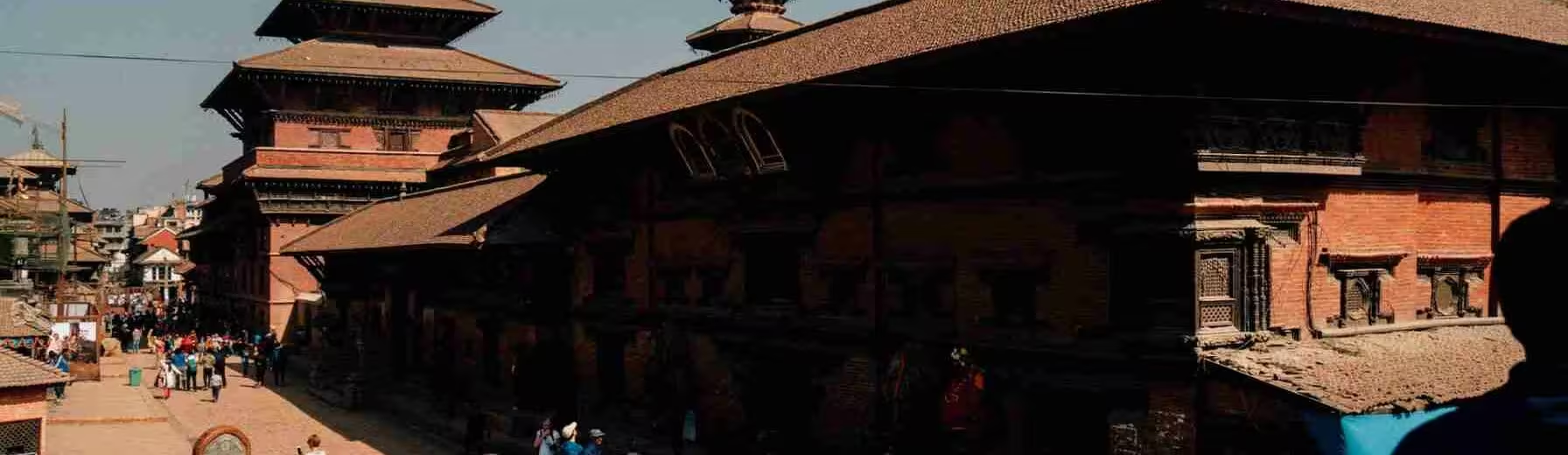
South of the main Pashupatinath structure, Raj Rajeshwari Temple draws visitors interested in religious architecture. Along with nearby Nawa Durga and Pancha Dewal temples, this area showcases intricate Newari craftsmanship. Stone and wood carvings demonstrate the artistic sophistication of traditional temple builders.
Raj Rajeshwari honors a goddess manifestation. Devotees offer prayers for protection and blessings. Smaller temples in this southern section see fewer crowds than the main temple, allowing closer examination of architectural details.
Carved wooden struts support temple roofs. Each strut features unique religious imagery—gods, goddesses, mythological creatures, and symbolic patterns. Stone work includes elaborate window frames, doorways, and foundation decorations. Artisans spent years creating these details without modern tools, relying entirely on hand techniques.
Photography is generally permitted in these outer temple areas. However, always ask permission before photographing worship activities or individuals. Some temples restrict interior photography to protect sacred spaces.
Virupaksha: The Mysterious Growing Statue
Among Pashupatinath's many fascinating features, Virupaksha statue stands out as an unsolved mystery. Located on the western Bagmati bank, this statue's origin remains unknown despite extensive research by historians and archaeologists.
Most unusually, only Virupaksha's upper body appears above ground level. Lower portions remain buried beneath the earth. According to local belief, even the visible upper portion continues gradually rising. Elders claim less of the statue showed above ground decades ago compared to today.
Popular prophecy states that when Virupaksha's full form finally emerges completely from the earth, the current era (kali yuga) will end. A new cosmic age will begin for the world. Whether this represents literal belief or symbolic teaching, the story adds mystique to an already intriguing statue.
Devotees often visit Virupaksha as part of broader temple complex exploration. Some make specific offerings here believing the statue holds special powers. Scientists and archaeologists periodically study the statue attempting to explain its gradual emergence through geological processes rather than divine intervention.
Temple Architecture and Art
Pashupatinath's main temple exemplifies pagoda-style architecture perfected in Nepal. A four-sided structure topped with a gilded roof, it displays masterful proportions and decoration. Two-level roofs covered in gold sheets shine brilliantly in sunlight. Each roof level diminishes in size creating the classic pagoda silhouette.
Elaborately carved wooden doors guard the main entrance. Only practicing Hindus may enter the inner sanctum housing the sacred lingam. Non-Hindu visitors must admire the exterior and surrounding areas. Despite entry restrictions, exterior artistry alone justifies the visit.
Struts supporting the roof showcase carved deities in various poses. Each figure tells stories from Hindu mythology. Skilled artisans carved these from single pieces of wood centuries ago. Natural weathering has darkened the wood but details remain remarkably preserved.
Stone sculptures occupy niches around the temple base. Guardian figures, mythological creatures, and religious symbols cover available surfaces. Walking completely around the temple reveals different decorative schemes on each side.
Silver and bronze work adorns doors, bells, and ritual objects. Craftsmen hammered metal into intricate patterns and figurative designs. Some pieces date back several centuries, maintained through careful preservation efforts.
Practical Visiting Information
Location and Access
Pashupatinath sits approximately 5 kilometers northeast of Kathmandu's tourist district Thamel. Multiple transportation options reach the temple complex from central areas.
Walking: Determined visitors can walk from Thamel in 40-50 minutes. Following the main road northeast, directional signs mark the route. Walking allows observing daily Kathmandu life in neighborhoods between Thamel and the temple.
Taxi: Quickest option, taxis reach Pashupatinath in 15-20 minutes depending on traffic. Metered taxis should cost NPR 300-500 ($2.50-4). Always insist on meter use or agree on price before departure.
Rickshaw: Three-wheeled motorized rickshaws provide economical transport. Journey takes 20-30 minutes costing approximately NPR 200-300 ($1.50-2.50).
Local Bus: Various buses pass near Pashupatinath, though none provide direct Thamel service. Buses suit budget travelers comfortable navigating local transport. Ask locals for current route information as bus lines change periodically.
Entry Fees and Hours
Foreign visitors pay NPR 1,000 ($8) entry fee. Indian citizens and SAARC nationals pay NPR 250 ($2). Nepali citizens enter free. Tickets grant access to the entire complex including all outer temples and ghat areas.
Opening hours run 4:00 AM to 9:00 PM daily. Morning hours (6:00-9:00 AM) see maximum devotee activity. Evening aarti occurs around 6:00 PM providing highlight experience. Midday periods (11:00 AM-3:00 PM) generally have fewer crowds allowing easier movement.
What to Wear
Modest dress demonstrates appropriate respect at religious sites. Both men and women should cover shoulders and knees minimum. Avoid shorts, sleeveless shirts, and revealing clothing. Women benefit from carrying scarves for additional coverage if needed.
Remove shoes before entering most temple structures. Designated shoe-keeping areas charge small fees (NPR 20-50) for storage. Alternatively, carry shoes in bags though this becomes cumbersome while exploring.
Photography Rules
Photography is generally permitted in outer complex areas. However, strict prohibitions apply to several situations. Never photograph cremation ceremonies or mourning families. Avoid photographing people in private worship without permission. Interior photography of main temples typically prohibited.
Signs mark restricted photography areas. When uncertain, ask security personnel or guides. Respecting these rules shows cultural sensitivity and prevents uncomfortable confrontations.
Guided Tours
Hiring guides enhances understanding of complex's religious and historical significance. Licensed guides wait at the main entrance offering services. Standard rates run NPR 1,000-2,000 ($8-16) for 1-2 hour tours. Guides explain mythology, point out important structures, and provide cultural context making visits more meaningful.
Best Times to Visit
Morning (6:00-9:00 AM): Experience authentic devotional atmosphere with fewer tourists. Devotees perform morning rituals and prayers. Quieter environment allows better observation and photography.
Evening (5:00-7:00 PM): Witness the spectacular Bagmati aarti ceremony. Arrive by 5:30 PM for good viewing positions. Evening light creates beautiful photography conditions.
Avoid: Major Hindu festivals like Mahashivaratri bring massive crowds making movement difficult. Unless specifically interested in festival atmosphere, regular days provide better visiting conditions.
Frequently Asked Questions
Can non-Hindus enter Pashupatinath Temple?
Non-Hindus cannot enter the main temple's inner sanctum but freely access all other complex areas including outer temples, ghats, and riverbanks. Restrictions apply only to the central shrine housing the sacred lingam.
How long should I spend at Pashupatinath?
Allow a minimum 2-3 hours for thorough exploration. Include time for observing aarti ceremony, viewing cremation sites, and visiting smaller temples. Half-day visits (4-5 hours) provide comprehensive experience without rushing.
Is it appropriate to photograph cremations?
No, photographing cremations is strictly prohibited and deeply disrespectful. Observe quietly from designated areas without cameras. Families deserve privacy during mourning regardless of cultural differences in public cremation practices.
What is the significance of Mahashivaratri?
Mahashivaratri celebrates Shiva's cosmic dance and marriage to Parvati. Devotees fast, maintain nightlong vigil, and perform special rituals. Millions visit Pashupatinath making it Nepal's largest religious gathering. Sadhus from across India and Nepal converge for celebrations.
Are there dress code requirements?
Yes, modest clothing covering shoulders and knees shows appropriate respect. Remove shoes before entering temples. Conservative dress ensures a comfortable experience without unwanted attention or entry denial.
When does the evening aarti ceremony occur?
Evening aarti begins around 6:00 PM daily. Timing varies slightly by season. Arrive 30 minutes early for best viewing positions. The ceremony lasts approximately 30-45 minutes.

No comments yet. Be the first to share your thoughts!