
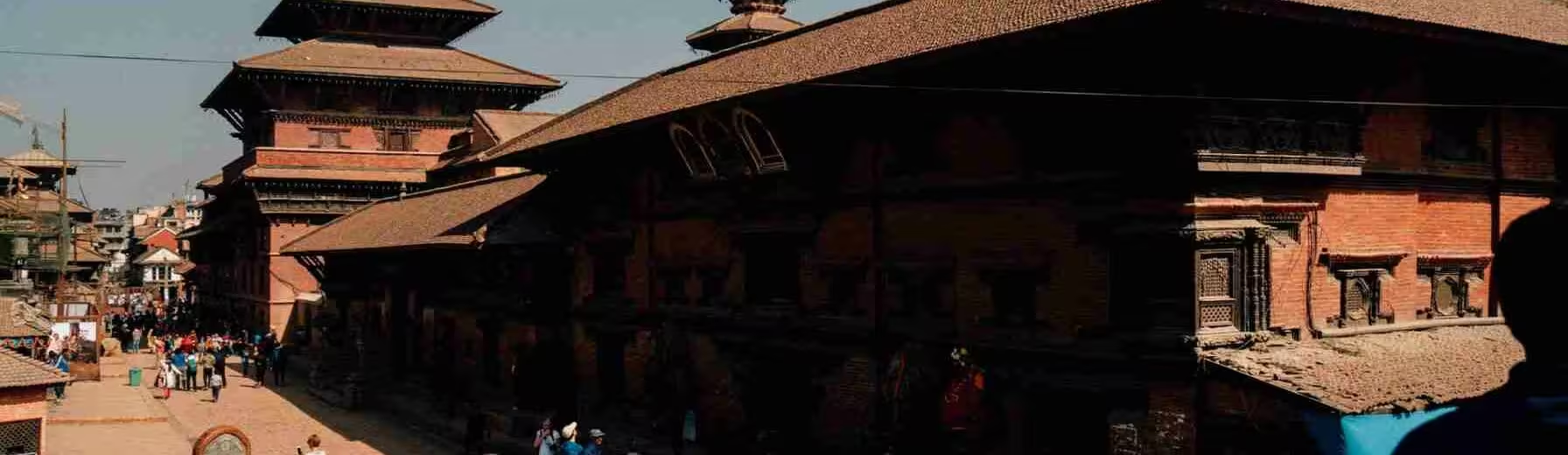
Kirtipur occupies hilltop location six kilometers southwest of Kathmandu, representing one of the valley's oldest continuously inhabited settlements.
Unlike commercialized Durbar Squares attracting mass tourism, Kirtipur maintains authentic Newari character with narrow brick-paved lanes, traditional architecture, and residents practicing centuries-old customs largely unchanged by modernization. UNESCO Tentative List status recognizes outstanding cultural value though formal World Heritage designation remains pending.
Strategic hilltop position made Kirtipur militarily significant throughout history. Multiple conquest attempts by Prithvi Narayan Shah during 18th-century unification campaign ended only after brutal third siege involving infamous nose-cutting punishment for male defenders. This violent history paradoxically strengthened community identity and cultural preservation creating the proud, distinctive town visible today. Walking ancient streets reveals layers of history through architecture, shrines, and social patterns.
Tribhuvan University campus established here in 1960s brought modern educational functions transforming sleepy agricultural town into vibrant student community. However, traditional core remains remarkably intact with elderly residents speaking Newari, maintaining festivals, and preserving crafts. This unusual combination of ancient culture and youthful academic energy creates unique atmosphere distinguishing Kirtipur from other valley heritage sites.
Historical Significance and Development
Ancient Origins and Medieval Importance
Archaeological evidence suggests settlement dating back over 2,000 years making Kirtipur among Kathmandu Valley's oldest towns. Strategic position on defensible hilltop controlling trade routes explains early importance. Medieval period saw Kirtipur functioning as part of Patan Kingdom though maintaining semi-autonomous status under local governance.
Newari population developed sophisticated urban planning evident in remaining architectural patterns. Three-story brick houses with carved wooden windows line narrow streets. Interconnected courtyards (chowks) create semi-public spaces for community gatherings. Temple complexes occupy prominent positions at settlement cores. Understanding traditional Newari urbanism enriches appreciation beyond viewing buildings as isolated monuments.
Prithvi Narayan Shah's Conquest
Kirtipur's resistance against unification forces became legendary. First two attacks failed despite Shah's superior numbers demonstrating defenders' determination and strategic position advantages. Third campaign involved prolonged siege cutting water supplies and starving residents into submission. Victory's price included brutal nose-cutting punishment for adult males creating visible markers of conquered people.
This traumatic event paradoxically strengthened Kirtipur identity. Shared suffering created powerful community bonds. Resistance memory fostered cultural pride encouraging preservation. Contemporary residents reference this history explaining their fierce protection of traditions and suspicion toward outsiders. Understanding this historical consciousness helps appreciating why Kirtipur maintains authenticity despite proximity to Kathmandu.
Modern Educational Center
Tribhuvan University establishment transformed Kirtipur economically and demographically. Nepal's first university attracted students nationwide and internationally. Campus construction consumed agricultural land. Student housing demand altered local economy. Restaurants, shops, and services proliferated serving academic community.
However, traditional core adapted rather than disappeared. Students occupy peripheral areas while old town maintains residential character. University brings economic benefits through rent, services, and employment without overwhelming traditional society. This coexistence creates fascinating contrast walking between campus modernity and old town antiquity within minutes.
Major Cultural and Religious Sites
Bagh Bhairab Temple
Dedicated to Bhairab (fierce Shiva manifestation) appearing as tiger, this temple occupies Kirtipur's highest point at 1,400 meters. "Bagh" means tiger in Nepali reflecting deity's animal form. Locals revere Bagh Bhairab as town protector deity ensuring community safety and prosperity. Three-story pagoda structure features intricate woodcarvings and ritual implements accumulated across centuries.
Temple compound covers approximately 1,500 square meters including main shrine, subsidiary structures, and open courtyards. Weekly Hawan (fire ritual) occurs every first Saturday of Nepali month attracting devotees performing ancient Vedic ceremonies. Priests maintain traditions passed through families for generations. Observing these rituals provides glimpses into living religious practices connecting contemporary worship with ancient origins.
Panoramic views from temple terrace justify climbing steep approach stairs. Kathmandu Valley spreads below showing urban development patterns. Northern horizons reveal Himalayan peaks on clear days. Understanding how geography influenced temple placement—choosing highest defendable position—reveals strategic and spiritual considerations merging in traditional sacred site selection.
Uma Maheshwar Temple
Also called Bhawani Shankar Temple, this pagoda-style shrine dedicated to Shiva and Parvati occupies another prominent hilltop. Architectural beauty combines with spectacular valley views creating popular destination for both worshippers and sightseers. Stone elephant guards entrance gate following traditional iconography protecting sacred spaces.
Main shrine houses Shiva-Parvati images receiving daily worship and elaborate ceremonies during festivals. Architectural details include carved wooden struts showing deities and mythological scenes, decorative windows following Newari design traditions, and roof tiers representing cosmic levels. Annual festivals bring community gatherings maintaining social cohesion through shared religious participation.
Approach path winds through traditional neighborhoods providing cultural immersion opportunities. Observing daily life—women fetching water, artisans working, children playing—contextualizes temple within living community rather than isolated monument. This integration of sacred and mundane characterizes traditional Newari urbanism where religious sites anchor social geography.
Chilancho Stupa
Buddhist monument on Kirtipur's eastern section shows religious diversity characterizing Newari communities. White-washed hemispherical dome topped with harmika and spire follows classic stupa architecture. Newari name "Chilancho" combines "chilan" (everlasting) and "cho" (hill) describing immortal deity residing here.
Historical records attribute construction to Jagatpal Verma during 16th century explaining alternative name Jagatpal Maha Bihar. However, stupa likely occupies earlier sacred site given strategic position and religious importance. Buddhist monks maintain daily rituals while local Newari Buddhists conduct community ceremonies continuing centuries-old traditions.
Circumambulation path allows devotees walking clockwise while spinning prayer wheels embedded in base. This meditative practice connects physical movement with spiritual intention. Visitors welcome joining though maintaining respectful behavior and clockwise direction essential. Understanding stupa symbolism—dome representing earth, square harmika transcending material realm, spire showing enlightenment stages—enriches appreciation beyond aesthetic admiration.
Newari Culture and Traditional Life
Language and Social Structure
Newari language (Nepal Bhasa) maintains strong presence despite Nepali dominance elsewhere. Elderly residents primarily speak Newari while younger generations show bilingualism. Language preservation efforts include cultural programs, publications, and educational initiatives recognizing linguistic heritage importance.
Traditional caste system organized society with specific groups holding hereditary occupations. Though legally abolished, these patterns influence contemporary social relationships and settlement geography. Farmers (Jyapu), artisans, merchants, and priests occupied distinct quarters. Understanding these historical patterns explains current neighborhood characteristics and social dynamics.
Festivals and Celebrations
Annual festival cycle maintains traditional calendar connections. Indra Jatra celebration brings chariot processions, masked dances, and community feasts. Gai Jatra commemorates deceased family members through cow representations and satirical performances. Buddhist festivals including Buddha Jayanti bring special observances at Chilancho Stupa.
Festival participation strengthens community bonds and transmits cultural knowledge to younger generations. Elaborate preparations involving multiple families create collaborative efforts. Traditional music, dance, and ritual performances maintain artistic heritage. Visitors fortunate timing visits during festivals experience authentic cultural vitality impossible through monument viewing alone.
Traditional Crafts and Livelihoods
Newari craftsmanship historically emphasized metalwork, woodcarving, and weaving. Though modernization reduced traditional craft dependence, some families maintain ancestral skills. Metalworkers create religious statues and ritual implements. Woodcarvers produce windows, doors, and decorative elements. Weavers make traditional textiles for ceremonies and daily use.
Agriculture remains important despite urbanization pressures. Terraced fields surrounding town grow rice, wheat, and vegetables supplying local consumption. Traditional farming methods using oxen and hand tools persist alongside modern techniques. Observing agricultural cycles provides understanding of subsistence patterns underlying cultural practices.
Exploring Kirtipur Practically
Getting There and Orientation
Public buses from Kathmandu's Ratna Park depart regularly (NPR 25-30, 30-45 minutes). Taxis charge NPR 800-1,200 one-way. Bicycles provide enjoyable approach for fit riders combining exercise with gradual scenery appreciation. Walking from Tribhuvan University campus (accessible by bus) takes 20-30 minutes uphill.
Kirtipur spreads across hilltop with three main settlements—upper town (traditional core), middle settlement, and lower bazaar. Orientation requires wandering narrow lanes though locals happily provide directions. Getting slightly lost discovering hidden courtyards and unexpected shrines enhances exploration. Carrying offline maps or downloading mapping applications helps navigation without constant asking.
Duration and Timing
Half-day visit (4-5 hours) covers major temples and basic town exploration. Full day allows thorough wandering, extended temple time, and leisurely meals experiencing local restaurants. Multi-day stays suit those seeking deep cultural immersion through homestays or serious photography projects.
Morning visits (8:00-11:00 AM) show town awakening with market activity and morning rituals. Late afternoon (3:00-5:00 PM) provides beautiful light for photography as sun angles low. Avoiding midday heat (12:00-2:00 PM) when activity diminishes improves comfort and cultural interaction opportunities.
Where to Eat
Local restaurants operated by Newari families serve authentic cuisine. Newa Lahana and Newa Chen restaurants offer traditional dishes including beaten rice (chiura), spicy buffalo (choila), fermented soybeans (kwati), and rice wine (aila). Understanding that Newari cuisine emphasizes bold flavors and unique ingredients prepares first-timers for taste experiences.
Small tea shops scattered throughout town provide refreshment breaks. Sweet milky tea (chiya) accompanies conversations with locals. Samosas, momos, and other snacks satisfy hunger between meals. Supporting family-run establishments contributes directly to local economy while ensuring authentic experiences rather than tourist-oriented service.
Photography Opportunities
Traditional architecture, religious ceremonies, daily life scenes, and valley panoramas provide excellent photography subjects. However, respecting residents' privacy essential—always asking permission before photographing people. Temple ceremonies may restrict photography during certain rituals. Observing posted rules and local guidance prevents offense.
Golden hour lighting (early morning or late afternoon) enhances brick architecture warmth. Market scenes show vibrant colors and activity. Temple details reward close-up attention. Wide valley views require clear days and patience waiting for optimal conditions.
Cultural Etiquette
Modest dress covering shoulders and knees shows respect at religious sites. Removing shoes before entering temples follows essential protocol. Clockwise circumambulation around stupas maintains proper practice. Avoiding pointing feet toward religious images or people demonstrates awareness.
Newari communities value respectful behavior and genuine interest over superficial tourism. Learning basic Newari greetings (Juju Bhaye for hello) creates positive impressions. Accepting hospitality when offered honors social customs though purchasing items or services rather than expecting free help respects economic realities.
Frequently Asked Questions
How does Kirtipur differ from Bhaktapur or Patan?
Less tourist development maintains authenticity. Working town rather than museum-like preservation. Lower commercial pressure creates natural community atmosphere. However, fewer amenities and English speakers require more adventurous spirit.
Is it safe walking around independently?
Very safe with low crime. Narrow streets sometimes confusing though locals help with directions. Uneven paving requires careful footing. Standard urban awareness sufficient.
Can I visit during festivals?
Absolutely recommended. Major festivals bring spectacular cultural displays. However, expect crowds and limited services. Advance planning for accommodation and meals advisable during major celebrations.
Are there accommodation options?
Limited compared to major tourist areas. Few guesthouses and homestay possibilities exist. Most visitors day-trip from Kathmandu though overnight stays provide deeper immersion experiencing evening and morning town rhythms.
What's the best season for visiting?
October-November and February-April offer pleasant weather and clear views. Monsoon (June-August) creates mud but shows lush greenery and reduced crowds. Winter (December-January) provides excellent clarity though cold mornings.

No comments yet. Be the first to share your thoughts!