
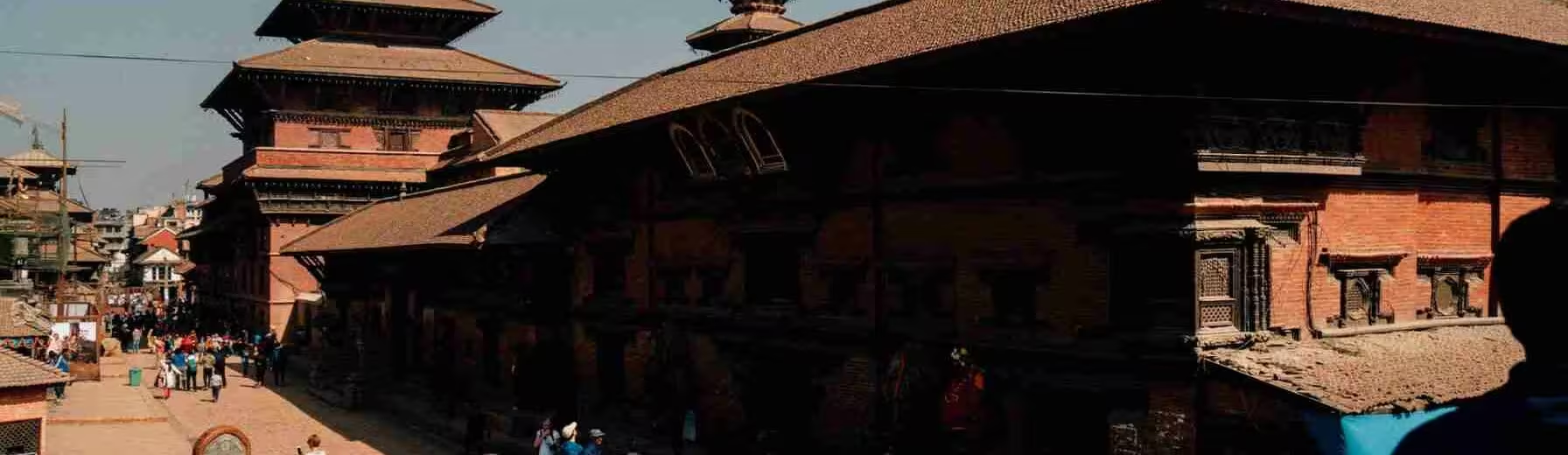
Bhaktapur Durbar Square represents one of Nepal's most preserved medieval city centers, located 13 kilometers east of Kathmandu.
Also known as Bhadgaun or Khwopa in local dialect, this UNESCO World Heritage Site showcases extraordinary Newari architecture, woodcarving mastery, and cultural traditions spanning centuries. Unlike Kathmandu's commercialized Durbar Square, Bhaktapur maintains stronger traditional character with fewer modern intrusions.
Ancient city status reflects Bhaktapur's long history as independent kingdom capital before Nepal's unification. Malla dynasty kings ruled from these palaces between 12th-18th centuries creating architectural legacy still visible today. Narrow medieval streets wind between brick buildings. Traditional crafts including pottery, weaving, and woodcarving continue in family workshops. Cultural practices remain strong with festivals, rituals, and daily life following patterns established generations ago.
Four distinct squares comprise the complex. Durbar Square contains royal palace and main temples. Taumadhi Square features the famous five-story Nyatapola Temple. Pottery Square shows traditional ceramic production. Dattatreya Square displays older architectural styles. Walking between these areas reveals comprehensive picture of medieval Nepali city planning and social organization. Entrance fees collected support ongoing preservation and earthquake recovery efforts.
Understanding Bhaktapur's Significance
Ancient City Heritage
Bhaktapur ranks among Nepal's oldest continuously inhabited cities. Archaeological evidence suggests settlement dating back over 2,000 years. Strategic location on trade routes between India and Tibet brought prosperity. Agricultural productivity from surrounding valleys supported large urban population. Cultural flowering during Malla period (12th-18th centuries) created most visible monuments.
City planning follows traditional mandala concept placing palace at center with residential quarters radiating outward. Caste-based neighborhoods maintained social hierarchy. Narrow lanes provided security while allowing cart traffic. Public squares served as commercial and social centers. Water systems including stone spouts and ponds ensured adequate supply. Understanding this layout reveals sophisticated urban design predating Western city planning theories.
Newari Cultural Center
Newar people, indigenous inhabitants of Kathmandu Valley, maintain strongest presence in Bhaktapur. Unlike Kathmandu where modernization diluted traditional culture, Bhaktapur preserves Newari language, festivals, architecture, and social structures. Extended families occupy traditional houses around courtyards. Caste-based craft specializations continue with families practicing same trades for generations.
Religious syncretism blending Hinduism and Buddhism characterizes Newari spirituality. Temples serve both traditions. Festivals honor Hindu deities using Buddhist ritual elements. Family shrines include multiple religious icons. Understanding this religious complexity enriches appreciation of temples and rituals observed throughout the city.
Newari cuisine reaches highest development in Bhaktapur. Famous "juju dhau" (king curd) produced here using traditional clay pots creates unique flavor impossible to replicate elsewhere. Other specialties include bara (lentil pancakes), yomari (sweet dumplings), and various fermented foods. Sampling local cuisine provides delicious cultural education.
UNESCO World Heritage Status
UNESCO designated Bhaktapur Durbar Square World Heritage Site in 1979 recognizing outstanding cultural value. Criteria include exceptional medieval architecture, living cultural traditions, and artistic achievements. Heritage status brings international attention and funding for conservation. Strict regulations control new construction maintaining historical character.
However, heritage designation creates tensions between preservation and modern needs. Residents desire modern amenities conflicting with historical preservation. Tourism brings economic benefits but also cultural commodification concerns. Balancing these interests requires careful planning and community engagement. Visiting with awareness of these complexities shows respect for living cultural heritage beyond tourist attractions.
Major Monuments and Attractions
55 Window Palace (Pachpanna Jhyale Durbar)
Built during 15th century under King Yaksha Malla, this palace represents pinnacle of Newari woodcarving achievement. Name derives from balcony featuring 55 intricately carved windows allowing royal family observing square activities while maintaining privacy. Each window shows unique design demonstrating artisan creativity within traditional motifs.
Three-story brick structure topped with traditional tile roof creates imposing presence. Ground floor housed administrative functions. Second floor contained royal living quarters. Third floor served ceremonial purposes. Interior courtyards provided private spaces for family activities. Palace museums now occupy sections displaying royal artifacts, paintings, and historical exhibits.
Woodcarving details cover doorways, window frames, roof struts, and interior panels. Geometric patterns, floral motifs, and mythological figures demonstrate supreme craftsmanship. Dark wood aged over centuries creates rich patina. Some carvings show earthquake damage but restoration efforts continue using traditional techniques and salvaged materials.
Visiting palace museums requires separate ticket beyond general square entry. Collections include weapons, thangka paintings, palm-leaf manuscripts, and ceremonial items. Understanding palace layout reveals how medieval royal life functioned. Small windows and thick walls provided security while limiting natural light. Modern restoration balances access with preservation needs.
Golden Gate (Sun Dhoka)
Considered masterpiece of Nepali metalwork, Golden Gate marks entrance to main palace courtyard. Created in 1754 under King Ranjit Malla, the gate displays gilded copper repoussé work of exceptional quality. British art critic Percy Brown called it "the most lovely piece of art in the whole Kingdom" highlighting international recognition of its artistic merit.
Central torana (decorative arch) shows goddess Kali with multiple arms surrounded by attendant deities. Intricate detailing includes mythological creatures, floral patterns, and geometric designs. Gilding remains remarkably preserved despite centuries of exposure. Supernatural serpents (nagas) crown the arch believed providing protection. Garuda, the vehicle of Vishnu, appears in prominent position reinforcing Hindu iconography.
Two stone lions guard entrance steps holding Nepali flags. These guardian figures follow traditional placement protecting sacred spaces from negative influences. Passing through Golden Gate creates threshold experience entering from public square into sacred royal precincts. Architecture employs symbolic elements reinforcing hierarchical boundaries between common and royal/divine spaces.
Photography permitted at Golden Gate though respecting worshippers and avoiding intrusive behavior. Different lighting throughout day creates varied effects on gilded surfaces. Morning and late afternoon provide best conditions avoiding harsh midday glare. Understanding artistic techniques and symbolic meanings enriches visual appreciation beyond simple aesthetics.
Nyatapola Temple
Five-story Nyatapola Temple dominates Taumadhi Square as Nepal's tallest pagoda structure. Built in 1702 under King Bhupatindra Malla, construction took only seven months demonstrating sophisticated organization and skilled workforce. Dedicated to goddess Siddhi Lakshmi (Tantric form of Lakshmi), the temple represents Tantric architectural principles in physical form.
Ascending staircase features paired guardian figures on each level. Bottom level shows wrestlers Jaya Malla and Patta claiming legendary strength. Second level depicts elephants, third shows lions, fourth displays griffins, fifth features goddesses Baghini and Singhini. Each level guardian supposedly possesses ten times previous level's power creating exponential protection. Symbolic hierarchy reinforces religious concepts through architectural program.
Five roofs decrease in size creating elegant proportions. Elaborate struts carved with deity figures support each roof. Corner bells ring in wind creating constant atmospheric presence. Temple height reaches approximately 30 meters making it visible landmark across city. Structural engineering represents remarkable achievement using traditional materials and techniques ensuring stability through multiple earthquakes over three centuries.
Temple interior remains restricted to priests conducting daily rituals. Goddess image supposedly possesses powerful tantric energy requiring specialized worship protocols. Annual festivals bring massive crowds with special ceremonies and offerings. Even without interior access, exterior architectural magnificence justifies reputation as Nepal's finest pagoda temple.
Bhairava Nath Temple
Adjacent to Nyatapola Temple, Bhairava Nath Temple honors Bhairava, terrifying manifestation of Shiva. Original structure dating to 1598 underwent several reconstructions including post-1934 earthquake rebuilding. Current three-story pagoda design follows traditional proportions though simplified compared to earlier ornate versions.
Entrance guarded by two large stone lions holding Nepali flags creates formidable threshold. Right side door passage leads to main shrine housing Bhairava image. Small windows allow limited natural light creating mysterious interior atmosphere appropriate for fierce deity worship. Wooden carvings show traditional craftsmanship though less elaborate than 55 Window Palace or Golden Gate.
Bhairava worship involves animal sacrifices during festivals creating spectacles attracting both devotees and curious visitors. Blood offerings considered necessary appeasing fierce deity who protects city from evil influences. Understanding these practices within cultural context prevents judgmental reactions while acknowledging discomfort some visitors experience.
Temple positioning next to Nyatapola creates architectural dialogue between protective goddess (Siddhi Lakshmi) and fierce god (Bhairava). Traditional belief holds Siddhi Lakshmi controlling Bhairava's destructive power through superior strength. Spatial relationship reflects theological concepts physically manifested through urban planning.
Pottery Square (Talako Tole)
Walking south from main Durbar Square leads to Pottery Square where traditional ceramic production continues. Open plaza fills with drying pottery during favorable weather. Potters using wooden wheels shape clay into various vessels, figurines, and decorative items. Traditional techniques passed through families for generations maintain craft continuity.
Watching potters work provides insight into skilled hand movements and timing required producing consistent forms. Clay preparation, wheel throwing, drying, and firing each require specific knowledge. Buying directly from producers supports traditional crafts while obtaining authentic products. Prices remain reasonable compared to tourist shops though bargaining expected.
Pottery Square atmosphere feels more working class than royal Durbar Square area. Residential buildings surround plaza showing typical Newari architecture without monumental scale. Children play around drying pots. Women carry water. Daily life continues integrating craft production into community routine. Experiencing this area provides balance to palace and temple grandeur showing complete social picture.
Dattatreya Square
Eastern section of Bhaktapur contains Dattatreya Square featuring older architectural styles. Dattatreya Temple built in 1427 represents one of city's oldest surviving structures. Dedicated to Dattatreya (composite deity combining Brahma, Vishnu, Shiva), the temple attracts both Hindu and Buddhist devotees reflecting Newari religious syncretism.
Peacock Window (Muna Jhya), possibly Nepal's most photographed window, occupies building adjacent to Dattatreya Temple. Intricate woodcarving depicting peacock shows supreme craftsmanship from 15th century. Design complexity and preservation quality make it iconic image representing Nepali art internationally. Viewing original inspires appreciation for artisan skill creating such delicate work in wood.
Pujari Math, former priest residence, now houses Woodcarving Museum displaying historical and contemporary examples. Collections show technique evolution and artistic styles across periods. Examining tools and processes reveals how artisans achieve remarkable detail. Museum visit enriches understanding of woodcarving seen throughout city.
Practical Visiting Information
Entry Fees and Tickets
Foreign nationals pay NPR 1,500 ($12) for Bhaktapur Durbar Square entry. SAARC citizens pay NPR 500 ($4). Nepali citizens enter free with identification. Tickets valid for entire day allowing exit and re-entry. Multi-day passes available for extended visits.
Additional fees apply for palace museums (NPR 200) and some specific temples. Cumulative costs reach NPR 1,700-2,000 for comprehensive exploration. Photography generally permitted except marked restricted areas. Video cameras sometimes require additional fees though policies vary.
Student discounts available with valid international student identification. Early morning visitors (before 7:00 AM) sometimes avoid ticket collection though ethically questionable as fees support conservation. Purchasing tickets demonstrates commitment to heritage preservation.
Best Time to Visit
Early Morning (6:00-9:00 AM): Experience authentic morning routines before tourist crowds. Locals perform rituals, shops open, pottery drying begins. Soft lighting perfect for photography. Some entrance gates unmanned but purchasing tickets upon opening shows integrity.
Late Afternoon (3:00-6:00 PM): Golden hour lighting creates beautiful conditions. Fewer tourists than midday. Locals relax in squares after work. Pottery Square shows late afternoon drying activity. Sunset colors enhance red brick architecture.
Festival Periods: Bisket Jatra (April) showcases Bhaktapur's biggest festival with chariot processions and tug-of-war competitions. Dashain (September-October) brings major celebrations. Gai Jatra (August) features unique local variations. Festival crowds intense but cultural experiences unmatched.
Avoid Midday (11:00 AM-2:00 PM): Peak tourist congestion. Harsh overhead lighting poor for photography. Heat makes walking uncomfortable. Tour groups dominate major sites.
What to Bring
Comfortable walking shoes for uneven stone paving, sun protection (hat, sunscreen, sunglasses), modest clothing respecting religious sites, camera with charged batteries, cash in small denominations (many vendors lack change), water bottle (refill stations available), small daypack, notebook for sketching or journaling, and guidebook or downloaded maps.
Where to Stay
Staying overnight in Bhaktapur allows early morning and evening exploration after day-trippers depart. Traditional guesthouses occupy renovated Newari buildings offering cultural immersion. Rooftop restaurants provide square views. Budget options (NPR 1,000-2,000) to mid-range hotels (NPR 3,000-6,000) accommodate various preferences.
Local Food Experiences
Sampling juju dhau (king curd) remains essential Bhaktapur experience. Numerous shops surrounding Nyatapola Temple serve this specialty in traditional clay bowls. Sweet, creamy texture creates unique flavor profile. Other specialties include bara (savory lentil pancakes), wo (lentil patties), chatamari (rice crepes), and seasonal sel roti (rice donuts).
Restaurants ranging from simple local eateries to rooftop tourist establishments serve Newari cuisine. Newari Set meals provide sampling of multiple traditional dishes. Vegetarian options plentiful given Hindu/Buddhist dietary practices. Trying local food connects visitors to cultural heritage beyond architectural tourism.
Earthquake Recovery and Current Status
April 2015 earthquake severely damaged multiple Bhaktapur monuments. Vatsala Temple collapsed completely. Other structures showed major cracks requiring stabilization. International organizations including UNESCO coordinated restoration programs. Local communities participated in debris clearing and salvaging materials.
Reconstruction follows traditional techniques using brick, wood, and tile matching original materials. Skilled artisans train apprentices ensuring craft knowledge transmission. Progress visible throughout square with completed restorations and ongoing projects. Some areas remain closed during reconstruction work.
Visiting post-earthquake demonstrates heritage resilience and community commitment to preservation. Understanding reconstruction challenges creates appreciation for conservation complexities. Supporting local businesses and paying entry fees contributes to recovery funding.
Frequently Asked Questions
How long should I spend in Bhaktapur?
Minimum half-day (4-5 hours) covers major highlights. Full day allows thorough exploration including museums and Pottery/Dattatreya Squares. Overnight stay permits early morning and evening experiences after day-trippers leave.
Can I use the same ticket for all areas?
General entry ticket covers Durbar, Taumadhi, Pottery, and Dattatreya Squares. Palace museums require separate tickets. Some specific temples may charge small additional fees.
Is Bhaktapur suitable for photography?
Excellent photography destination with medieval architecture, street life, and pottery activities. Morning and late afternoon provide best lighting. Some interior areas restrict photography indicated by signs.
What makes Bhaktapur different from Kathmandu Durbar Square?
Better preservation, stronger traditional culture, less commercialization, and more cohesive medieval city feel. Pedestrian-friendly environment with vehicle restrictions enhances atmosphere. Better maintained overall.
Where can I buy authentic handicrafts?
Pottery Square for ceramics directly from makers. Dattatreya Square area features woodcarving shops. Thangka painting studios operate throughout city. Purchasing directly from artisans ensures authenticity and fair prices.
Is Bhaktapur safe for solo travelers?
Very safe with low crime rates. Locals friendly and helpful. Standard precautions regarding valuables apply. Women report comfortable solo exploring. Evening hours remain safe in tourist areas

No comments yet. Be the first to share your thoughts!