
Proper Annapurna Circuit Trek acclimatization is the key to a safe and smooth journey on this high trail.
The Annapurna Circuit presents one of trekking's greatest altitude challenges. This destination takes you over 4,600 meters of elevation within 10 to 14 days.
The physical and mental challenge here is overwhelming. Without proper rest and sleep the journey gets dangerous.
Your body needs proper time to adapt to decreasing oxygen levels with the increasing altitude.
There are several symptoms you find like headaches, nausea, and dangerous complications . It causes a great threat to your life.
Our acclimatization guide on Annapurna Circuit explains how your body responds to high altitude.
You will know day-by-day acclimatization strategies, identify the warning signs of altitude sickness, and share practical prevention methods to control it.
Why does acclimatization matter much more on the Annapurna Circuit ?
Annapurna Circuit trek takes you to the foothills of mountains. You will be going towards great heights within a short span of time .
The more you climb low hills to high slopes, your body gets less oxygen and needs to adapt.
For these crucial situations, acclimatization is important.
Likewise, rushing on this journey is no good. There lies the possibility of altitude sickness which is not good for your body.
The Annapurna Circuit has long sections over 3,000 meters . You will notice the patterns of your changing breaths automatically.
Likewise, once you are above 4,000 meters , the risk grows even more.
The challenging part at Annapurna Circuit Trek is Thorong La. This is the highest spot on the trek. Most of the trekkers find it tough and face problems here.
This is the section you need to take slow and steady steps.
- Proper acclimatization helps your lungs, blood, and muscles adjust to the thin air.
- It helps you walk with comfort and keeps your sleep calm at higher points.
- It also prevents common issues such as headaches, loss of appetite, or short breath.
- Good acclimatization is the base of a safe and happy trek.
Make sure you take enough rest when you are at this Annapurna Circuit Journey
What happens to your body above 3,000 m ?
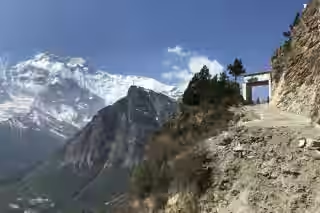
This is one of the serious concerns that you need to be aware of.
Once you reach 3,000 meters your body faces low oxygen levels. Your breathing becomes faster. Your heart beats faster.
The body pushes more blood to your brain and lungs. This creates stress in your system.
You may also feel light pressure in your head. Your body feels more tired than usual. Your sleep may not feel deep.
But don’t panic.
These signs are normal as long as they stay mild. Your body is trying to get used to the new height.
It can be controlled with enough water intake, slow pace, and rest to help your body adapt well.
Note : If your body gets no time to adjust, these signs can grow into altitude sickness. That is why slow and planned climbs are important on this trek.
Climb high and sleep low rule
This is one of the golden rules that no one tells you about.
Climb high and sleep low limits sleeping elevation gains to no more than 300 to 500 meters per day once above 3,000 meters. This includes a rest day roughly every 1,000 meters of altitude gain.
These practices give your body time to adapt safely.
While good fitness helps, it does not guarantee immunity to altitude issues.
There are several factors such as age, genetics, previous high-altitude experience, and especially the rate of ascent play a major role.
Even young and fit trekkers can develop Acute Mountain Sickness (AMS) if they ascend too quickly.
That is why make use of standard itineraries with built-in rest days.
This makes the trek manageable no matter if you are an experienced trekker or a beginner.
What happens when altitude sickness becomes dangerous ?
If mild AMS symptoms are ignored and you still continue the journey , it can take you to life-threatening conditions :
High Altitude Pulmonary Edema (HAPE):
Fluid builds up in the lungs. It makes it hard to breathe.
The critical signs include shortness of breath even at rest, a persistent cough sometimes with frothy or pink sputum, extreme fatigue, and rattling or gurgling sounds in the chest.
High Altitude Cerebral Edema (HACE):
It causes swelling in the brain. The critical signs include severe headache, loss of coordination like ataxia .
This is the inability to walk in a straight line. Likewise , other symptoms are confusions, hallucinations, and changes in behavior.
Note : These are the medical emergencies.
Immediate descent of at least 500 to 1,000 meters is the only reliable treatment, along with supplemental oxygen and medical help if available.
Never try to “push through” serious symptoms.
Pre-Trek Preparation Tip
Consult a doctor before your trip, particularly if you have any heart, lung, or circulatory conditions.
Discuss your itinerary and whether preventive medication might be appropriate for you.
AMS on the Annapurna Circuit
Acute Mountain Sickness (AMS) is very common when you are trekking to high altitude mountains.
The Annapurna Circuit has many spots where AMS can gradually begin. Mild symptoms can appear even at 2,800 to 3,200 meters.
Most trekkers notice clear symptoms around Manang, Yak Kharka, or the climb to Thorong Phedi.
Check out the symptoms for more clarity:
Soft warning signs before Thorong La
Soft signs appear when your body starts to struggle with thin air.
These signs remind you to slow down and take more rest. Below are the early signs you must watch with care.
Mild headache:
A light headache is often the first sign of altitude stress. It may feel small at first but can grow if you climb higher.
Stop and rest until the pain fades.
Low hunger:
You may not feel like eating even after long walks. This shows your body is under stress. Eat small meals to keep your energy steady.
Trouble sleeping:
You may wake often or feel restless at night. This happens when your body works harder to breathe. A slow pace the next day helps you adjust.
Light dizziness:
You may feel unsteady when you stand or walk. This shows your body needs more time to adapt. Rest and drink warm water to feel stable again.
Feeling very weak:
Your steps may feel heavy even on flat ground. Your lungs work harder at this height. A break helps your body catch up before you climb higher.
These signs are early warnings.
If you notice them, you must not move higher on the same day. Rest and hydration help your body adjust.
Primary Treatment and Emergency Response
Descent is the most effective treatment.
Going down to 300 to 1,000 meters in elevation often brings rapid improvement in symptoms because oxygen levels increase.
Do not wait for symptoms to worsen .You have to descend as soon as possible if mild signs do not improve with rest.
Supplemental oxygen and medications such as Diamox, dexamethasone, or nifedipine can help as temporary measures.
Especially while arranging descent, but they are not substitutes for going down.
Seek emergency help when:
- Symptoms worsen rapidly
- You experience signs of HAPE or HACE (severe breathlessness at rest, rattling cough, confusion, or loss of balance)
- You cannot descend safely on your own
Note : In Nepal, helicopter evacuation is commonly available in the Annapurna region but is very expensive (often several thousand USD).
Good travel insurance that covers high-altitude trekking and helicopter rescue is strongly recommended.
Key elevation points on the Annapurna Circuit Trek
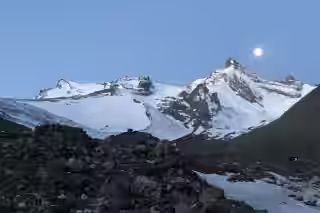
The distance and altitude profile of the Annapurna Circuit shows exactly how quickly you gain elevation throughout the journey.
These points show how fast you move into high zones. You must climb slowly after Chame.
The days from Upper Pisang to Manang and from Manang to Yak Kharka are the most important for safe progress.
Location | Approx. elevation | Notes |
|---|---|---|
Besisahar | 760 m | Low Zone, no altitude issues |
Chamjee | 1,410 m | Safe height, mild gain |
Dharapani | 1,860 m | Safe height, the body adjusts well |
Chame | 2,650 m | Entering the moderate zone |
Upper Pisang | 3,300m | First place where many feel changes |
Manang | 3,540 m | Key acclimatization stop |
Yak Kharka | 4,018 m | Very high zone. Rest well here. |
Thorang Phedi | 4,540 m | Very high zone. Rest well here. |
Muktinath | 3, 760 m | Height drops fast after the pass. |
Altitude Zones on the Annapurna Circuit and how they affect you ?
Each part of the Annapurna Circuit has its different altitude zone.Every zone affects your body in a different way.
As you rise, your body works harder to keep up because the air becomes thinner.
You need to know these zones which help you to plan your pace, choose the right rest days, and move safely toward the high pass.
Low Zone (0-2,500m)
This zone covers places like Besisahar, Jagat, and Chamje.
Oxygen levels are normal here. You can walk without worry. Your body feels fresh, and your sleep stays normal.
Moderate Zone (2,500m-3,500m)
This zone includes Chame and Upper Pisang.
Your body starts to feel changes. You will notice that you are breathing faster during climbs.
Many trekkers notice mild headaches or dry throat. This zone is a good place to walk slowly and hydrate more. So, drink plenty of water for this journey.
High Zone (3,500m-4,500m)
The high zone includes Manang, Yak Kharka, and areas before Thorong Phedi.
The air gets thinner as we talked about . Your body works more with each step. This zone can trigger AMS if you climb too fast. That is why don’t rush. Rest and then move.
Rest days help your body adjust.
Similar acclimatization strategies apply to the Annapurna Base Camp trek acclimatization, though the ABC trek reaches a lower maximum elevation of 4,130 meters.
Very High Zone (Above 4,500m)
This zone includes Thorong Phedi, High Camp, and Thorong La Pass. It is the challenging section of the trek.
Your breathing gets heavy. Even short walks feel hard.
Your sleep may feel light. It gets difficult with every passing trail. So, you must move slowly and reach the pass early in the morning to avoid strong winds.
Preventing AMS on the Annapurna Circuit
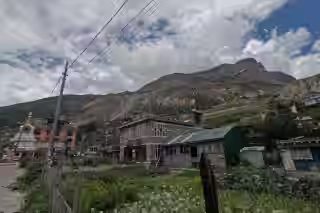
A good preparation keeps your body strong and lowers stress on the lungs and heart.
Learning how to acclimatize safely for high altitude treks in Nepal provides detailed strategies that apply to all Himalayan treks.
Let’s see how we can prevent AMS on the Annapurna Circuit :
Pre-trek Preparation
Good fitness helps your body handle long days. You do not need to be an athlete, but you must at least have basic stamina.
Jogging, walking uphill, and doing light strength training helps for the trek. Strong legs and stable breathing gives you more energy on the trail.
Likewise, make sure your gear supports you.
Warm layers, gloves, and socks keep your body safe from cold air.
Good boots help you walk slow and steady at high places. Pack light to avoid extra pressure on your back and lungs.
You must also eat well before the trek.
A balanced diet keeps your body ready for long days of walking.
Medications
Diamox (acetazolamide) is commonly used by many trekkers as a preventive measure.
It helps the body acclimatize faster by improving breathing and oxygenation. It is not cheating but in fact it is a safety tool.
Consult your doctor before the trip.
Painkillers such as ibuprofen can help relieve mild headaches symptomatically, but they do not address the underlying cause.
Always prioritize rest or descent if symptoms persist.
Note : A typical preventive dose is 125 mg twice daily, often started 1 to 2 days before reaching higher altitudes.
Natural Prevention Methods
Apart from taking medications, there are other natural preventive measures that you can rely on as a safety net. Check out what are those below :
Daily Prevention Habits
Hydration:
Drink at least 3 to 5 liters or more of fluids per day. Thin air increases fluid loss through breathing. You can drink warm water, herbal tea, and electrolyte packets . They are very helpful.
Diet:
You can focus on carbohydrate rich meals like rice, pasta, bread, potatoes for long-lasting energy.
Avoid heavy, greasy, or hard-to-digest foods at higher altitudes. They can worsen your nausea.
Pace:
Follow the Nepali saying “Pole pole” (slowly slowly). This means you have to maintain a steady, comfortable rhythm .
This is not a competition so, there is no benefit of racing. Let your breathing guide you.
Don’t rush.
Breathing & rest:
Practice deep, steady breathing during high steep climbs. Avoid overdoing and take frequent short breaks.
Thorang La Pass weather awareness
Thorong La Pass crossing is highly weather-dependent.
Strong winds, snow, or whiteout conditions can make the pass dangerous even for well-acclimatized trekkers.
Don’t forget to check weather forecasts and local advice before attempting crossing this section .
What to do if you feel altitude sickness ?
Rest . If you feel light symptoms, just stop and rest. Do not force yourself to climb higher on the same day.
Drink warm water. Eat a simple meal and take a short nap.
We have seen many mild symptoms get better with rest. But, if the symptoms grow stronger, you must go down.
A drop of even 300 to 500 meters can make a clear difference.
Do not wait for symptoms to fade. Ask for help from our guides or lodge owners if needed.
It’s better to be safe early than regret later, isn’t it ?
Altitude myths that mislead Annapurna Circuit trekkers
Not everything you hear is true. You can check below what are the myths that you have been hearing that completely is misleading on this journey:
- Young trekkers don't get altitude sickness.
Your age doesn't protect you. Altitude affects everyone based on your climbing or say ascent speed, not based on your age or fitness level.
- Diamox is cheating.
Diamox helps your body breathe better at altitude. This also improves sleep quality. For more clarity it's a safety tool, not performance improvement.
- Mild symptoms are normal, just keep walking.
Do not ignore your signs. Mild symptoms are early warnings that says” You require rest”. So, continuing upward makes your situation even worse and creates serious complications.
- Alcohol helps you relax at altitude.
Alcohol dehydrates your body, worsens altitude symptoms, and hides warning signs of AMS. Avoid it completely on the high-altitude treks.
- Descending means you failed.
Descending when symptoms appear shows wisdom and self-awareness. This is nothing to be ashamed of. It protects your safety and allows future attempts. So, descend immediately in case of symptoms.
Common mistakes that cause altitude issues
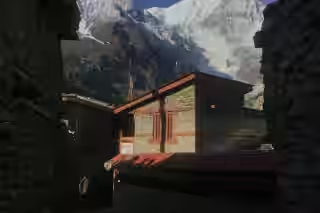
Many trekkers get altitude problems because they repeat the same simple mistakes.
These mistakes look small, but they create big risks as you climb higher for the Circuit Trek.
Here are the issues you must watch for on the Annapurna Circuit.
- Climbing too fast
- Skipping rest days
- Drinking too little water
- Walking with a heavy pack
- Ignoring early symptoms
- Drinking alcohol at high points
- Sleeping at higher places than planned
- Pushing hard on steep climbs.
- Ignoring weather conditions especially for the Thorong La crossing.
- Inadequate fitness training
- improper gear (e.g., poor boots or insufficient warm layers).
- Trying to compete with faster trekkers.
Conclusion
Safe acclimatization to Annapurna Circuit helps you enjoy each day with comfort. We recommend you to walk slowly, drink enough water, and use rest days with care.
Always listen to your body. If you feel sick, take action immediately.
A safe journey gives you the best chance to enjoy the majestic mountain views, enjoy the culture, and pass the long trail ahead easily.
Most of the trekkers complete the Annapurna Circuit safely when they follow proper pacing and acclimatization.
Mild AMS symptoms are relatively common, but serious complications are rare with sensible decisions.
Your body usually recovers quickly during the descent and after returning to lower altitudes. So, make sure you continue drinking plenty of fluids, eat nutritious food, and rest well.
Seek medical follow-up if symptoms, especially headache, fatigue, or breathing issues, exist for longer days even after reaching the lower elevations.
FAQs
Should I take Diamox for acclimatization on the Annapurna Circuit?
Diamox (acetazolamide) can help speed up acclimatization for some trekkers. It improves breathing and oxygenation, but it’s not a substitute for slow ascent and rest days.
Consult your doctor before the trip, as it has side effects that might create trouble for you.
Is the Annapurna Circuit safe for beginners regarding altitude?
Yes, Annapurna circuit is generally safe for fit beginners . But you need proper preparation, gradual pacing, and a licensed guide for this journey .
How many acclimatization days do I need for the Annapurna Circuit Trek?
Most of the itineraries include at least 1 to 2 dedicated acclimatization/rest days, especially in Manang.
First-timers or those who can walk quickly should plan for two or more days . Extra time at Thorong Phedi can also help before the pass.
When is the best time to trek the Annapurna Circuit for easier acclimatization?
You can trek during Spring (March-May) and autumn (September-November) for Circuit Trek.
It offers stable weather, clearer skies, and fewer extreme temperature swings making acclimatization more comfortable.
Can I do the Annapurna Circuit without a guide for acclimatization and safety?
Yes, you can trek Annapurna Circuit without a guide.
But a guide helps monitor AMS symptoms, adjust pace, and handle logistics whereas solo travel increases risks on remote sections like the pass.
No comments yet. Be the first to share your thoughts!