
Is Annapurna Base Camp Trek safe for female travelers? This is one of the first questions many women ask us before they planning their Annapurna journey.
We understand the concern. It is tough especially when the trek involves several hours of walking each day .
Annapurna Base Camp is located at an elevation of 4,130 meters (13,550 feet) above sea level. This destination is inside the Annapurna Sanctuary. So, altitude and mountain conditions need to have more attention than gender-specific security concerns.
It comes with several problems like altitude sickness, changing weather, slippery and sometimes no network in some areas.
The trek route of Annapurna Base camp is generally safe for female trekkers even if you are trekking alone. You will find most of the teahouses are available at the routes. The local communities are very welcoming. You will find food and accommodations enough.
If you are a female trekker, the best approach is simple. All you have to do is prepare yourself.
You should be able to walk long hours, monitor your health, respect local culture, stay aware of weather conditions. Make sure you have a plan for your emergencies.
Annapurna Region welcomes all the trekkers who have a love for mountains and are fond of adventures in life.
Why is Annapurna Base Camp Trek considered safe for female trekkers?
The Annapurna Base Camp Trek is a popular trek among trekkers from all around the world. Its popularity is one reason many women feel comfortable choosing the route.
Unlike other extremely remote trekking areas, the Annapurna Base camp trail passes through villages and established teahouse settlements. This provides regular opportunities to meet other trekkers and local people on the way.
The route also has a long history of trekking tourism.
Local communities are familiar with international visitors. Teahouses provide basic accommodation, meals, and places to rest along the journey. The established trail, teahouse network, local communities, and regular flow of trekkers makes this trekking more safe for females.
Another advantage is that you rarely feel lost or alone on the entire trek. Your journey depends on the season and time of day you choose.
You may meet organized groups, guides, porters, couples, families, or other solo travelers. This does not remove every risk. However, it can make the experience feel more connected. This provides additional opportunities to ask for guidance.
But this does not mean popularity automatically makes the trek safe. You still need to make sensible decisions when dealing with altitude, bad weather and unfamiliar sections of the trail.
Read more on Solo Trek to Annapurna Base Camp:The Real Trail experience from our satisfied trekker
Main safety risks for females on the ABC Trek
The biggest safety concerns for females on the Annapurna Base Camp Trek are generally related to the mountain environment rather than being a woman traveling alone.
The major risks include altitude sickness, changing weather, slippery trails, dehydration, and seasonal hazards such as landslides and avalanches.
Everyone needs to understand these risks before starting the trek .
Mensuration/Periods
This if often neglected or ignored topic for the trek. But, this should be acknowledged .
When females get their periods on the trail they feel more difficult than usual.
Note : Medical science says, a female menstrual blood loss is about 30-40 mL per period on average. However, it varies from person to person.
The blood loss makes you feel weak or tired, and have mood swings. Walking for many hours while being away from home may sometimes make you feel lonely.
Make sure you carry enough menstrual products, water, extra underwear, and wet wipes, and take breaks when you need them.
Altitude Sickness
Altitude is one of the most important safety concerns on the Annapurna Base Camp Trek. The route takes you to 4,130 meters. It is high enough for altitude-related illness to become a genuine concern.
Altitude sickness can affect anyone. It does not care about your age, gender, fitness level, or previous trekking experience.
Some of the common symptoms are headache, nausea, dizziness, unusual tiredness, loss of appetite, and difficulty in sleeping.
The main mistake most trekkers make is to climb even when their body is clearly struggling.
If you develop such symptoms, stop ascending. Inform your guide, trekking partner, or teahouse staff for guidance. Rest and monitor your condition. If symptoms become worse or serious warning signs develop, descend to a lower altitude. It makes you safe.
Uncertain weather
Mountain weather can change very quickly. A morning that begins with clear skies can become cloudy, rainy, snowy, or windy later in the afternoon. Most of the time weather conditions vary by season.
Spring and autumn generally provide better trekking conditions. Winter brings colder temperatures and a greater possibility of snow. The monsoon season can bring rain, slippery trails. It reduces the visibility, and landslide concerns.
Because weather affects both comfort and trail safety, you have to check the forecast before leaving your teahouse each morning.
If conditions get worse, do not feel pressured to continue simply because your itinerary says you should reach the next village.
Slippery and Uneven Trails
The ABC route has more or less stone steps, forest paths, rocky sections, steep climbs, and uneven terrain.
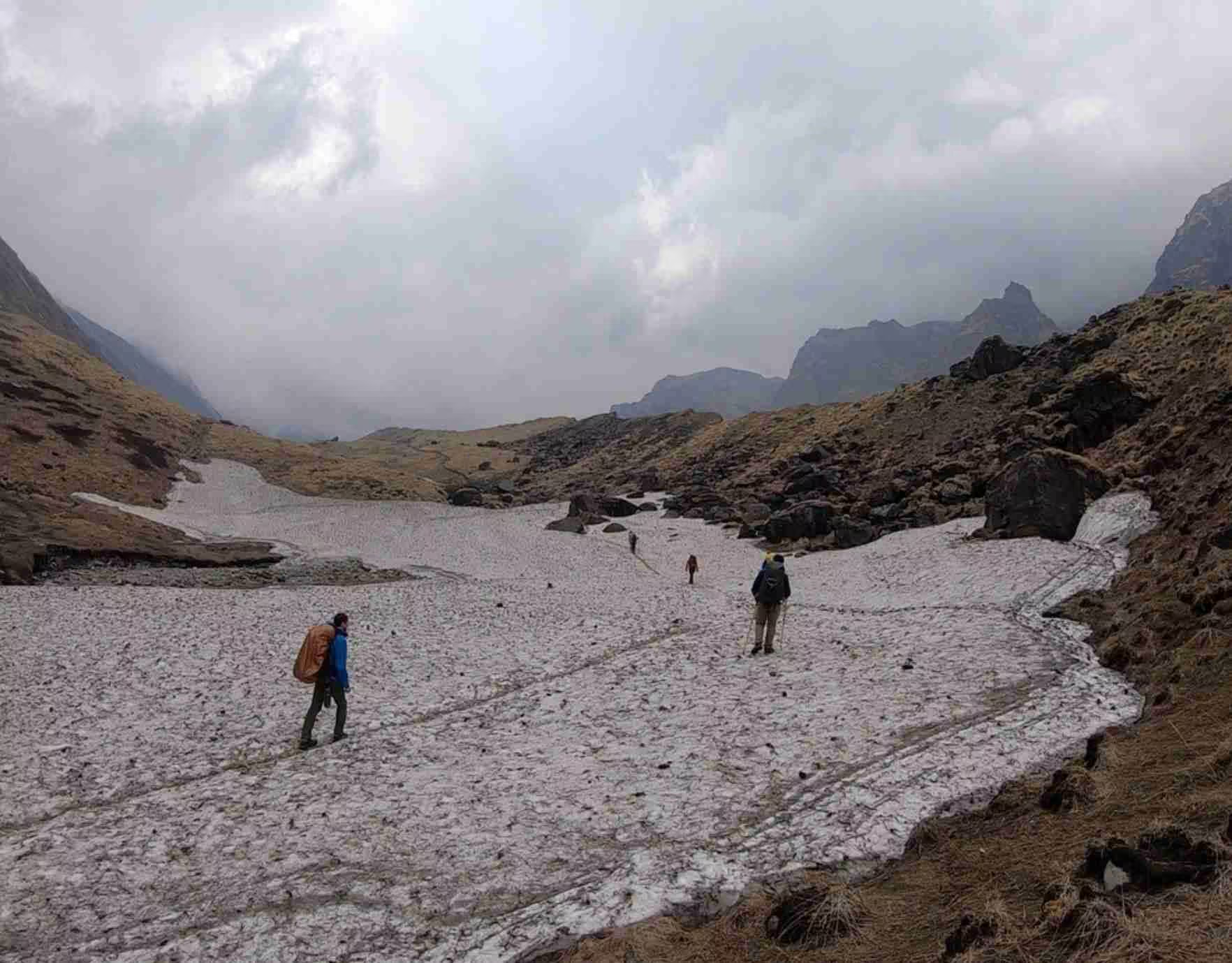
Rain can make sections muddy and slippery. Likewise, snow and ice can make higher sections more difficult during colder months.
You have to have good trekking footwear and trekking poles. It helps you with balance. You should also slow down when descending. It is because tired legs and slippery steps can increase the chance of falling.
Note: The Nepal Tourism Board recommends using walking sticks on high-altitude and steep terrain. It helps with balance and reduce pressure on the knees during descents of Annapurna.
Fatigue and Dehydration
Long walking days can make you tired. The trail to Annapurna gets steeper as the altitude increases. Do not wait until you feel extremely thirsty before drinking water. Hydration is the key.
Carry enough water and refill it at appropriate points along the trail. Take regular breaks, eat properly, and maintain a pace . This helps you sustain throughout the day.
A common mistake among inexperienced trekkers is walking too quickly during the first few hours because they feel fresh. A slower and consistent pace is usually more comfortable over several hours.
Landslides and Avalanches
You cannot ignore the seasonal problems.
Heavy rain can increase the possibility of landslides in most of the areas. Snow can create avalanche concerns on higher sections. This is a threat to your life.
Note: The Deurali-Machhapuchhre Base Camp section is particularly worth checking for current conditions during snowy periods.
Your safety decision should always be based on the current trail and weather situation rather than an old trekking report.
What should you do when you get lost?
If you think you have taken the wrong way, you have to stop rather than continuing farther. First, check your offline map and retrace your route if you are confident about where you came from.
But if you are unsure, contact your teahouse or ask nearby locals or trekkers for directions.
Do not take an unfamiliar shortcut to find the main trail.
In mountain terrain you might not know but a shortcut can quickly become more dangerous than the original route.
How safe is to trek Annapurna Base Camp for females at Night?
It is best to avoid unnecessary walking after dark if you are a female.
The main reason is not that the ABC trail suddenly becomes dangerous because the sun has gone down. Instead, darkness reduces visibility . It makes the journey difficult to identify slippery steps, junctions, or changing trail conditions.
Try to reach your teahouse before dark whenever possible. This gives you enough time to check in.
You can have time to settle your belongings, eat, charge your devices, and prepare for the next day.
If you genuinely need to walk outside after dark make sure you carry a reliable headlamp. Don’t forget to inform the teahouse staff. Avoid wandering onto unfamiliar sections of the trail alone.
Staying safe inside Teahouses
You will find many teahouses are family-run teahouses. They provide simple rooms, shared dining areas, meals, and basic facilities.
Female trekkers can take a few simple steps to be extra safe like :
- Keep your passport and money secure.
- Keep your phone and important documents with you.
- Lock your room when a lock is available.
- Avoid leaving valuables unattended.
- Keep your phone charged for communication and maps.
The goal is not to become overly suspicious. But basic awareness is enough to keep you safe.
Are teahouses on Annapurna Base Camp safe for Solo Female Trekkers?
Yes, teahouses are one of the main reasons why the ABC route feels safe for female trekkers. The Annapurna region has a well-developed network of lodges and teahouses along popular trekking routes.
The Nepal Tourism Board says that most trekking routes in the Annapurna region are well serviced by teahouses.
Rooms are usually simple, and availability is dependent on the season. During busy periods, private rooms may become limited. But the safe space is that you can arrive earlier and get more accommodation choices.
The dining area is often a social space . Here the trekkers from different countries sit together. For female travelers who are trekking alone, this can make the trek feel less lonely.
Bathrooms may be shared, particularly at higher elevations. You will also find hot showers available at some teahouses. But it comes with an additional charge. You will find facilities become more basic as you climb higher. However ,teahouses available are enough to keep every female safe.
How can you protect your valuables on the Annapurna trail ?
Carry only what you need and keep important items close.
Your passport, cash, cards, phone, insurance information, and permits should remain secure. A small lock can give you a peace of mind for your bag or room when appropriate.
It is also always safe to keep digital copies of important documents on your phone or in secure online storage.
How Can Solo Female Trekkers Stay Safe on the ABC Trek?
Safety is the major concern when you are on a journey for multiple days. To be safe at Annapurna it does not require complicated rules.
A few habits for females can make a major difference. You can check them below :
Trek during daylight hours
You have to start early enough to reach your destination before dark. Try to avoid unnecessarily long breaks . It extends and takes your arrival into the evening.
If you are tired or weather conditions change, contact your teahouse or guide instead of rushing.
Share your daily trekking plan
Tell your teahouse where you are going each morning. They need to know in case you get stuck somewhere.
If possible, you can share your itinerary with a family member or trusted contact.
Let someone know your expected destination. Update them when you arrive.
Stay connected
Mobile coverage and Wi-Fi availability is normally weak along the route. It gets more disturbed when you reach higher elevations.
Do not assume that you will have reliable internet throughout the trek. Carry:
- A charged phone
- A power bank
- Offline maps
- Important emergency contacts
- Copies of important documents
Note : The Nepal Tourism Board also advises trekkers to carry a torch, raincoat, and first-aid kit and to stay on designated routes.
Trust your instincts
If someone makes you uncomfortable, you do not have to continue walking with them.
Move towards populated areas, return to your teahouse, or ask lodge staff for assistance. Being friendly does not mean you need to ignore your personal boundaries.
Respect local culture
The ABC trek route passes through rural mountain communities with their own customs and traditions. Dress respectfully, especially around villages and religious sites. Make sure you ask before photographing people, homes, or religious activities.
Respecting local culture is not only polite, it can also make interactions easy and more respectful throughout the trek.
Packing lists for solo Female Trekkers
Packing is very important during your Annapurna trek. There are certain things that a female should carry that the men should not. We have given below a packing list for females . We hope it helps for your ABC trek:
Packing properly will improve both comfort and safety of our trekkers.
Essential Trekking Gear
Your basic gear should include the following items below:
- Comfortable trekking boots
- Warm layers
- Waterproof jacket
- Trekking trousers
- Gloves
- Warm hat
- Sunglasses
- Trekking poles
- Headlamp
- Water bottle or hydration system
The exact amount of warm clothing depends on the season and your itinerary. You can contact your guide or us for more accurate information.
Personal Safety Items
These are the most essential items that you need to carry:
- Power bank
- Offline maps
- First-aid supplies
- Emergency contact information
- Passport copies
- Permit copies
- Travel insurance information
Keep important documents protected from rain and moisture.
Female-Specific Essentials
The route to Annapurna is very steep. You will find plenty of teahouses . However, there are still chances that your personal products won’t be found easily.
If you are a female trekker make sure you carry:
- Menstrual products like pads, tampons, menstrual cups
- Extra underwear
- Wet wipes
- Hand sanitizer
- Personal toiletries
- Small waste-disposal bags
You have to pack these items before leaving Pokhara or Kathmandu . It gives you greater control over your personal needs during the trek.
Can you trek to Annapurna Base Camp during your period?
Yes, many women can trek during their period. However but the experience depends on your personal comfort, symptoms, and physical condition.
After you walk for a long day you feel more tired. At the time of periods most of the females experience cramps, fatigue, or other menstrual symptoms.
The best way to be prepared is to listen to your body. You should not rush when you are walking. Allow yourself to slow down when it is needed .
Note: Carry enough menstrual products for the entire trek. There are very rare chances that you will find your preferred product at every teahouse.
Hygiene can also require extra planning because washing facilities are very less at higher elevations.
You have to carry wet wipes and hand sanitizer for your hygiene. It can be useful when water access is not available.
Dispose of menstrual products should be done responsibly. For this, you can carry small disposal bags. For more ease, you can follow the waste-management practices recommended by your guide or teahouse.
What is the safest time for female Trekkers to trek ABC?
Spring and autumn are the two best trekking seasons for Annapurna Base Camp. If you are a solo female choose these two peak seasons. Let’s see below what each seasons offers you:
Spring (March to May)
Spring has warmer conditions that help your body adapt easily. You will see the best mountain views during spring. It is good for photography.
However, March can still bring winter-like conditions at higher elevations. There are chances of snow, so you should still prepare for changing conditions.
Autumn ( September to November)
Autumn is another popular season after spring because of generally favorable trekking conditions and mountain views. You will see the clear skies, blooming rhododendrons and a perfect escape for vacation.
More trekkers can mean busier trails and greater demand for teahouse rooms. Make sure you book in advance.
Winter ( December to February )
Winter can be beautiful but more difficult to trek. Especially if you are a female trekking for the first time at Annapurna..
Temperatures are colder here at night. Snow and ice can affect higher sections. Some routes may become more challenging depending on conditions.
Female trekkers choosing winter should be properly equipped. You should check current weather and trail conditions if you are really willing to trek in winter..
Monsoon ( June to August )
Monsoon is not a very safe time to trek. You will find more rain on the southern Annapurna slopes. Trails can become muddy and slippery. There is a heavy risk of landslides. Visibility gets poor during the rain.
Leeches can also be easily spotted in wetter lower sections.
For these reasons, female trekkers who want easier trail conditions should choose spring or autumn.
Is ABC Safe for First-Time Female Trekkers?
Yes, Annapurna Base Camp is a suitable trek for first-time female trekkers. But they need to understand every problem and solution that they face at high-altitude destinations.
Preparation is the key. With enough preparation, not just females but anyone can trek Annapurna Base camp.
You do not need technical mountaineering skills to complete this trek. However, a good reasonable fitness and patience does wonders.
Fitness level for females to Trek Annapurna
Annapurna requires long walking hours everyday. So, first things first, you should be comfortable walking for many hours. For this you need enough stamina .
Before the trek, build your stamina through:
- Regular walking
- Hiking on short hiking routes
- Cardiovascular exercise
You should also break in your trekking boots before arriving in Nepal.
Most importantly, do not try to prove your fitness by walking too quickly. This is not a competition. You need your own pace. Rushing to complete the trek creates unnecessary problems.
When should trekkers not continue Annapurna trek?
Altitude sickness is the main problem when you are at heights. Your body feels uneasy making it difficult to walk forward. You should stop ascending and seek help if you feel serious or worsening symptoms . Some of the major symptoms are:
- Worse headache
- Nausea or vomiting
- Dizziness
- Confusion
- Breathing difficulties
- Extreme weakness
Always keep in mind your trekking goal should never be more important than your health.
Tips for solo female trekkers on ABC trek
We understand the necessary concerns and doubts for female trekkers . Annapurna base Camp is a long journey. Especially if you are a first timer and especially if you are a female . It comes with extra care.
We have given you a quick checklist before and during your Annapurna trek.
Before You Leave
- Check the weather forecast.
- Check current trail conditions.
- Confirm your permits and required documents.
- Arrange your travel insurance.
- Share your itinerary with someone you trust.
- Check your trekking gear.
- Don’t forget to download an offline map.
- Save important emergency contacts.
Every Morning
- Check how your body feels.
- Check the weather.
- Tell your teahouse where you are heading before going anywhere.
- Carry enough water.
- Carry your phone and power bank.
- Start early enough to reach your destination before dark.
Every Evening
- Confirm the next day's route.
- Check the weather again.
- Charge your phone and power bank.
- Secure your passport and valuables.
- Inform your contact if necessary.
- Get enough rest.
These tiny little habits can make a huge difference over several days for females at Annapurna.
Annapurna Base Camp trek has the established trails, regular teahouses and many trekkers that won't make you miss out.
Adventures are for everyone. It should not be gender-biased. The thing that every female and every male needs to worry about is usually altitude, changing weather, slippery terrain, fatigue, dehydration, and seasonal mountain problems rather than simply being a female traveler.
You have to prepare your fitness, pack suitable clothing and footwear, and understand altitude sickness for this journey.
Before you move forward, check the weather, carry offline navigation, protect your important documents, and make sure you have your travel insurance with you.
Trek to Annapurna Base camp with smart preparation. This is a moderate trek.
You have to respect the mountains and then Annapurna Base Camp offers you not only spectacular Himalayan scenery but also the confidence that comes from completing a challenging journey on your own terms as a female.
Frequently Asked Questions
Is Annapurna Base Camp safe for female trekkers?
Yes. Annapurna Base Camp is suitable for female trekkers. If you are a female and want to trek solo , the journey is safe. It is because Annapurna region has established trekking routes, teahouses, local communities and many more.
Can a woman trek Annapurna Base Camp alone?
Annapurna Base Camp trek is a moderate trek. So, a woman can do the trek alone. It depends on the exact route and current regulations.
However, current Nepal Tourism Board guidance requires a licensed guide and agency-issued TIMS for certain Annapurna routes, including Poon Hill-ABC. Make sure you always check the requirements for your exact itinerary before departure.
Is it better to hire a guide for a solo female trek?
Hiring a guide is for your safety. Just because you are a woman doesn't mean you need a guide and you are weak.
But it's more safe if you have one . A guide will provide you enough support with the roadmap, accommodation, communication, and emergencies.
Are teahouses safe for solo women in ABC trek?
Yes, most of the teahouses at Annapurna are safe for solo female trekkers. But you have to take care of the basic things like your valuables that are very important .
The teahouses will provide you enough resources for you to complete the trek.
Can women trek ABC during their period/mensuration?
Yes, females can trek Annapurna Base Camp during their period/mensuration. It depends on your stamina though.
If there are extreme cramps and weakness, the journey becomes difficult. If it is normal, the journey feels the same as normal days.
You have to carry sufficient menstrual products, maintain hygiene, drink enough water, and adjust your pace according to how you feel.
What is the biggest safety risk on the ABC Trek for females?
Altitude sickness is the primary but we personally think having periods in the middle of your journey comes with extra challenges.
Females face the loss of blood with weakness making them weak and unable to stand. Don’t forget to carry period medication but first consult the doctor.
One of the most important risks because the trail reaches around 4,130 meters. Weather, slippery trails, fatigue, dehydration, and seasonal hazards can also affect safety.
What happens if you get sick or injured on the trek?
You can always tell your guide if anything happens on this journey. There will be your trekking partner, or teahouse staff too.
You can tell anyone. It depends on the situation. You may take rest or descent if necessary. Your guide will be there for medical assistance, or evacuation.
What is the safest season for a solo female ABC trek?
Spring and autumn are the two most popular seasons for solo female ABC trek. It is because these two seasons have perfect trekking conditions.
If you choose winter, it can bring snow and cold. If you trek in monsoon, it can bring rain, slippery trails, and reduced visibility. So, the best is autumn and spring.
Can I meet other solo travelers on the ABC trail?
Yes, absolutely ! Annapurna Base Camp is one of the popular trekking routes in Nepal. So, solo travelers often meet many other trekkers and different groups on their way. Teahouses also provide natural opportunities to meet people along this journey.

No comments yet. Be the first to share your thoughts!