Introduction
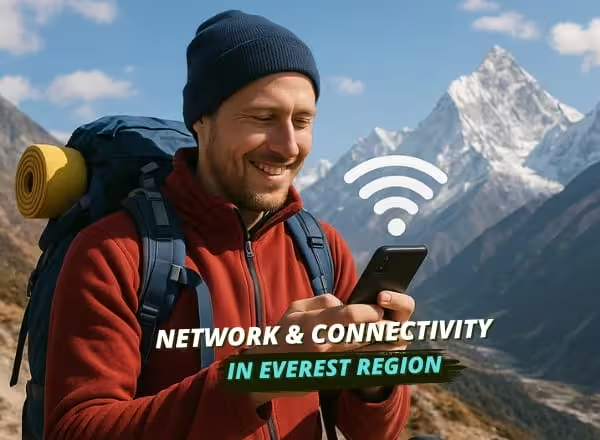
Everest Base Camp internet access is available at most villages along the trek. Mobile networks and satellite Wi-Fi have reached many areas between Lukla and Gorak Shep.
You don’t have to worry. You can send messages, check the weather, contact your family, and be updated about things.
In this guide, you will know everything you need to know about staying connected on the trail. You'll learn which SIM card works best, and what the Wi-Fi costs are at each village. You'll also understand power challenges and charging options.
But to be honest, the internet on the Everest Base Camp trek destination is not like home. However, it serves its purpose.
Connections get weaker and more expensive as you climb higher. Service cuts out during bad weather. Altitude is always a risk, not just for the internet but there will definitely be WI-FI as this is the 21st century.
Not Total Isolation, But Not the City Either
Thirty years ago, Everest trekkers had no phones. They had no internet. They walked into complete silence.
But today it is different.
Mobile towers now reach many villages on the trail. Satellite dishes bring internet to tea houses. You can send a message from 17,000 ft.
This change brings safety. You can call for help in emergencies. You can check the weather forecast. You can tell your family that you're safe.
We also hope that you are prepared for rough risks, as the internet here is slow. It cuts out often. Some days it doesn't work at all. Make sure you are prepared.
Think of it as a backup tool. Not your main connection to the world.
Don’t worry, you will love the mountains even if there is no internet. It offers peace.
You might not get internet with quick speed or high mbps but you won’t be isolated either.
Why Modern Connectivity Changed Trekking ?
Old expeditions carried radios. If we go on depth ,they sent letters that took weeks to arrive. Communication was hard.
Moving forward, things have changed. Now, you can video call from Namche Bazaar. You can post photos from Tengboche.
You can work remotely from Dingboche. Isn’t it amazing ?
Somehow it might change the experience. The question becomes: How much do you want to stay connected?
We'll return to that question later. First, let's understand why internet access matters on this Everest trek.
Why Connectivity Matters on the EBC Trek?
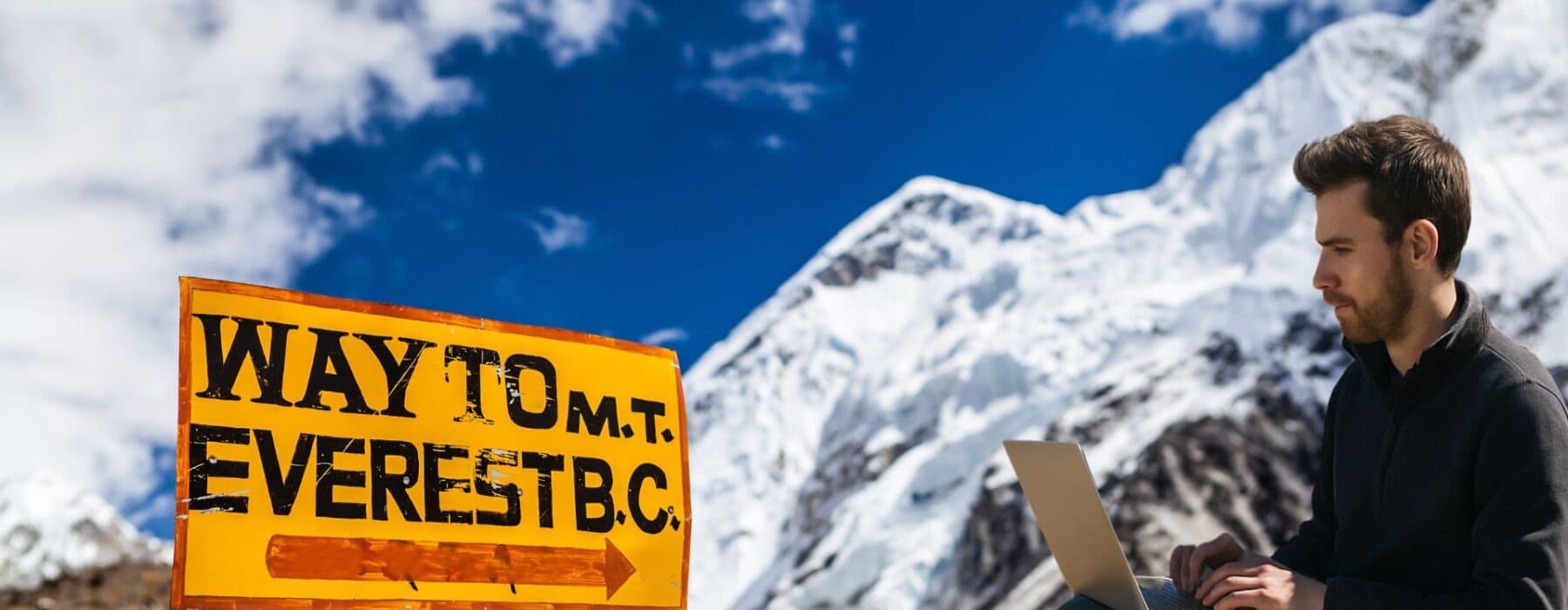
Now that you know internet exists in the mountains, let's talk about why it matters.
Emergency & SOS Communication
This is the main reason why internet matters here.
Altitude sickness can be caught fast. Weather can turn dangerous. Injuries can happen on rough trails.
With internet, you can reach your trekking company. You can contact rescue services. You can check your travel insurance details.
Our Mountain Routes team are always available and concerned for your safety.
Don’t worry, we got you !
GPS, Weather Checks, and Navigation
Your guide knows the way. But having your own maps is the best.
Apps like Maps.me work offline. But downloading updates requires the internet. Checking weather forecasts needs a connection, too.
The weather in the Himalayas changes fast. A clear morning can become risky by afternoon. Real-time weather data helps you make smart choices.
GPS tracking lets your family see where you are. Some trekkers use it for peace of mind.
Family Updates & Remote Work Check-Ins
Your family wants to know you're safe. A quick message every few days gives them comfort.
Some trekkers work remotely. They need to check emails. They need to join short calls. The internet makes this possible in lower villages. This is why you need internet.
We just want to say, don’t get your hopes high.
Mental Comfort for Trekkers
It is the sense of comfort that the internet makes you feel. Imagine if you are a solo trekker and you lost your way. Wouldn’t it make you feel safe knowing you have internet? Or if you are a first-time Himalayan trekker, it gives you the sense of safety knowing you can be seen and heard.
Note: The key is balance. Use the internet when you need it. Reserve it for emergencies.
Your Connectivity Options Explained
SIM Cards, Wi-Fi & Mountain ISPs
You have two main options for internet on the EBC trek. Local SIM cards and lodge Wi-Fi. Each has pros and cons.
Many trekkers use both.Let's talk about mobile SIM cards.
Local SIM Cards
Nepal has two main mobile networks. Ncell and Nepal Telecom (NTC). Both offer coverage on the EBC route. But coverage varies by altitude.
Ncell
Ncell is a private company. Many trekkers prefer it because the speeds are often faster. Coverage reaches most major villages up to Gorak Shep.
You can buy Ncell SIM cards in Kathmandu. Tourist areas like Thamel have many shops. Bring your passport photo and passport copy.
A 25GB package costs around $10-15. This should last your whole trek if you use it wisely.
The other major network provider is NTC.
Nepal Telecom (NTC)
NTC is the government network. It has wider coverage in remote areas. Some trekkers say NTC works better above Namche.
Like Ncell, NTC SIMs are also available in Kathmandu. The process is the same as Ncell. Bring your documents.
Prices are similar to Ncell. Data costs about the same. Likewise, there are two other 2 Internet Service Providers:
Everest Link
Everest link is one of the popular regional Wi-Fi provider with hotspots in most tea houses and lodges along the route . It is available even where mobile signal is poor.
You will find affordable prepaid data packages and most consistent above Namche. If required call Everest Service Provider and get more details.
Airlink (Nepal Airlink)
Another solid local Wi-Fi option that is helpful in covering many villages in the Everest region is Airlink (Nepal Airlink ) . They offer you similar prepaid plans and growing reliability like all of the above internet service providers.
Now we will guide you for how coverage breaks down by altitude below :
Coverage Zones
Lukla to Namche have good 4G coverage with both networks. Signals are strong. Speeds are good.
Tengboche to Dingboche have 3G or 4G. Service gets okey coverage. But some areas have no signal.
Likewise, Lobuche and Gorak Shep have basic 2G or 3G. Don't expect fast speeds here. But, calls work better than data.
Everest Base Camp itself has very limited signal. Just be mentally prepared that you are not on your home.
Where & When to get your SIM for Everest ?
You can buy your SIM in Kathmandu. Make sure you do this before you fly to Lukla.
Lukla has SIM cards too. But shops may run out during busy season. Kathmandu gives you more options.
Note: Don’t forget to check if the SIM works properly or not.
Now let’s see about another option that is lodge Wi-Fi.
Lodge Wi-Fi & Paid Services
Most tea houses offer Wi-Fi. But it's very expensive in higher villages.
Lets talk about tea House Wi-Fi Reality
In Lukla and Phakding, some lodges offer free Wi-Fi. Speeds are okay for messaging.
But above Namche, you have to pay for Wi-Fi. Prices range from $3 to $10 per day. Higher you go, more you pay.
Cost vs Altitude in Everest
Do you know why Internet gets expensive as you climb higher ?
Fuel costs more at altitude. Generators run the internet equipment. Fuel must be carried up by porters or yaks.
Less people stay in high villages. So, lodges have less customers to split costs.
Technical challenges increase with altitude. Equipment breaks more often. Repairs cost more. A night in Lukla, internet might be free. But , night in Gorak Shep, it might cost $10.
This is normal just don't get frustrated. You're in one of the most remote places on Earth. Now you know your connectivity options. Let's see what internet looks like at each village.
Internet Availability by Village
Let's walk through the trek village by village. Here's what to expect for internet at each stop.
Lukla & Phakding
Lukla is your starting point and has good mobile coverage. Both Ncell and NTC work well here. Many lodges offer free Wi-Fi. Some charge $2-3 per day. Speeds are decent for the mountains. You can make calls easily. Data works for messaging and light browsing.
Phakding is your first night on the trail. It's lower than Lukla. Mobile signals work well.
Wi-Fi is available at most lodges. Some include it free with your room. Others charge a small fee.
This is your last chance for reliable, affordable internet for a while.
From Phakding, you climb to the biggest town on the trek.
Namche Bazaar
Namche is the biggest town on the trail.Mobile coverage is strong here.
Both Ncell and NTC work well. 4G speeds are available in parts of town. Many lodges offer Wi-Fi and prices range from $3-5 per day. The internet is better here than anywhere else on the upper trail.
After Namche Bazaar , the trek gets higher and more remote.
Tengboche & Dingboche
Tengboche is a home to a famous monastery.
Mobile coverage exists but it's quite weaker. NTC often works better than Ncell here.
Lodge Wi-Fi costs $5-7 per day and speeds are slower than Namche. Expect delays loading pages.
Dingboche is a key acclimatization stop.
Mobile signals here are weak. Some areas have no coverage at all.
Wi-Fi is available at lodges for $5-8 per day. Service depends heavily on weather.
Make sure you don't plan important calls from Dingboche. The connection may not hold. To be honest, the final villages before base camp have even less connectivity.
Lobuche & Gorak Shep
Mobile coverage is good here. NTC might work in some places but Ncell is hit or miss. Lodge Wi-Fi costs $8-10 per day. Speeds are very slow.
Pages take minutes to load.
Note :Use the internet only for essential messages here. Gorak Shep is your last village before base camp.
This is one of the highest settlements on Earth. Internet here is a luxury if you find any.
But most of the time you are out of luck. Mobile signals barely work. You might catch a signal only if you climb to a high spot.
Lodge Wi-Fi can cost $10 per day. Service is extremely limited. Many days it doesn't work at all.
Don't count on the internet in Gorak Shep. Consider yourself lucky if it works.
From Gorak Shep, you make the final push to Everest now.
Everest Base Camp
Everest Base camp trek has no Wi-Fi. There are no tea houses here. Just tents and prayer flags.
Some climbers report getting weak mobile signal. But this is rare. Just don’t expect your phone to work at this height.
Enjoy the chills and the chaos in your heart and mind. This is the moment to be fully present. Put the phone away. Take in the achievement.
Now, let's talk more about what internet actually costs and how it performs.
Costs, Speed & Limitations
We know you are unknown about the details, but we will do our best to cover your curiosities.
Price Increase with Altitude
We touched on this earlier. But let's be clear about costs.
The internet in Kathmandu is cheap or free. The internet in Lukla is cheap. Internet in Namche is affordable. This is all because of the height.
Internet above Namche gets expensive fast. We know you need internet for family updates and safety, but it is what it is. Not just cost, speed is another challenge you'll face at Everest.
Speed Inconsistency
Speed varies wildly in the mountains.
Namche might give you 2-3 Mbps on a good day. That's enough for messaging and email. Dingboche might give you 0.5 Mbps. Loading a webpage takes time.
Gorak Shep might give you barely anything. If it connects at all.
It is all because of weather. If there are clear skies the connection is good but if not clouds and snow here slows everything down.
Internet availability in Tabular form
Location | Altitude(m) | Wifi Cost | Wi-Fi Signal | Mobile Service |
|---|---|---|---|---|
Phakding | 2610 | USD 5-6 (Unlimited) | Good | NTC, Ncell 2G-3G |
Namche Bazaar | 3440 | USD 10-15(Unlimited) | Very Good | Ncell 3G |
Tengboche | 3810 | USD 5-6 (per hour) | Poor | Ncell 2G |
Periche | 4371 | USD 7 (Unlimited) | Good | Ncell 3G |
Dingboche | 4410 | USD 7-10 (per hour) | Poor | Ncell 2G |
Lobuche | 4910 | USD 10 ( per hour) | Very Good | Ncell 2G |
Gorakshep | 5140 | USD 12 (per hour) | Very Good | Ncell 3G |
Everest Base Camp | 5364 | Unavailable | Unavailable | Ncell 3G |
How is Satellite Dependency at Higher Camps?
There is no denying that most high-altitude internet runs on satellite connections.
Signals travel a long way from this, which creates delays. If you haven’t heard, the term is called latency.
You'll notice this on video calls. There's a lag between speaking and hearing responses. Web pages load in chunks. Videos won't play properly.
This is just how satellite internet works.
Another factor that affects your connection speed: other people.
Crowd Impact on Bandwidth
October and November are peak trekking months. Hundreds of people walk the Everest trail daily.
Everyone wants internet . This creates a mass. Think of it like rush hour traffic. Too many users, not enough bandwidth. March and April have the same issue. These are the other peak months.
But if you trek in off-season, the internet is often better. Fewer people share the connection.
The Internet is only useful if your devices have power. Let's talk about electricity now.
Power & Charging Challenges
You can use several methods to overcome these digital problems. Power access changes as you climb higher.
Charging Availability in Tea Houses
Most tea houses let you charge devices. But not for free above Namche.
Lower villages might include charging for your room. Higher villages charge per device. It is important that you bring your own cable.
Just like the internet, charging has a price tag. You can carry powerbank for the best use.
Cost per Device at heights
It is so obvious that charging costs increase with altitude. Just like the internet. Lukla and Phakding might charge $1-2 per device. Or nothing at all. Namche charges $2-3 per device per charge.
Dingboche and above charge $3-5 per device. Gorak Shep can charge $5 per device.
Generators are expensive to run at altitude which is why everything is costly. Even when you pay for charging, electricity isn't always available.
What about Power Cuts & Solar Dependency?
Power isn't constant in the mountains. Many lodges use solar panels. These charge batteries during the day. At night, they run on stored power.
Cloudy days mean less solar charging.
This can lead to power cuts.
Some lodges use generators. But generators are expensive to run.
They're used sparingly. Don't expect 24-hour electricity.
This unpredictable power makes carrying your own backup essential.
Importance of Power Banks
Bring at least one good power bank. Two is better to avoid trouble.
You can charge your power bank in Namche. Get it to 100% during your rest days there.
This backup power is useful for emergencies. If you need to make an urgent call, a dead phone is useless.
So, now you now understand the reality of the Everest Base Camp internet. Let's see more on these topics.
Smart Connectivity Tips for Trekkers
There are several practical tips to make the internet work for you on the trail. These come from experienced trekkers who will help you.
Buy SIM Early
● Get your Nepali SIM in Kathmandu. Don't wait until the last minute.
● Load plenty of credit.
● Load enough data.
● Test everything before you trek.
Once you have your SIM, use it wisely.
Use the The Internet Selectively
You don't need to be online every time.
Check in once a day. Send a quick message to family. Then put the phone away. The mountains deserve your full attention.
Download Offline Essentials
Before you leave Kathmandu, download everything you might need.
Download offline maps. Download your favorite music or podcasts. Download any books you want to read.
Note : Apps like Maps.me and Google Maps help you for offline use
Carry Power Backups
We covered this in the power section. But it needs to be repeated because it is important. Good power banks are essential. They free you from depending on lodge electricity.
Don’t forget to bring charging cables for all your devices. Keep them organized and in your reach.
The final tip for the Everest trek is the most important one.
Manage Expectations
This is the most important tip if you are trekking to Everest: Don't expect the internet to work as it does at home. It won't.
Don't get frustrated when pages load slowly. Don't get angry when Wi-Fi cuts out. You're in the Himalayas.
The fact that the internet exists at all is amazing.
Accept the problems and work within them. Your trek will be much more enjoyable.
Digital Detox vs Staying Connected
We all know the internet is mandatory, but Everest gives you digital detox. It gives you a break from constantly consuming social media.
We have to address the balance between staying safe and staying present.
Balance Between Safety & Presence
Here's the real question: How connected should you be?
Some trekkers go offline completely. They see Everest as part of the adventure. Others stay connected every day. They see it as practical and comforting.
Both approaches are valid. The key is you have to find your balance.
Use the internet for safety. Use it to tell family you're okay. Use it to check whether you need to.
Moreover, live the experience.
Psychological Benefits of Disconnecting
When you're not checking emails, your mind finds peace. When you're not scrolling social media, you're more present.
The mountains have a way of giving life a perspective. It offers you solitude but only if you let it.
A constant internet connection can prevent this shift. It keeps you mentally tied to home. So, walk without checking it. Sit at viewpoints without photographing them.
You might be surprised how good it feels.
The goal isn't total disconnection. It's a mindful connection.
Using the Internet as a tool, not as a distraction
Internet is a tool. Like trekking poles or a headlamp. Use it when you need it and then put it away.
Don't let it become your random scrolling. Don't reach for your phone every time you sit down.
This moment in the mountains? It won't come again.
So, will you have internet access on the Everest Base Camp trek? Yes. You will.
From Lukla to Namche, you'll find a simple connection. From Namche to Dingboche, it becomes limited but usable. From Lobuche to Gorak Shep, it becomes expensive and unreliable.
At Base Camp itself, don't count on any connection. Is this a problem? Not really.
Remember why the internet matters. It exists for safety. It exists for family updates. It exists to help you when you need help. But it doesn't need to dominate your trek. Remember, the best moments on the EBC trek happen offline.
You will love the sunrise over Ama Dablam. The best feeling is when you're standing at Everest Base Camp with tears in your eyes.
The mountains are calling. Your screen can wait.
Everest Base Camp is waiting for you. With or without internet, it will give you the best experience.
No comments yet. Be the first to share your thoughts!