
There are three main ways to reach Everest Base Camp : by trekking after a flight to Lukla, by helicopter, or through a combination of trekking and helicopter travel. Each option offers a different experience depending on your budget, fitness level, and available time
Reaching Everest Base Camp is one of the greatest adventures a person can take in the Himalayas. The camp sits at 5,364 m in Nepal's Khumbu region.
It is surrounded by glaciers, towering peaks, and is also one of the world's highest mountain.
Thousands of trekkers, climbers, and travelers go to this place every year. Their experience depends on the route they choose. This place involves lots of strength physically and mentally.
So, if you choose the wrong route to EBC , this may lead you to altitude sickness.Be very careful because a rushed schedule, overspending that did not need to cost that much can alter your Eveest journey. Here you will know about each option with honest detail on cost, time, difficulty, and experience.
We also have covered permits, safety, and packing so you can plan a well-prepared and enjoyable journey to Everest Base Camp. Everest is the highest peak not just in Nepal but from all over the world. Keep in mind , it requires quite a preparation then other places. To reach here,here are three main ways.
The first is the classic trek
It follows a trail from Lukla through Sherpa villages and high mountain passes over 12 to 14 days.
The second is a helicopter tour.
It departs from Kathmandu and reaches EBC in a single day.
The third is a combined approach
You have to fly to Lukla and then trek to base camp over 8 to 12 days.
Each option serves a different schedule, budget, and level of physical readiness.
Ways to Reach Everest Base Camp
Trekking to Everest Base Camp
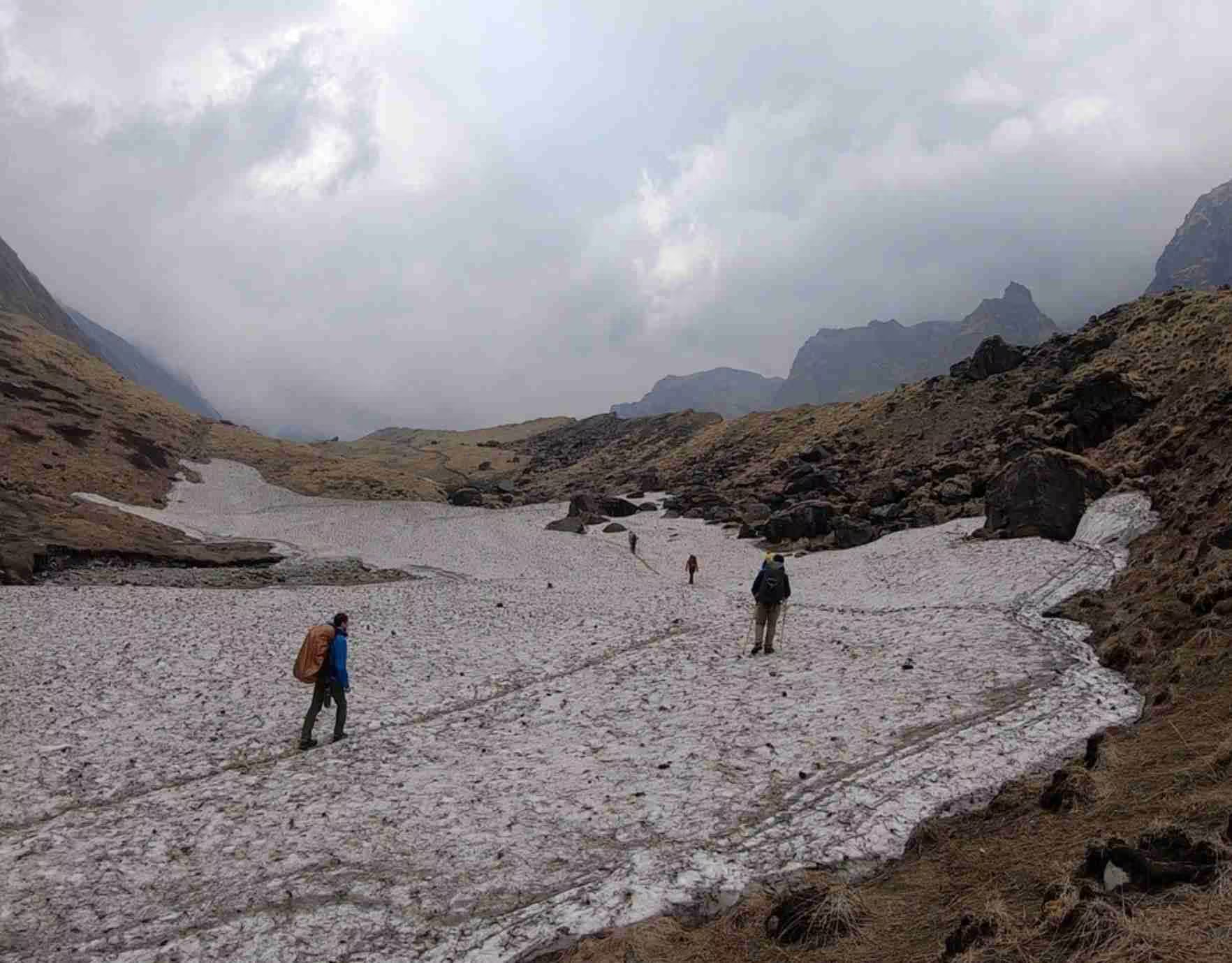
The classic EBC trek is the most popular way to reach base camp. It follows a well-travelled trail from Lukla through the heart of the Khumbu region.
Along the way, you pass through Sherpa villages, cross suspension bridges over glacial rivers. The most beautiful part is you walk beside some of the tallest peaks on earth. It makes you feel like a very tiny creature in this universe.
The route gives you a ground-level experience of the Himalayas that no flight or rotor blade can give you.
Route
Lukla to Namche Bazaar to Tengboche to Dingboche to Lobuche to Gorak Shep to EBC
Duration
It takes 12 to 14 days for a standard round trip. Shorter 10-day options also exists but it leaves you little time for acclimatization. This might cause you a risk.
Difficulty and altitude:
The journey is moderate to challenging. The altitude is the main challenge here, not the steepness. Most paths are clear and well-marked throughout. But still a difficult.
The trek begins with a 35 minute flight from Kathmandu to Lukla. From Lukla, you walk toward EBC for days. You keep on gaining altitude.
Each day ends at a teahouse where you rest, eat, and recover for the next stage.
Life on the Everest trail has its own steady rhythm. You eat dal bhat, noodles, and hot soup in small dining rooms with strangers. You share stories about the mountain and learn about them.
Sherpa guides point out hidden trails and assists you in many ways.
This cultural layer is what sets the EBC trek different from any other high-altitude route in the world.
Tips for the EBC Trek
- The perfect time to trek is in spring (March to May) or autumn (September to November). This time has stable weather and clear mountain views.
- You have to hire a licensed guide and a porter. They manage logistics, know the trail, and keep you safe at altitude.
- Make sure you pack thermal layers, a warm sleeping bag, trekking poles, and high-SPF sunscreen. This will protect you from freezing\.
- You have to get your TIMS card and Sagarmatha National Park permit in Kathmandu before the trek begins. Don’t forget it even by mistake.
- Walk at a slow and steady pace each day. Drink at least 3 liters of water and rest fully each night.
2. Helicopter to Everest Base Camp
A helicopter tour is the fastest route to Everest Base Camp.
If you are someone who have very limited time but still want to see the Himalayas from close range, helicopter is for you.
Most tours depart from Kathmandu in the early morning and return by midday. This is the most effective medium for full EBC experience within a single day.
Duration: 1 to 2 days.
A one-day tour leaves Kathmandu early and returns by afternoon.
Your two-day options include an overnight stay at a high-altitude lodge.
Cost:
Regarding your costs, shared tours cost roughly $1,000 to $1,500 per person.
Private charters range from $3,500 to $5,000 or more. Prices shift by season and group size.
Contact Mountain Routes for more accuracy.
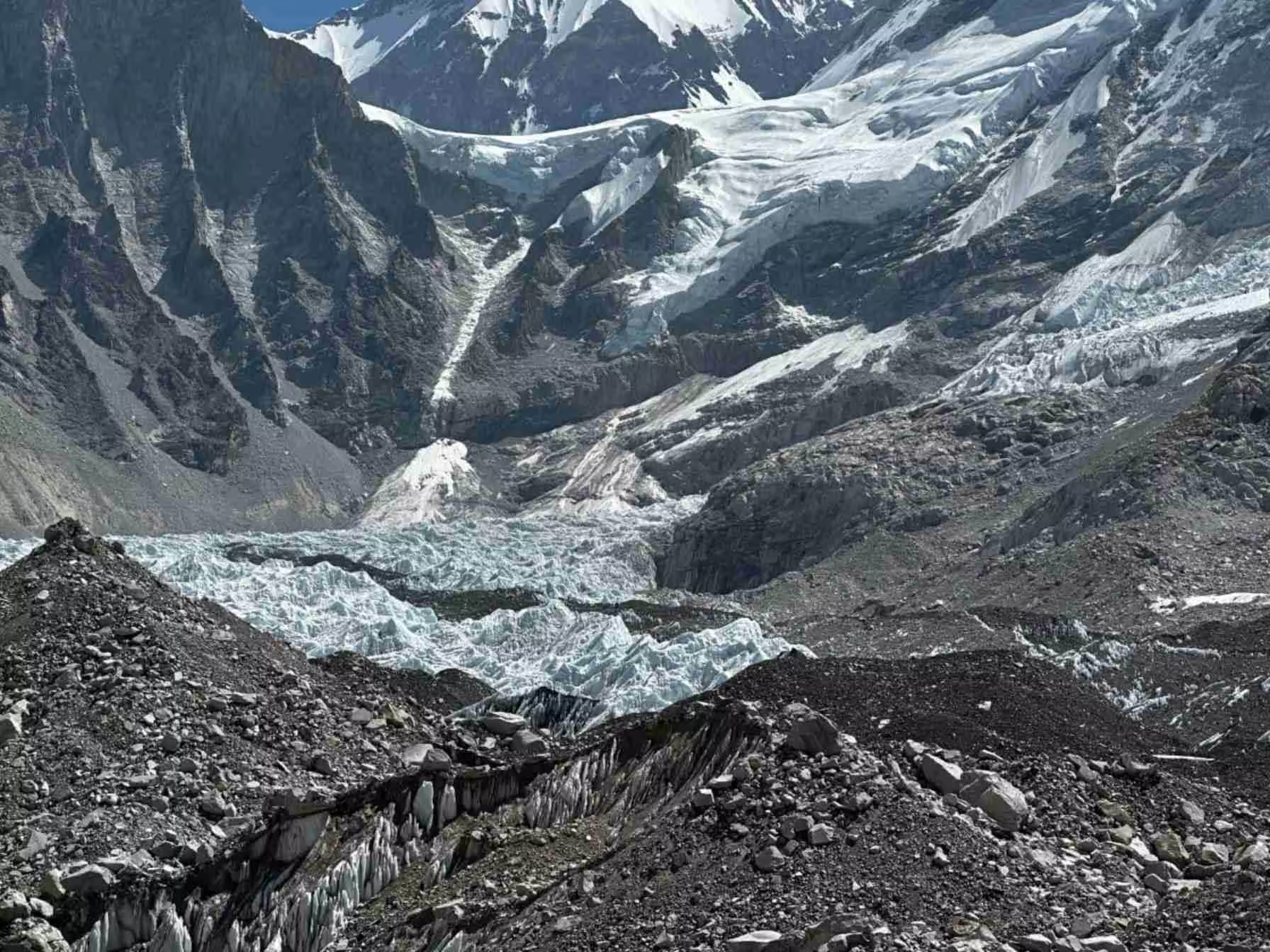
The flight rises above Kathmandu's valley and heads north into the high Himalayas. Below, you will love the view of the Khumbu Glacier, the icefall, and the ridgelines of Everest and Lhotse.
Most tours land at Kala Patthar (5,545m) or at EBC . This is for photographs and a short walk. Some routes include a breakfast stop at a mountain lodge. It gives you relaxed and memorable element to the Everest trip.
But remember, a brief stop at high altitude can still affect the body. Altitude sickness does not spare helicopter passengers.
So ,moving slowly at every high stop and returning to lower elevation is the safest option for you.
Safety and Weather Tips for Helicopter Tours
- Book only with a licensed and reputable operator. Make sure you check reviews and safety records before booking your Everest Trek.
- Helicopter flights depend entirely on weather. You have to keep flexible travel dates to avoid last-minute cancellations. Better safe then sorry.
- Move slowly at every high-altitude stop. Symptoms of altitude sickness can appear within minutes. The weather doesn't spare anyone at all.
- Confirm exactly what the price includes like fuel surcharges, breakfast, landing permits, and insurance. Everything should be transparent.
3. Flight to Lukla (Gateway to EBC Trek)
Lukla is the starting point for the EBC trek. Most of the trekkers reach it by flight. Tenzing-Hillary Airport sits at 2,845 m on the edge of a cliff in the Solukhumbu district.
Its short, sloped runway and the mountain walls on either side make it one of the most talked-about small airports in the world.
Despite its reputation, it handles hundreds of trekking flights every season without issue.
Note: Lukla airport is also one of the most dangerous airport in the world. Yet , it is one of the adventurous way.
Flight Time
It takes about 35 minutes from Kathmandu. The path runs directly over the Himalayan foothills, and the mountain views from the plane window are breath-takingly beautiful.
Cost
A round-trip flight from Kathmandu to Lukla costs around $250 to $350 per person. Prices shift by season and airline.
For more accurate pricing you can contact Mountain Routes.
Note : Weather delays are the most common issue at Lukla Airport.
Fog, cloud cover, and afternoon winds can keep flights late for a full day or more. This happens frequently during transition seasons between spring and monsoon.
That’s why we advice you to book morning flights. Add at least one buffer day in Kathmandu. Always carry essential items in hand luggage in case, checked bags are delayed.
Some trekkers avoid the Lukla flight entirely by driving to Salleri or Phaplu and trekking overland to Lukla.
This adds two to three days to the journey but removes the risk of flight delays. It also passes through lower-altitude villages that most EBC trekkers never see on a standard itinerary.
Tips for Flying to Lukla
• It is best to book your Lukla flight at least 4 to 6 weeks ahead. Especially during spring and autumn peak seasons the schedule is hectic.
• Choose morning departure slots. Afternoon winds at Lukla increase the chance of cancellations.
• Pack all essentials like your medication, documents, and a day's clothing in the bag you carry.
• Add at least one buffer day to your Kathmandu schedule incase if there are flight delays.
Comparing the above three Options
You will get different experience no matter which route you choose.
The table below gives a clear side-by-side view to help you decide which option fits your situation best.
Option | Duration | Cost | Experience | Difficulty | BestFor |
|---|---|---|---|---|---|
Trekking | 12-14 days | Budget-friendly | Immersive & adventurous | Moderate-challenging | Adventure seekers |
Helicopter | 1 day | Expensive | Scenic & Luxurious | Easy | Travelers with limited time |
Flight + Trek | 8-12 days | Mid-range | Scenic + adventurous | Moderate | Balanced experience |
Pros and Cons at a Glance
Trekking gives you the most complete EBC experience. The trail takes you through villages, monasteries, and high passes that no flight can access.
But, the trade-off is time: you need at least 12 days, and the physical demands you need are real.
Helicopter tours suit travelers for whom time is the main problem.
You reach EBC in a day and return to Kathmandu by afternoon. The cost is high and your time on the mountain is short. But the aerial view of Everest and the Khumbu Icefall is unforgettable and just magical.
Flight plus trek strikes the middle ground. You fly to Lukla to skip the long overland approach. Then you trek to EBC over 8 to 12 days.
You will still experience the trail, the culture, and the altitude, but within a shorter total schedule than the classic 14-day route.
Cost Breakdown
The figures below cover the main costs for each option.
Trekking to EBC
Lukla flights (round trip) | $250 to $350 |
|---|---|
Sagarmatha National Park Permit | $30 |
TIMS Card | $20 |
Licensed Guide (per day) | $25 to $35 |
Porter (per day) | $18 to $25 |
Teahouse accommodation (per night) | $5 to $20 |
Food and drinks (per day) | $15 to $30 |
Estimated total: $1,200 to $2,500.
Note: It depends on group size, operator, and personal choices along the way.
You can contact Mountain Routes for accuracy.
Helicopter Tour
Shared helicopter tour (1 day ) | $1,000 to $ 1,500 per person |
|---|---|
Private charter | $3,500 to $5000 or more |
Note: Shared tours are the most cost-effective format. A group of four to five passengers splits the total charter cost equally. This is the most clever and effective way to avoid extra budget.
Flight Plus Shorter Trek
Lukla flights (round trip) | $250 to $350 |
|---|---|
Permits (TIMS plus National Park) | $50 |
Guide and porter | Included in most guided packages |
Estimated total: $1,800 to $3,500 for a full guided package. It depends on the duration and operator selected.
Tips for a Safe and Enjoyable Journey
Altitude Sickness Prevention
Altitude sickness is the most serious risk on any EBC trip. It affects trekkers and helicopter passengers alike no matter of what age or physical fitness you are. The condition develops when the body does not have enough time to adjust to the reduced oxygen at high elevation. So, you have to understand how to prevent it. It matters just as much as choosing the right route for your trek.
Let’s see how we can be safe from altitude sickness:
The most effective approach is to ascend slowly. Above 3,000 m, you should not gain more than 500 m of sleeping altitude per day.
A rest day in Namche Bazaar (3,440m) is built into most EBC itineraries for this exact reason. So you can rest and be safe.
Staying well hydrated, avoiding alcohol, and eating regular meals all support the body's adjustment to higher elevation.
• Do not skip rest days. They are part of the safety design of the itinerary.
• Drink 3 to 4 liters of water each day throughout the trek.
• Avoid alcohol above 3,000 meters. It speeds up dehydration at altitude.
• Carry Diamox (acetazolamide) if your doctor recommends it before departure.
• Know the warning signs like persistent headache, nausea, dizziness, and loss of appetite.
Note : Descend immediately if any symptoms worsen. Do not neglect the initial symptoms.
Packing Essentials
Packing light but smart is the key to a comfortable EBC experience.
Temperatures at base camp can drop well below freezing at night, so thermal layers are not optional.
Good footwear, strong sun protection, and a reliable sleeping bag will make a real difference at high altitude. You can check some of the mandatory essentials below:
• Warm down jacket and moisture-wicking fleece base layers
• Waterproof, ankle-support trekking boots (broken in before the trek)
• Trekking poles for descent sections and rocky terrain
• Sleeping bag rated to -20 degrees Celsius for teahouse use
• Sunscreen (SPF 50 or higher) and UV-protective sunglasses
• Personal first aid kit with blister care, pain relief, and basic medicines
• Portable water filter or purification tablets for trail use
• High-energy trail snacks: energy bars, nuts, and dried fruit
Best Seasons to Visit for Everest Base Camp
Unlike your packing lists, costs and other things, your seasons is equally responsible for your Everest trek.
The season you choose directly affects your safety, visibility, and experience on the trail.
You might not know this but Spring and autumn are the two windows that offers you the best conditions your EBC travel.
Spring (March to May)
You will see clear skies, moderate temperatures, and blooming rhododendrons on the lower trail. This is the one of the busiest season .
It is also the main Everest climbing window, so Everest base camp is active with expedition teams mainly at spring.
Autumn (September to November)
The monsoon clears by late September, leaving the air clean . It then offers very sharp and beautiful views.
Trail conditions are excellent and temperatures are stable. This is the second most popular season for EBC trekkers after spring.
Winter (December to February)
The trail is quiet and uncrowded. But temperatures fall sharply above 4,000 m. Snow can make high sections slippery and physically demanding.
It is the off-season and normally challenging.
Monsoon (June to August)
Monsoon at Everest brings heavy rain, persistent cloud cover. The route gets all wet with leeches on lower trails.
This makes this the least suitable period to trek.
Note: Most trek operators do not run EBC treks during peak monsoon months.
Travel Insurance and Emergency Planning for your trek
Travel insurance is not optional on a high-altitude trek. It is mandatory.
A helicopter evacuation from EBC to Kathmandu can cost $5,000 or more without coverage. Mountain routes requires proof of valid insurance before your trip starts.
Your policy must include high-altitude trekking coverage up to at least 6,000 m and helicopter evacuation.
Standard travel insurance policies often exclude these.
Read the below given policy terms carefully . Confirm your coverage before you leave home.
• Save emergency contacts before departure: your trekking agency, guide, and the nearest hospital.
• Register your trek with your country's embassy in Kathmandu.
• Locate the nearest Himalayan Rescue Association clinic on your route.There are many posts that are active in Namche Bazaar and Pheriche.
Frequently Asked Questions
Can I do EBC in less than 12 days?
A 10 day itinerary is possible but there is high risk of altitude sickness. Shorter schedules leave very little time for acclimatization at key stops like Namche Bazaar and Dingboche.
Most experienced guides and medical professionals recommend a minimum of 12 days.The slow pace allows the body to adjust safely.
Rushing the ascent is the most common reason trekkers turn back before reaching base camp.
Is a helicopter return from EBC worth the cost?
Many trekkers choose to walk up to EBC and fly back to Lukla or Kathmandu by helicopter. This saves 5 to 6 days of downhill walking . It also reduces strain on the knees and joints on the descent.
A helicopter return from Lukla costs an extra $200 to $350 per person. For trekkers with tight return flights or those who feel worn down at the end of the trip, it is a practical and a worth it option.
Do I need a guide for the EBC trek?
Nepal's government has made new trekking regulations in 2023 . The rule is that if you are visiting national parks or trekking areas you have to travel with a licensed guide. If you are with a guide you are legally safe.The guides manage permits, navigate route changes, communicate in Nepali with local communities. They are also quick for medical situations.
What permits are required for Everest Base Camp?
You need permits listed below to complete EBC trek:
• Sagarmatha National Park Entry Permit
It is available at the park gate in Monjo or we can manage it for you.
The cost is around $30.
• TIMS Card (Trekkers' Information Management System)
It is available at the Nepal Tourism Board office in Kathmandu.
The cost is around $20.
• Khumbu Pasang Lhamu Rural Municipality Entry Fee
This permit is collected at checkpoints in Lukla.
The cost is approximately $1 per day.
Note: Mountain Routes can arrange all these three permits for you before your departure from Kathmandu.
Conclusion
Everest Base Camp is reachable by three routes. Each one suits a different traveler. You can choose the classic 12 to 14 day trek. It gives you the beautiful experience of the Khumbu region.The trails, the people, and the mountains are worth to look at.
The helicopter tour offers you a close-up view of Everest in a single day. You do not need a long itinerary and no physical build-up is required. The flight with trek option sits between the two. It gives you the real trail experience within a short period of time.
But at first what mattes you is the right choice you should make.
Means to say, it comes down to three factors like how much time you have, what is your budget, and how prepared you are physically for this trek.
All the three routes leads to the same destination. The difference is in how much of the journey you experience along the way.
You can connect with mountain routes for your Everest journey.
No comments yet. Be the first to share your thoughts!