
Introduction
The Food Culture in the Everest Region is a blend of traditional Sherpa cuisine, authentic Nepali dishes, and international meals designed to fuel trekkers throughout their journey. Along the Everest Base Camp trek trail, teahouses serve nutritious, high-energy meals that help hikers cope with long walking days and high-altitude conditions. The most popular dish is Dal Bhat, a traditional Nepali meal of rice, lentil soup, vegetables, and curry that is often served with unlimited refills. Trekkers can also enjoy Sherpa stew, Tibetan bread, momos, thukpa (noodle soup), fried rice, pasta, potatoes, pancakes, eggs, porridge, and yak cheese. As the altitude increases, menus become simpler and food prices rise because all supplies are transported by porters, yaks, or helicopters. Staying hydrated and eating carbohydrate-rich meals is highly recommended, as they provide the energy needed to tackle the challenging trails while helping your body adapt to the high altitude.
Food culture in the Everest Region will surprise you in every way possible. Everest is a high-altitude trek, but still, the food service is more than enough.Most people think about the mountains, the trails, and the altitude. But you just cannot ignore food on this journey.It is said that you are what you eat. Food gives you energy and keeps you moving. It keeps you warm. You will get help for your body to recover after long days of trekking. This guide covers everything you need to know about food on the Everest trek. You will learn what dishes are available, how much they cost, and how to eat well for better getting better on the trail on the trail. You will also know what affects your body on the trek. Afterall we all know, health is wealth.
Delve more into us.
Food culture in the Everest Region
Food in the Khumbu region is shaped by altitude, weather, and location. Villages like Namche Bazaar are around 3,440 meters. There are higher places like Gorak Shep, which is at 5,140 meters. You will find the conditions very different at each point.
And talking about the Khumbu region, food tells you a different story . It tells you the story about the people who live there.
You will find the Sherpa community has lived at high altitude for generations. Their food reflects their lifestyle, climate, and culture. You will get to eat at local tea houses, try traditional dishes, and share meals with other guests from all around the world.
At lower altitudes, fresh vegetables and more options are available. As you go higher, the food options get simpler.
Tea houses rely on ingredients that can be carried up by porters or yaks. Trust us, the way is quite difficult.
These problems limit the food options, but you will also get to know a unique food culture and have a entirely new experience from your own culture.
Sherpa food availability
If you are going to Everest, no wonder you have heard about the Sherpa people. They have their own way of survival and focus on local meals.
Traditional Sherpa food uses local grains, potatoes, and dried meats. Today, tea house menus also include dishes that make it easy for trekkers who are from different countries.
You will find pasta, pizza, and even apple pie on some menus in Namche Bazaar.
It looks like their own food. But you know what, the core of the food culture remains Sherpa and Tibetan-influenced and makes you feel amazing.
Note: At high altitude, temperatures can get extremely cold and below freezing at night. Hot meals and warm drinks are not a luxury here.
They are a daily need. Tea houses cook food fresh and serve hot portions to keep trekkers warm and energised. You might find the costs quite different, as it is high-altitude trekking and things are really hard to carry here.
Staple foods in the Everest Region
Everest lies at a high altitude . Things are really difficult to take here but still, the options that you get to eat will literally surprise you.
You will see the wide variety of food options below:
Dal Bhat ( The Power Meal )
Dal Bhat is the most popular meal on the Everest trek. It is eaten by locals and trekkers on the trek. The name means lentil soup and rice. But a full Dal Bhat plate is much more than that.
It is a lifesaver.
You will get steamed rice, lentil soup (dal), a vegetable curry, and pickled vegetables called achar on your plate. Many tea houses also add a small portion of saag (cooked greens) or potato curry.
You know what the best part is?
In most tea houses, Dal Bhat comes with free refills. You can eat as much as you want for one set price. This makes it the best value meal on the trek.
Why is it Dal Bhat power,24 hours?
It rhymes, but there is a story behind when trekkers say "Dal Bhat power, 24 hour."
The high carbohydrate you get after eating gives you long- lasting energy. The warm soup helps with hydration. And the variety of vegetables gives your body important nutrients.
You can walk for long hours without even resting.
The good point is that Dal Bhat is safe to eat. It is always cooked fresh and served hot.
At higher altitudes where food safety matters, Dal Bhat for you is important.
Sherpa Food ( Warm and hearty meals)
The Sherpa people have made their own food culture. They have been living for ages and have their own food. It is good for cold, high-altitude conditions.
Their traditional dishes are rich in calories and easy to digest. As a trekker, you will feel the difference in your body immediately.
Let’s have a look:
Sherpa Stew (Sherpa Thukpa)
It is a thick soup made with vegetables, noodles, and sometimes meat. This food warms you up quickly . It fills you up for hours.
Many trekkers call it their favourite comfort food on the trail because of the energy it provides.
Tsampa
Tsampa is roasted barley flour mixed with butter tea or water. This is also one of the oldest foods in the Himalayan region. Sherpas eat it for breakfast or as a quick snack on the trail.
You may not find it on every tea house menu, but if you are with local families, they still have it regularly.
Potato dishes
Potato dishes are very common. It is because potatoes grow well at altitude. You will find boiled potatoes, fried potatoes, potato curry, and potato soup throughout the trek.
They are cheap, filling, and easy to prepare.
Well, who doesn’t love potatoes?
Tibetan Influences on the menu
The Khumbu region shares a long history with Tibet. And it is also clearly in the food. Many dishes at Everest carry Tibetan roots.
They have become part of everyday life in the mountains.
Let’s have a look:
Momo
You might have heard about Momo. It is very famous.
Momo is either steamed or fried dumplings. They are filled with vegetables or meat. You will find them at most tea houses below 4,000 meters.
They are best eaten fresh and hot and are very yummy to take.
Thukpa
Thukpa is a Tibetan noodle soup. It is cooked with vegetables, broth, and sometimes egg or meat. You will find it warming, satisfying meal after a long day at trekking.
Many trekkers eat Thukpa for dinner at lower stops on the trail. Just add some more spice for your body warmth, and you are good to go.
Tibetan Bread (Tingmo or Chapati)
This is a soft, steamed or flatbread meal. It is served with soup or butter. Some tea houses serve it with honey or jam at breakfast.
It is simple but very satisfying to eat.
Butter Tea (Po Cha)
Butter Tea is a traditional Tibetan drink made with tea, yak butter, and salt. You will have a strong, unusual taste that surprises most first-time trekkers.
But it is also high in calories and fat, which you will find perfect for cold weather and physical activity.
What do trekkers commonly eat at Everest Trek ?
Tea house menus are very important across the trek route. Now you will see the typical breakdown of meals below:
Breakfast
Breakfast at tea houses is filling and often varied. Some of the common options for breakfast includes:
- Porridge (plain, with honey, or with fruit)
- Eggs (fried, scrambled, or boiled)
- Toast or chapati with butter and jam
- Tibetan bread with honey
- Pancakes with honey or maple syrup
- Muesli or granola with warm milk
- Tsampa porridge (at traditional tea houses)
Note : Always eat something before you start walking, even if your appetite is low.
Lunch
Most trekkers eat lunch at a tea house along the trail. It is a good chance to rest, warm up, and refuel. Some lunch options are below :
- Fried rice or noodles
- Vegetable or egg noodle soup
- Pasta with sauce
- Sandwiches (available at lower altitudes)
- Spring rolls or fried momos
- Potato soup
Note : Keep lunches lighter if you still have a long walk ahead. A heavy midday meal can slow you down.
Dinner
Dinner is the main meal of the day on the trek. Trekkers normally eat dinner early.
Popular dinner dishes include:
- Dal Bhat (always the top choice on trek)
- Vegetable curry with rice
- Soups (tomato, vegetable, or Sherpa stew)
- Pasta with vegetables or cheese
- Thukpa (Tibetan noodle soup)
- Boiled or baked potatoes with vegetables
Drinks
Staying hydrated at altitude is very important. Common drinks on the Everest trek menu includes:
- Ginger, lemon, and honey tea (a popular choice for warmth and immunity)
- Butter tea ( high in calories, traditional Sherpa drink)
- Black tea with milk
- Coffee (available but not always good quality above Namche)
- Hot chocolate
- Garlic soup widely recommended for altitude acclimatisation. Many trekkers swear by it at Namche and above.
- Boiled or filtered water (always choose this over cold tap water)
Note: Avoid cold drinks and alcohol at high altitude. Both can speed up dehydration and affect your walking pace on the trail.
Food availability along the Everest Trek
Tea houses are the main places to eat on the trek. You will find the entire trail with teahouses from Lukla to Everest Base Camp.
Most of them serve three meals a day.
At lower stops like Lukla, Phakding, and Namche Bazaar, the menus are large. You will find local dishes, Western comfort food, and even bakeries. The options are more.
If you don’t know this, then Namche has the best food variety on the entire route. Some trekkers take an extra rest day here, and the food options are always a plus point..
As you climb higher through Tengboche, Dingboche, and Lobuche , the food options gets less.
Tea houses focus on simple, warm, carbohydrate-rich meals. The Ingredients are harder and more expensive to bring up. So, please don't expect pizza or salads above 4,000 meters.
We have given the options available below:
Vegetarian options
Vegetarian options are widely available across the route. Most trekkers are advised to eat vegetarian meals at higher altitudes.
This is because meat is harder to store and keep fresh at altitude. The risk of food-related illness is higher with meat dishes at remote, high-altitude stops.
Non-vegetarian options
You will find non-veg options like egg dishes, chicken, and yak meat . They are available at lower altitudes.
If you have never tried than Yak meat is a local speciality here. It is a good protein source.
But as you go higher, stick to vegetarian meals for safety.
Note: Do not forget to tell your preference if you are vegan / vegetarian / non-vegeterian so that the teahouses can plan accordingly.
Cost of food in the Everest Region
To be honest , the price changes as you go up higher . This is not the tea house trying to overcharge you. It reflects the real cost of getting food to remote mountain locations.
Did you know everything above Lukla is carried by foot, by porter, or by yak ?
Fuel, time, and effort all add to the cost. A simple meal that costs $3 to $4 in Kathmandu , the same might cost $10–15 at Gorak Shep.
Let’s see a rough sketch:
Location | Simple Meal (e.g., Dal Bhat) | Tea/Coffee |
|---|---|---|
Lukla (2,840m) | $4-$6 | $1-2 |
Namche Bazaar(3,440m) | $6-$9 | $2-3 |
Tengboche (3,860 m) | $8-$12 | $2-$4 |
Dingboche(4,410m) | $10-$14 | $3-$5 |
Gorak Shep (5,140m) | $12-$18 | $4-$6 |
Note : Prices are estimated and may vary by season and tea house. Contact the owners to know actual price on teahouses.
Hygiene and food safety
We know you are concerned about the food safety on the Everest trek . Why not? Food definitely has a direct effect on your body.
But most tea houses maintain decent hygiene standards. It depends on the conditions.
You can check the major key facts below:
You can always eat freshly cooked food.
Dal Bhat, soups, and noodle dishes are cooked properly and served hot. This is the safest choice. Avoid pre-cooked or reheated food if possible.
Avoid raw foods at high altitude.
Salads, raw vegetables, and unpeeled fruit carry a higher risk of contamination. Wash your hands before every meal.
Be careful with meat above 3,500 meters.
Cold storage is limited at high altitudes. Meat may not be stored or handled properly. If you want to eat meat, eat at lower stops like Namche or Phakding .
Here, the supply chains are more reliable.
Drink safe water only.
Never drink tap water directly. Choose boiled water, filtered water, or water purification tablets. Many tea houses sell boiled water or have a filter system.
Bottled water is available but expensive and creates plastic waste.
Trust your instincts.
If a kitchen looks unclean or a dish smells off, don't eat it. Your health is more important than anything on the trail.
Unique food experiences on the Everest trek
Food on the Everest trek is more than just fuel. You will also be a part of the cultural experience.
Here are a few food moments you may remember on the Everest trek journey:
Eating with locals:
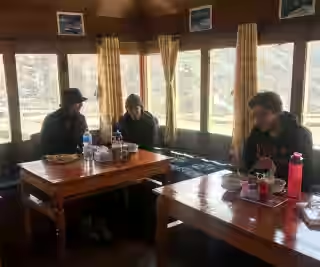
In smaller tea houses, you often share the dining room with local Sherpa families and staff. You will love the stories they tell you over a shared meal .
This gives you a vision about the life in the mountains that no guidebook can offer you.
Trying butter tea for the first time:
Most trekkers are surprised by the taste of butter tea at first. It is salty, rich, and unlike anything they have had before. But give it a try at least once .
It is a cultural tradition worth experiencing and completely new to you.
Bakeries in Namche Bazaar:
You might be surprised, but yes, there are bakeries at 3,440 meters.
Freshly baked cinnamon rolls, apple pie, and bread are available at several spots in Namche. It feels like a small reward to you after days on the trail.
Garlic soup at altitude:
Many trekkers try garlic soup for the first time in Namche or Tengboche. You will find a strong flavour, though. Most of the locals and guides recommend it for acclimatisation.
The warmth and comfort the soup provides are amazing for your body.
Monastery hospitality:
You will enjoy butter tea or tsampa by monks at Tengboche Monastery. This is a rare and memorable cultural moment for you.
You are guests, and guests are gods here.Accept them with gratitude and show some respect to them.
The role of food in your trekking performance
Eating well directly affects how well you trek.
At altitude, your body burns more calories than it does at sea level. Your metabolism speeds up. Your body works harder to keep warm. You need more energy.
Carbohydrates are your best friend at altitude.
Rice, potatoes, noodles, and bread give you steady energy for long days of walking. Dal Bhat is the best meal because it gives you both carbohydrates and protein for your body.
Do not skip meals.
Even if you are not hungry which often happens above 4,000 meters , try to eat something at every meal.
Small, regular portions are better than not eating food. You might not have energy on the trail if you skip meals.
Warm meals matter.
Your body loses heat quickly at altitude. Eating warm food keeps your core temperature up . It also helps your muscles recover.
Choose soups, stews, and hot dishes over anything cold.
Stay hydrated.
Drink at least 3-4 litres of fluid each day. Start with water and supplement with warm teas. Do not drink alcohol and caffeine in large amounts at altitude.
Eat before you start climbing.
A good breakfast gives you energy for the morning trail. Never start a big day of trekking on an empty stomach. Eat proper meals and then start your trek.
Challenges related to food on the trek
Trekking through the Khumbu region is amazing, but the food situation comes with major challenges like:
Limited variety at higher altitudes.
Once you pass Dingboche, your options become quite limited.
But you will find Dal Bhat, noodle soup, and potatoes make up most menus. This can feel repetitive over time, but these simple foods are the best choices.
Appetite loss due to altitude.
Altitude sickness often reduces your appetite. This is a common and natural response. But your body still needs calories. Eat even if you are not hungry.
Dietary restrictions
Vegetarians and vegans are well-cared for on the trek. But those with gluten intolerance, nut allergies, or other food restrictions should plan ahead.
Menus are simple, but make sure you tell them about your being vegan and any allergies if you have any. Carry safe snacks as backup.
Slow cooking times
At high altitude, water boils at a lower temperature. This means food takes longer to cook. Be patient at meal times. A hot meal is worth the wait.Trust us !
Tips for Trekkers to eat smart on the trail
Here are practical tips to help you eat well and stay healthy on the Everest trek:
Stick to vegetarian meals above 4,000 meters.
This is the safest choice for food hygiene at high altitude. Avoid meat as there is storage problem at high-altitude.
Carry your own snacks.
You can carry energy bars, trail mix, chocolate, dried fruit, and nuts . They are great between meals.
Drink plenty of warm fluids.
At least for 3 to 4 litres daily. Ginger tea, lemon honey tea, and hot water are all good choices.
Try to eat Dal Bhat every day.
It is nutritious, filling, safe, and affordable. The free refill policy at most tea houses makes it an excellent value.
Do not skip meals even if you feel less hungry.
Your body needs more energy at altitude. Eat small portions if a full meal seems too heavy.
Order your dinner early.
Tea houses cook for many trekkers at once. Ordering early means you get your food faster and can rest sooner.
Carry water purification tablets or a water filter.
It saves on bottled water and reduces plastic waste on the trail.
Budget carefully.
Food costs increase with altitude. Set aside $25–35 per day for meals and drinks. Keep extra cash for emergencies.
Note : Carry enough cash in Nepali Rupees as ATMs are only available at Lukla and Namche Bazaar.
Conclusion
Food on the Everest Base Camp trek is a unique part you will experience. From a filled plate of Dal Bhat in Namche to a cup of butter tea shared with a Sherpa guide, you will find each meal connecting you to the mountain and its people.
Make sure you don’t skip meals. Eat well, stay hydrated, and respect the local food culture. Your body will thank you, and so will your trekking experience.
Whether you are a first-time trekker or a seasoned mountaineer, the food of the Khumbu region never fails you.
Frequently Asked Questions
What is the best food to eat during the Everest trek?
Dal Bhat is the best meal on the trek. It is nutritious, freshly cooked, and gives you long-lasting energy.
Trekkers who eat Dal Bhat performs better on the trail than any other dishes. At lower altitudes, you can also try momos, Thukpa, and Sherpa stew.
Is vegetarian food available in the Everest region?
Yes. You will find vegetarian food on the entire trek route. Most tea house menus have a strong vegetarian section. In fact, eating vegetarian food is recommended above 4,000 meters.
It is for health and safety reasons. Vegans may find it a little harder, but can manage with rice, vegetables, and potato dishes.
How expensive is food on the Everest trek?
At lower points like Lukla, a meal costs around $4 to $6. Near Everest Base Camp at Gorak Shep, the same meal can cost $12–18. It is because of the altitude.
Budget around $20–35 per day for all meals and drinks.
Is it safe to eat meat during the Everest trek?
Meat is safer to eat at lower altitudes like Lukla, Phakding, and Namche Bazaar. But above 4,000 meters, cold storage is not available, and supply chains are limited.
Most trekking guides recommend eating vegetarian meals at high altitude. It reduces the risk of food-related illness.
No comments yet. Be the first to share your thoughts!