
The 4-day Poon Hill Trek offers one of Nepal's most rewarding short trekking experiences.
The budget-friendly route costs approximately half the price of the standard 8-day Ghorepani Poon Hill Trek while delivering the same spectacular sunrise views.
In just four days, trekkers climb through lush rhododendron forests, traditional Gurung and Magar villages, and reach the iconic Poon Hill viewpoint at 3,210 meters.
The trek suits both first-time trekkers and experienced hikers. The moderate difficulty level creates manageable challenges without requiring technical skills or extreme fitness. Daily walking times range from 3-6 hours over well-maintained trails. The famous Ghorepani to Poon Hill distance measures only 1.4 kilometers, making the final sunrise climb accessible for all fitness levels.
Panoramic views from Poon Hill include Annapurna South (7,219m), Machapuchhre (6,993m), Dhaulagiri (8,167m), and Hiunchuli (6,441m).
The sunrise moment transforms white peaks to gold as first light strikes the Himalayan giants. This spectacle alone justifies the entire journey. Combined with cultural experiences in mountain villages and comfortable tea house accommodation, the 4-day Poon Hill Trek delivers exceptional value for budget-conscious travelers.
Why Choose the 4-Day Poon Hill Trek
Budget-Friendly Adventure
The condensed 4-day itinerary significantly reduces costs compared to longer Ghorepani Poon Hill routes. Total expenses range from $350-375 per person including permits, accommodation, meals, transportation, and guide services. This pricing makes Poon Hill accessible to budget travelers, students, and those with limited vacation time. The short treks near Pokhara category includes Poon Hill as one of the most economical options.
Time-Efficient Route
Four days provides sufficient time to experience all trek highlights without excessive travel commitment. The route eliminates unnecessary rest days while maintaining comfortable daily walking distances. Many trekkers complete this journey during long weekends or short vacation breaks. Starting from Pokhara means minimal travel time to and from trailheads.
Beginner-Friendly Terrain
The moderate difficulty level welcomes trekkers with basic fitness. No technical climbing or dangerous exposure exists. Stone staircases at Ulleri present the main physical challenge with approximately 3,200 steps. However, taking frequent breaks makes this section manageable. Well-marked trails reduce navigation concerns. Tea houses every few hours provide rest opportunities and refreshments.
Rich Cultural Experience
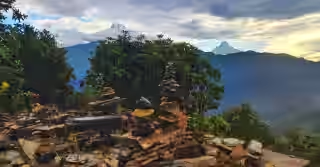
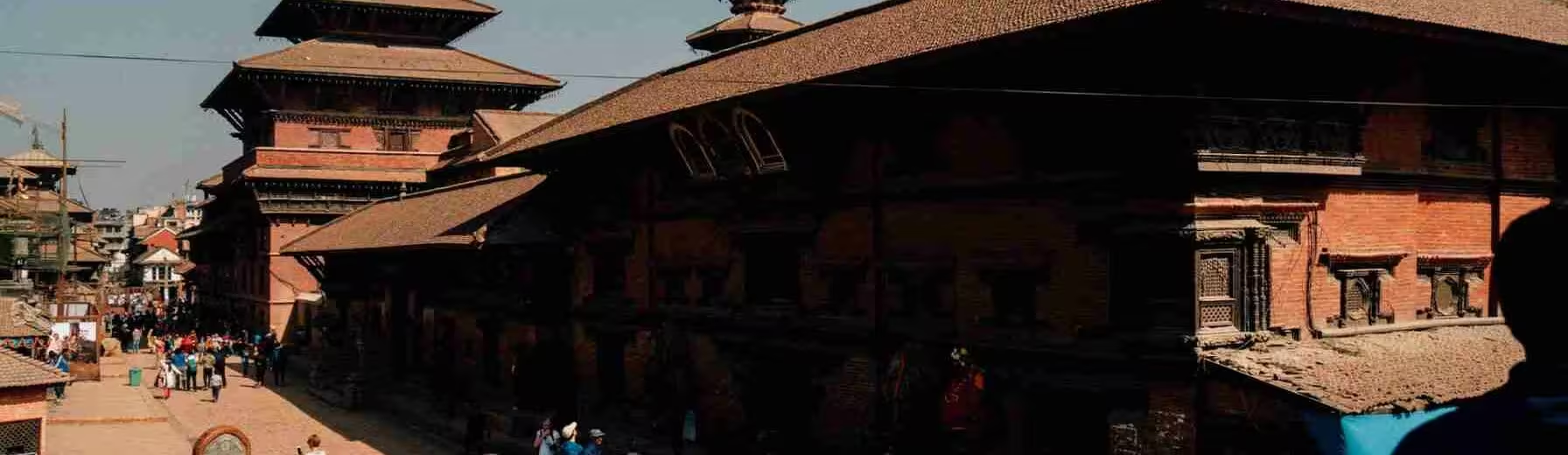
The route passes through authentic Gurung and Magar villages where traditional lifestyles continue. Ghandruk village showcases classic stone architecture and cultural museums. Local families operate tea houses providing genuine hospitality. Evening conversations around dining room fireplaces create cultural exchange opportunities. Home-cooked meals feature traditional recipes passed through generations.
Spectacular Mountain Views
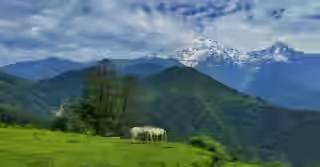
Despite lower maximum elevation compared to high-altitude treks, Poon Hill provides outstanding Himalayan panoramas. The viewpoint's strategic position offers unobstructed sightlines to major peaks. Dawn light creates constantly changing colors on snow-covered summits. Clear autumn and spring days reveal dozens of peaks above 6,000 meters. Photography conditions peak during sunrise hours.
Complete 4-Day Poon Hill Trek Itinerary
Day 1: Pokhara to Nayapul (1,070m), Trek to Ulleri (2,050m)
- Elevation: 850m to 1,070m (drive), then 1,070m to 2,050m (trek)
- Distance: 42km drive, 10-12km trek
- Travel Time: 1.5 hours drive, 5-6 hours trekking
- Accommodation: Tea house in Ulleri
The adventure begins with an early morning drive from Pokhara to Nayapul. Private jeeps take approximately 1.5 hours following the main road toward Baglung. The route passes through riverside settlements, terraced farmland, and small market towns. Views of the Annapurna range appear in the distance on clear mornings.
Nayapul sits at 1,070 meters where the Modi Khola river flows through a valley. This bustling trailhead town features tea shops, trekking gear stores, and permit checkpoint offices. After organizing final permits and meeting guides, the walking begins.
The trail from Nayapul follows a stone-paved path alongside the Modi Khola river. The first 1-2 hours pass through subtropical forest and small settlements. The gradient stays gentle initially. Tea shops appear every 30-40 minutes offering refreshments. The atmosphere feels lively with locals commuting between villages and trekkers beginning journeys.
After reaching Tikhedhunga at 1,540 meters, the character changes dramatically. The famous Ulleri staircase begins, climbing steeply through forest. This sustained staircase section gains approximately 500 meters elevation over 3,200 stone steps. The climb takes 1.5-2.5 hours depending on fitness and pace. Many trekkers find this the trek's most challenging section.
The stairs pass through dense rhododendron and oak forest. During March and April, blooming rhododendrons create spectacular red and pink displays. The forest provides shade and cool temperatures. However, the relentless upward climbing tests leg strength and cardiovascular fitness. Taking frequent short breaks helps maintain energy.
Ulleri village appears suddenly as the staircase ends. This traditional Magar settlement sits at 2,050 meters on a hillside terrace. Stone houses cluster around narrow lanes. Prayer flags flutter from rooftops. Several tea houses provide accommodation with simple rooms and shared facilities.
Evening hours in Ulleri allow recovery from the staircase climb. The dining rooms feature wood or kerosene stoves where trekkers gather for warmth. Meals typically include dal bhat, noodles, or simple rice dishes. The atmosphere feels social with multiple groups sharing experiences. Mountain views open toward the north on clear evenings.
Day 2: Ulleri to Ghorepani (2,874m)
- Elevation: 2,050m to 2,874m
- Distance: 8-10 kilometers
- Walking Time: 4-5 hours
- Accommodation: Tea house in Ghorepani
Day two continues climbing through the rhododendron forest toward Ghorepani. The elevation gain of 824 meters feels more gradual than day one's staircase. The trail maintains a steady uphill gradient without extreme steepness. Forest cover provides shade throughout most sections.
The morning departure from Ulleri follows stone paths through agricultural terraces. Families cultivate vegetables and grains on hillside fields. Traditional farming methods continue with minimal mechanization. Buffalo and goats graze near houses. Children walk to school carrying books in cloth bags.
After 1-2 hours, the trail enters thick rhododendron forest. These trees dominate between 2,000-3,000 meters elevation in the Annapurna region. Twisted trunks and gnarled branches create atmospheric forest scenery. The understory includes ferns, orchids, and mosses. Bird activity increases with diverse species visible and audible.
The path passes through Banthanti at 2,210 meters, a small settlement with tea shops. This makes an ideal break spot approximately halfway between Ulleri and Ghorepani. Warm tea and simple snacks provide energy for continued climbing. The views begin opening toward mountain peaks as elevation increases.
The second half follows the ridge more closely. Open meadows alternate with forest patches. Prayer flags mark significant viewpoints. Annapurna South and Hiunchuli appear impressively close. The white peaks contrast beautifully against blue sky on clear days.
Nangethanti at 2,460 meters provides another rest opportunity. This small tea house settlement sits in a forest clearing. The final 400-meter climb to Ghorepani continues through more rhododendron forest before emerging into the village area.
Ghorepani sits at 2,874 meters on a saddle between two ridges. This relatively large trekking village features numerous tea houses, shops, and even a few bakeries. The name means "horse water," referring to the village's historical role as a stop for trade caravans. Today, Ghorepani serves primarily as a trekking hub for Poon Hill visitors.
Multiple tea houses offer varied accommodation standards. Rooms remain simple but clean with basic beds and shared bathrooms. The dining areas feature proper seating and warmth from stoves. Electricity comes from solar panels or small generators. Hot showers cost extra at most lodges.
Evening hours allow rest and preparation for the pre-dawn Poon Hill climb. Most trekkers retire early to maximize sleep before the 4:30-5:00 AM wake-up call. The village atmosphere stays quiet despite dozens of trekkers present.
Day 3: Sunrise at Poon Hill (3,210m), Trek to Tadapani (2,630m)
- Elevation: 2,874m to 3,210m to 2,630m
- Distance: 1.4km ascent to Poon Hill, 8-10km trek to Tadapani
- Walking Time: 1 hour climb, 5-6 hours trekking
- Accommodation: Tea house in Tadapani
The alarm rings around 4:30 AM for the pre-dawn Poon Hill climb. Most trekkers wake despite the early hour, excited for the famous sunrise. Headlamps illuminate trails as groups begin the 1.4-kilometer ascent. The path climbs steadily through forest on well-maintained stone steps.
The climb takes 45-60 minutes depending on pace and crowd conditions. During peak seasons, dozens of trekkers make this dawn journey creating a steady line of headlamps. The atmosphere feels anticipatory as everyone rushes to reach the viewpoint before sunrise.
Poon Hill summit features a stone watchtower and viewing platform. The space accommodates 100+ people during busy periods. Everyone clusters around the railing pointing cameras toward eastern horizons. The wait begins in cold darkness with temperatures often below freezing.
First light appears around 6:00-6:30 AM depending on the season. The sky gradually brightens from black to deep blue to orange. The transformation feels slow initially then accelerates dramatically. Suddenly, golden light strikes the highest peaks. Dhaulagiri glows first, followed by Annapurna South and Machapuchhre. The entire Himalayan panorama illuminates in stages creating breathtaking spectacle.
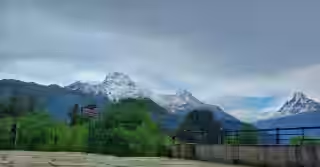
The view encompasses over 20 peaks above 6,000 meters. Dhaulagiri (8,167m) dominates the western horizon as the world's seventh-highest mountain. The Annapurna massif stretches across the north with multiple peaks. Machapuchhre's distinctive profile appears perfectly triangular. Hiunchuli, Annapurna South, and Nilgiri complete the stunning array.
Photography conditions peak during the 20-30 minutes of sunrise. The constantly changing light creates dramatic effects. Many trekkers shoot hundreds of photos trying to capture the perfect moment. The cold becomes irrelevant as everyone focuses on the spectacular display.
After sunrise and breakfast back in Ghorepani, the trek continues toward Tadapani. The route initially descends through forest before contouring around hillsides. The trail passes through Ban Thanti again before diverging onto a new path. This section sees fewer trekkers than the main Ghorepani-Ulleri route.
The walk to Tadapani covers varied terrain. Forest sections alternate with open ridges. Small streams cross the path requiring simple rock-hopping. The gradient stays mostly level with occasional short climbs. Views toward Annapurna South and Machapuchhre continue throughout.
Tadapani sits at 2,630 meters meaning "far water" in Nepali. This village occupies a forested ridge with a dramatic mountain backdrop. Several tea houses provide accommodation similar to Ghorepani standards. The location feels more peaceful with fewer trekkers compared to the busy Poon Hill route.
The evening atmosphere in Tadapani feels quiet and relaxing. The sunset creates beautiful light on surrounding peaks. Stars appear brilliantly in dark mountain sky. The social scene stays low-key compared to larger villages.
Day 4: Tadapani to Ghandruk (1,940m) and Drive to Pokhara (850m)
- Elevation: 2,630m to 1,940m (trek), then 1,940m to 850m (drive)
- Distance: 8-10km trek, 40km drive
- Walking Time: 3-4 hours trekking, 2-3 hours driving
The final trek day involves descent to Ghandruk followed by vehicle return to Pokhara. The morning walk drops 690 meters through beautiful forest scenery. The downhill feels easier on lungs but tests knees over the sustained descent.
The trail from Tadapani follows stone paths through rhododendron and oak forest. The gradient stays moderate without extreme steepness. Stone steps assist on steeper sections. The forest feels dense and atmospheric with moss-covered trees and filtered light.
After 2-3 hours, the trail emerges from forest to reveal Ghandruk village spread across a hillside. This large Gurung settlement ranks among the Annapurna region's most picturesque villages. Traditional stone houses feature slate roofs and wooden details. The architecture maintains authentic character despite tourism development.
Ghandruk sits at 1,940 meters with commanding views of Annapurna South, Machapuchhre, and Hiunchuli. The proximity to these peaks creates dramatic backdrop for the village. Many visitors spend extra time photographing the classic village-with-mountains composition.
The village features a Gurung cultural museum explaining traditional customs, clothing, and history. Several shops sell local handicrafts including woven textiles and carved woodwork. Walking through narrow lanes reveals daily village life continuing alongside tourism. Women work in fields or tend animals. Children play in courtyards. The atmosphere feels authentic rather than staged for tourists.
After exploring Ghandruk and having lunch, vehicles arrive for the return journey. The road from Ghandruk to Pokhara takes 2-3 hours following rough mountain roads. The route passes through Kimche, Syauli Bazaar, and eventually reaches the main highway. Views across valleys show terraced hillsides and distant mountains.
Arrival in Pokhara marks the trek's conclusion. Lakeside hotels offer comfortable beds, hot showers, and internet connectivity. The contrast to mountain tea houses emphasizes the journey's remoteness. However, many trekkers feel immediate nostalgia for peaceful trails and mountain atmosphere.
Trek Cost Breakdown
The 4-day Poon Hill Trek costs approximately $350-375 per person for foreign trekkers. This budget-friendly pricing includes all essential services while supporting local communities.
Permits ($40):
- Annapurna Conservation Area Permit (ACAP): NPR 3,000 ($25)
- TIMS Card: NPR 2,000 ($15)
Best Time for Poon Hill Trek
Spring (March to May): Excellent conditions with rhododendron blooms and mild temperatures. March shows flowers beginning at lower elevations. April brings peak blooming between 2,000-3,000 meters creating spectacular forest displays. May experiences warmer temperatures with developing afternoon clouds. Daytime temperatures range 15-25°C in valleys and 5-15°C at Ghorepani. Clear morning skies provide optimal sunrise views.
Autumn (September to November): Most popular season due to stable weather and crystal-clear visibility. September marks the post-monsoon transition. October provides peak conditions with dry trails, sharp mountain views, and comfortable temperatures. November brings colder weather but continued clarity. Daytime temperatures range 10-20°C in valleys and 0-10°C at higher elevations. Sunrise views reach maximum clarity. Villages stay busy with maximum tourist numbers.
Winter (December to February): Challenging conditions with cold temperatures and potential snow. December stays relatively manageable. January and February bring severe cold at higher elevations. Temperatures drop to -10°C at Poon Hill during the early morning. However, very clear skies create excellent visibility. Very few tourists guarantee peaceful trails. Proper winter gear becomes essential.
Monsoon (June to August): Difficult trekking with heavy rain and leeches. Lower elevations become very wet and slippery. Leeches present problems below 2,500 meters. Mountain views stay obscured by clouds most days. However, landscapes turn brilliantly green with wildflowers. Very few tourists create authentic experiences. Proper rain gear and leech socks essential.
Essential Packing List
Clothing:
- Moisture-wicking base layer shirts and thermal underwear
- Lightweight fleece or mid-layer jacket
- Down jacket for cold mornings
- Waterproof and windproof shell jacket
- Trekking pants (quick-dry material)
- Warm trousers for evenings
- Sun hat and warm beanie
- Lightweight gloves and insulated gloves
- 4-5 pairs wool or synthetic trekking socks
Footwear:
- Broken-in trekking boots with good ankle support
- Lightweight camp shoes or sandals
Gear:
- 30-40 liter backpack with rain cover
- Trekking poles (highly recommended for Ulleri steps)
- Water bottle or hydration system (2 liters capacity)
- Headlamp with spare batteries (essential for pre-dawn Poon Hill)
- Sleeping bag (optional, tea houses provide blankets)
- Sunglasses with UV protection
- SPF 50+ sunscreen and lip balm
Personal Items:
- First aid kit with basic medications
- Pain relievers and blister treatment
- Altitude medication if prone to issues
- Toiletries and quick-dry towel
- Hand sanitizer and wet wipes
- Passport and permit copies
- Cash in Nepali rupees (ATMs unavailable on trail)
- Camera and extra batteries
- Power bank for phone charging
- Snacks and energy bars
Transportation Options
Private Jeep (Recommended): Most comfortable option taking 1.5 hours from Pokhara to Nayapul. Cost approximately NPR 3,000-4,000 ($25-35) one way. Can be shared among group members. Allows flexible departure timing.
Public Bus (Budget Option): Departs Baglung Bus Park in Pokhara. Takes 2-2.5 hours with frequent stops. Costs approximately NPR 200-300 ($2-3) per person. Crowded during peak seasons. Fixed schedule limits flexibility.
Flight from Kathmandu: For those starting in Kathmandu, 25-minute flights to Pokhara cost $100-150. Provides spectacular aerial views. Weather delays possible. Most convenient for limited time.
Accommodation Along the Route
Tea houses provide standard accommodation throughout the 4-day route. Facilities improve gradually as the tourism industry develops. However, expectations should match mountain conditions.
Ulleri: Multiple tea houses offering basic rooms. Simple beds with blankets. Shared squat or western toilets. Limited electricity from solar panels. Hot water for showers costs extra. Dining areas feature wood stoves.
Ghorepani: Numerous tea houses with varying standards. Competition creates better facilities. Some lodges offer private rooms with attached bathrooms. Solar electricity more reliable. Hot showers widely available. Dining areas more comfortable. Bakeries sell fresh bread and pastries.
Tadapani: Fewer tea houses maintaining good standards. Similar facilities to Ghorepani but quieter atmosphere. Basic rooms with shared facilities. Wood stoves in dining areas. Limited phone charging options.
Meals: All tea houses serve similar menus. Dal bhat (rice and lentils) provides unlimited refills and best value. Noodle soups, fried rice, momos, and simple pasta dishes available. Breakfast includes porridge, toast, eggs, and pancakes. Tea, coffee, and soft drinks sold separately. Food quality stays consistently good despite simple preparation.
Why Trek with Mountain Routes
Mountain Routes specializes in creating personalized Poon Hill trekking experiences. Professional guides ensure safety while sharing cultural insights and local knowledge. The company handles all logistics including permits, transportation booking, and tea house reservations.
Experienced guides navigate trails efficiently while maintaining appropriate pace for group fitness levels. They explain local culture, identify plants and wildlife, and ensure proper acclimatization. Emergency protocols include satellite communication and evacuation insurance.
Flexible booking accommodates various group sizes and dates. Custom itineraries extend the trek or combine with other routes like Ghorepani Poon Hill trek variations or the Annapurna Base Camp trek. The company supports sustainable tourism through fair wages, community development, and environmental responsibility.
Frequently Asked Questions
How many days do you need for Poon Hill?
The minimum duration is 4 days for the budget route. Standard itineraries take 5-6 days with more gradual pacing. Extended versions incorporate additional villages or viewpoints taking 7-8 days.
Can you see Mount Everest from Poon Hill?
No, Mount Everest is not visible from Poon Hill due to distance and intervening peaks. However, spectacular views include Dhaulagiri (8,167m), Annapurna I (8,091m), Annapurna South (7,219m), and Machapuchhre (6,993m).
Can you trek Poon Hill without a guide?
Yes, independent trekking is possible. The trail stays well-marked with frequent tea houses. However, guides significantly enhance experience through cultural interpretation, safety monitoring, and logistical support.
How many steps are in the Poon Hill Trek?
The famous Ulleri staircase contains approximately 3,200 stone steps gaining 500 meters elevation. This represents the trek's most challenging section taking 1.5-2.5 hours to climb.
What is the difference between Annapurna Circuit and Poon Hill?
The Annapurna Circuit takes 15-20 days covering 160-230 kilometers with maximum elevation above 5,000 meters. Poon Hill takes 4-5 days covering 30-40 kilometers with a maximum 3,210 meters. Poon Hill offers an easier introduction to Himalayan trekking.
Is altitude sickness a concern on Poon Hill Trek?
Minimal concern due to moderate maximum elevation of 3,210 meters. Most trekkers experience no altitude issues. Proper hydration and steady pace prevent problems for the vast majority.

No comments yet. Be the first to share your thoughts!