
Annapurna Base Camp accommodation is mainly teahouse lodging along the south-side trekking route. You sleep in simple mountain lodges, share common guest spaces, and should expect room facilities to vary by stop, season and current availability.
Most trekkers do not need camping gear for the established south-side route. Most trekking routes in Nepal have lodges or tea houses, while modest accommodation can use communal toilets and showers.
This guide explains the sleeping experience rather than one package. It covers room privacy, bathrooms, showers, warmth, bedding, busy-season booking, Machhapuchhre Base Camp, Annapurna Base Camp and the questions worth asking before you leave Pokhara.
What Is Accommodation Like on the Annapurna Base Camp Trek?
The ABC trek uses a network of teahouses and trekking lodges rather than one chain or one fixed room standard.
A teahouse gives you a place to sleep and shared lodge space. The building, room size, bathroom arrangement and heating setup can differ from one property to the next.
The wider Annapurna Conservation Area has a large tourism service network. The National Trust for Nature Conservation reports more than 1,000 lodges and teashops across the conservation area. That regional figure shows how established lodge trekking is, but it does not tell you what one room at Deurali or ABC will look like.
The safest planning rule is simple: learn the general pattern, then confirm the room details that matter to you. Privacy, bathroom access, bedding and a single-room request should be checked against the actual lodge or trip booking.
A Teahouse Is Not the Same as a City Hotel
The word hotel can create the wrong expectation on a mountain trail. Teahouse and lodge are better terms for the places used on the ABC route. The focus is a bed, shelter and shared guest space rather than city-style room service or a fixed star rating.
Two lodges in the same village can have different rooms. The same lodge can have more than one room type. A search result that says private bathroom, hot shower or heated room does not make that feature standard across the route.
Read any accommodation promise at property scale. A photo of one bedroom proves what that bedroom looked like when the photo was taken. It does not prove the same setup at every stop.
Accommodation Changes as the Trail Moves Into the Sanctuary
The south-side ABC trail moves from lower villages into a narrower mountain corridor before it reaches Machhapuchhre Base Camp and Annapurna Base Camp. Lodging questions change with that move. Lower stops may give you more room choices, while high-route planning depends more heavily on current lodge operation and available beds.
Do not read this as a fixed comfort ladder. One lower lodge can be basic, while another can have better rooms. The useful distinction is that high-route options are fewer and more exposed to seasonal or operating change, so current confirmation matters more near the top of the trek.
Lower Trail Stops Give You the First Read on Room Expectations
Chhomrong and Jhinu Danda sit on the lower part of many south-side ABC itineraries. They are good places to check how your trip handles room sharing, bathroom requests and bedding before the trek moves higher.
If privacy matters, ask whether your request is confirmed or only requested. The same question applies to an attached bathroom. A preference written in a booking message is not the same as a room that has been assigned.
Middle-Corridor Overnight Stops Depend on the Itinerary
Sinuwa, Bamboo, Dovan, Himalaya and Deurali appear across different south-side ABC plans. A route may use some of them as overnight stops and pass through others during the walking day.
That difference matters when you compare accommodation articles. A room description for a village that your itinerary only passes through has little value to your own sleeping plan. Start with the overnight list, then compare room facts.
MBC and ABC Need Current High-Route Checks
Machhapuchhre Base Camp and Annapurna Base Camp are separate places. Some itineraries sleep at MBC. Others pass through MBC and continue to ABC. The lodging plan should match the itinerary you are actually walking.
High-route accommodation deserves a fresh check close to departure. A past closure, an old lodge list or a room photo from another season does not establish the current operating position. Ask which high stop is planned and what fallback exists if the room plan changes.
Not Every ABC Itinerary Sleeps in the Same Villages
Accommodation planning starts with the overnight sequence. A direct route, a Poon Hill extension and a shorter ABC plan can use different lower stops even when they share the same sanctuary corridor later in the trek.
Location | Route role | Accommodation planning point |
|---|---|---|
Chhomrong | Common lower-route village | May be an overnight or route stop, depending on the plan |
Sinuwa / Bamboo / Dovan | Middle corridor | Different itineraries split the walking days differently |
Himalaya / Deurali | Upper approach | Overnight use depends on route pace and plan |
Machhapuchhre Base Camp | High-route stop | Can be a transit point or an overnight |
Annapurna Base Camp | Trek objective | Often used as a high overnight on plans that stay at base camp |
Jhinu Danda | Lower return corridor | Common on south-side entry or exit plans |
Use the route guide when you need to compare complete itinerary choices. This page stays with the sleeping and bathroom questions that follow from whichever route you pick.
What Are the Rooms Like in ABC Teahouses?
Room standards vary enough that one fixed description would be misleading. Expect a practical sleeping room rather than a hotel room with a long facility list. Bed layout, mattress type, blankets, wall construction and storage space need lodge-specific proof before they are promised as route-wide facts.
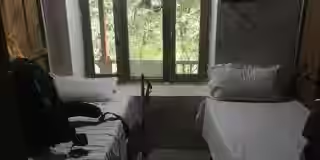
Noise and privacy can matter as much as room size. Mountain lodges use shared buildings, so a light sleeper may value earplugs more than a larger room. A room beside the dining area can feel different from one farther down the corridor even inside the same property.
If you have a non-negotiable room need, state it early. Ask whether it is confirmed, requested, or not available on part of the route.
Private Rooms and Single Occupancy Are Availability Questions
Private-room language can mean different things. It may mean one party has a room to itself, not that the room has a private bathroom. Single occupancy is a separate request again.
Room allocation can tighten when lodges are busy or when a group needs several rooms at the same stop. For that reason, a solo traveller, a couple and a larger group can face different room choices on the same date.
Ask for the room basis in plain words. “Twin-share room,” “single occupancy,” and “attached bathroom” describe different things. Keep each request separate so you know what has and has not been confirmed.
Bathrooms and Toilets May Be Shared
Modest accommodation may have communal toilets and showers. That is useful background for a trekking lodge, but it is not a village-by-village ABC rule. A specific bathroom claim should come from the lodge or from current trip records.
An attached bathroom should never be assumed from the words private room. Ask whether the bathroom is inside the room, shared on the same floor, or in another part of the building.
Toilet style can vary too. Do not build your plan around a fixed lower-versus-upper pattern without current proof. Carry the personal hygiene items you need and plan for basic shared facilities.
Hot Showers, Bathrooms and Heating Are Three Different Questions
A lodge can have a shared bathroom without a hot shower. A hot shower can exist without being included in a room price or trek package. A warm dining space does not mean the bedroom has heating.
Ask each question on its own. Is a shower operating at this stop? Is there an extra charge? Is the bedroom heated? Is only the common room heated? Answers can change with the lodge, season and local supply.
Communal showers can be part of modest accommodation and that heating may carry an extra charge. Use that as national context, then rely on current lodge information for the ABC route.
Bedding and Sleeping Bags Need Separate Planning
Lodge bedding and your own sleep system solve different problems. A lodge may provide a mattress, pillow or blanket, yet that does not tell you whether the setup will feel warm enough for your season and cold tolerance.
Ask what the booked lodge is expected to supply. Then use the ABC packing guide for the sleeping bag, liner and clothing decision. This page does not replace a season-specific packing plan.
Avoid relying on a fixed blanket count from an old blog or a single lodge photo. Bedding can change between properties and dates.
Spring and Fall Can Put More Pressure on Rooms
Accommodation in Annapurna Region Trek can run near full capacity in spring and fall and suggests checking ahead during busy periods. On the ABC trail, that makes room planning worth doing before you reach the high corridor.
A booking question has two parts. First, is a lodge bed expected for the group? Second, is a specific room request confirmed? Those are not the same promise.
Larger groups can be harder to place together than one or two trekkers because the group needs several beds at the same time. Ask how the room plan works if your party must stay together or needs a particular privacy setup.
What Happens If a Preferred Lodge or Room Is Full?
A useful accommodation plan has a fallback. The fallback might involve a different room type, another lodge at the same stop, or a route decision made by the guide or operator. The right answer depends on current beds, weather, walking time and the group plan.
Ask about that fallback before the high part of the trek. Do not rely on old claims about dining-room floors, spare mattresses or a named partner property without current proof.
If your itinerary can shift to another overnight stop, the route and altitude consequences belong with the route and acclimatization guidance. Accommodation is only one part of that decision.
Machhapuchhre Base Camp and Annapurna Base Camp Are Different Overnight Choices
MBC and ABC should not be collapsed into one accommodation stop. MBC comes before ABC on the south-side approach. An itinerary may sleep at MBC, continue to ABC, or use MBC as a fallback when current operations support that choice.
Read the day plan carefully before comparing room claims. If one article describes an MBC night and your itinerary sleeps at ABC, you are comparing two different lodging plans.
The high night matters for more than room comfort. It changes the next day, sleeping altitude and walking sequence, so a route change should be checked against the itinerary rather than made from an accommodation article alone.
What Should You Ask About Accommodation Before the Trek?
You do not need a long hotel checklist. You need clear answers about the nights that can change your sleep, privacy and morning routine.
- Which villages are planned as overnight stops on my itinerary?
- Is my room twin-share, single occupancy, shared with more trekkers, or still subject to allocation?
- Is any attached-bathroom request confirmed for a specific night?
- What bedding is expected at the booked lodges?
- What is the sleeping-bag plan for my season?
- Which stops currently have working showers, and which charges sit outside the room or package?
- What happens if the preferred lodge or room type is full?
- Can the high overnight move between MBC and ABC, and what would trigger that change?
Write down any answer that affects a non-negotiable need. That reduces the chance of confusing a request with a confirmed booking.
A First-Party Route Example: How Our Current Seven-Day Plan Uses the Lodging Corridor
Our current seven-day direct plan uses trail nights in Chhomrong, Dovan, Deurali, Annapurna Base Camp, Bamboo and Jhinu Danda. MBC is a transit point on the approach to ABC in that plan. We use this route record as first-party context, not as a rule for every ABC trek.
The room, bathroom, bedding, shower and fallback details for those nights still depend on current lodge records. We do not use another operator’s room list to make promises about our departures.
If you are walking a different ABC itinerary, compare its overnight list first. The accommodation principles in this guide still apply even when the sleep sequence changes.
Keep Cost, Food, Wi-Fi and Route Choice in Their Own Planning Pages
Accommodation overlaps with several other trek questions, but each needs its own answer. Use the ABC cost guide for total budget planning. Use the route guide when you are choosing between overnight sequences. Food and drinking water belong in the food guide, while charging and mobile access belong in the connectivity guide.
This separation keeps one article from becoming a general ABC guide. It gives you a clear place to check each decision without repeating the same package details across several pages.
If You Are Comparing an Annapurna Base Camp Trek Package
Check what the package says about trail accommodation, room sharing and any extra charges before you compare prices. If you are considering our current ABC trek, the package page carries the sold itinerary and current inclusion scope. This accommodation guide stays focused on what sleeping on the trail is like and what to confirm before departure.
Annapurna Base Camp Accommodation FAQs
What kind of accommodation is available on the ABC trek?
The established south-side trek is lodge-based. Most nights use teahouses or trekking lodges rather than camping. Exact room and bathroom standards vary by property.
Do ABC teahouses have private rooms?
Some lodges can allocate a room to one party, but private-room access should be checked for the date and stop. A private room does not automatically mean an attached bathroom.
Are bathrooms private or shared?
Shared bathrooms are common in modest trekking accommodation. Attached bathrooms may exist at some properties, but they should be confirmed at lodge scale rather than assumed for a village or the whole route.
Are hot showers available on the ABC trek?
Availability can change by lodge and season. Ask whether the shower is operating at the overnight stop and whether a separate charge applies.
Are teahouse bedrooms heated?
Do not assume bedroom heat. A heated common area and a heated bedroom are different things. Check the current lodge setup if room heat matters to you.
Are blankets provided?
Bedding can differ by lodge. Confirm what is supplied, then plan your own sleep gear for the season rather than relying on one fixed blanket rule.
Do I need to book accommodation in advance?
Spring and fall can be busy in Nepal. Confirm the lodging plan before the trek, and ask which room requests are confirmed rather than assuming every preference is guaranteed.
Can I sleep at Machhapuchhre Base Camp?
Some ABC itineraries use MBC as an overnight, while others pass through it and sleep at ABC. Check the overnight sequence for the route you are booking.
What if the lodge is full?
Ask your guide or operator for the current fallback. A different room, another lodge at the same stop, or a route change may be considered depending on beds and the day plan.
Is accommodation at ABC the same all year?
No fixed room standard should be assumed across seasons. High-route lodge operation and room supply should be checked close to travel, particularly when weather or seasonal business patterns can affect services.

No comments yet. Be the first to share your thoughts!