
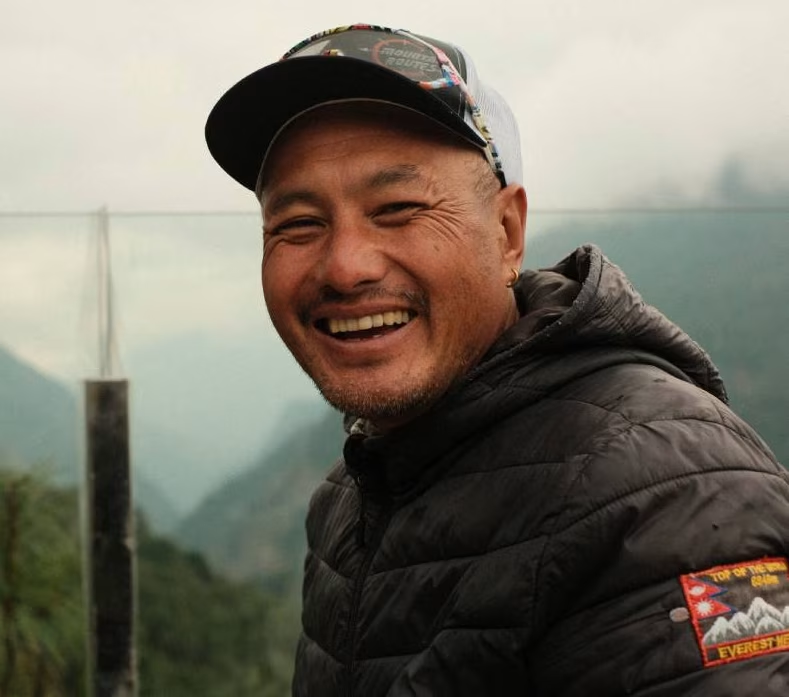
In the beautiful Gorkha region of Nepal, the Manaslu Circuit Trek is an adventurous trekking route that explores subtropical valleys and arid plateaus.
On this multi-day trek, trekkers hike around the eighth-tallest mountain on Earth, Mt. Manaslu, and cross a 5,000-meter-high mountain pass called Larkya La Pass. This rapid ascent and oxygen/pressure changes in just a few days hit hard on many trekkers' bodies, so they end up suffering from altitude sickness on Manaslu circuit trek.
In this blog, we have talked about altitude sickness, what it is, why it happens, what the symptoms are, how to treat it, and how to prevent it.
Not only that, we have also shared many insider tips throughout the content, so we advise you not to be lazy and give the blog a full read.
What is altitude sickness on Manaslu Trek Nepal?
Altitude sickness in Manaslu Circuit trek is common because it’s a high-altitude region. The Trekkers are not used to the weather, climate, and low oxygen levels at high elevations.
Acute Mountain Sickness (AMS) is the most common form of high-altitude sickness experienced by trekkers on the Manaslu Trek. It occurs when the body struggles to adapt to lower oxygen levels at higher elevations. During the Manaslu Circuit Trek, trekkers gradually ascend above 3,000 meters, where oxygen levels begin to decrease significantly.
Although many people refer to it simply as mountain sickness, AMS can affect anyone regardless of age or fitness level. If ignored, mild symptoms can progress into severe altitude-related illnesses such as High-Altitude Pulmonary Edema (HAPE) or High-Altitude Cerebral Edema (HACE).
Because the Manaslu trek Nepal route crosses the high-altitude Larkya La Pass at over 5,100 meters, understanding AMS is extremely important before starting this remote Himalayan trek.
Why does learning about altitude sickness matter for Manaslu Trek?
It can be the difference between completing the trek and being evacuated.
Last autumn, we guided a trekker from Colorado, USA. He was a fit, experienced hiker in his early 40s who had done several multi-day trails back home. Before departing Kathmandu, we briefed him thoroughly on altitude sickness: what to watch for, when to speak up, and why informing the guide early matters more than pushing through.
Around day seven, ascending toward Dharamsala at 4,460m, he noticed a mild but persistent headache and slight loss of appetite. Because he knew these were early AMS signals (and not just tiredness) he told our guide immediately instead of dismissing it.
Our guide assessed him on the spot, monitored his oxygen levels with a pulse oximeter, and made the call to extend the stay at Dharamsala by one full day rather than pushing toward Larkya La Pass.
That one extra acclimatization day made all the difference. His symptoms cleared completely. Two days later, he crossed Larkya La Pass at 5,160m in good health and finished the full Manaslu Circuit without further issues.
Had he not known what to look for (or worse, stayed quiet to avoid slowing the group), the outcome could have been very different.
This is exactly why altitude sickness awareness is not optional on the Manaslu Circuit. Knowledge is your first line of defence.
Why Altitude Sickness is Common on the Manaslu Circuit Trek?
The Manaslu Circuit climbs from 700m to over 5,100m in roughly 10 days through remote terrain with no roads or medical infrastructure. Based on our experience guiding this route across multiple seasons, roughly 6 in 10 trekkers report mild AMS symptoms above Sama Gaun.
Indeed, higher than most Nepal treks because the route keeps you at altitude for days with few opportunities to descend and recover.
Several factors increase the risk of altitude sickness symptoms on the Manaslu Trail:
- Low oxygen and hypoxia: Above 4,000m on the Manaslu trail, even fit trekkers feel the strain as oxygen-deprived tissues work harder with every step.
- The Namrung to Sama Gaun stretch: In our experience, this is where most trekkers get caught off guard. Nearly 900m of gain over two days, with nights at Lho above 3,000m giving the body insufficient recovery time.
- No medical facilities: Beyond Machha Khola, there are no pharmacies or medical posts until you descend past Tal. Every emergency we have managed on this route required helicopter evacuation to Kathmandu.
- Sustained high-altitude exposure: Unlike EBC where trekkers descend to Pheriche for recovery, the Manaslu Circuit offers no natural descent window between Sama Gaun and the far side of Larkya La Pass.
- Weather and terrain: Rapid weather shifts near Dharamsala and Samdo, combined with rocky trails from Deng to Namrung, exhaust the body faster than the elevation profile suggests.
- Dehydration and poor appetite: At altitude, trekkers unconsciously eat and drink less. On the Manaslu Circuit, where teahouse menus are more limited than Everest or Annapurna routes, maintaining intake requires deliberate effort.
With guiding global trekkers for over two decades now, Mountain Routes has strategically prepared a proper itinerary for Manaslu Circuit. This route keeps you above 3,500m for nearly a week and our acclimatization strategy matches that reality.
Types of altitude sickness Manaslu Trekkers Face
There are three types of altitude sickness faced by trekkers. These are acute mountain sickness (AMS), high altitude pulmonary edema (HAPE), and high altitude cerebral edema (HACE). The types are based on their severity.
AMS is the early sign of altitude sickness and the least severe form. In comparison, HACE is the most severe form, where brain tissues swell. We have shared in detail about all three forms of altitude sickness below:
Acute Mountain Sickness (AMS):
- Description: It is common among trekkers and not a severe form.
- Cause: Rapid ascent with acclimatization.
- Symptoms: Headache, insomnia, dizziness, nausea/vomiting, difficulty breathing, loss of appetite, etc.
- Onset: Usually, 6 to 24 hours of advancing above 2,500 meters.
- Risk level: Manageable with proper rest, first aid, and descent. It can progress to severe forms if ignored.
High Altitude Pulmonary Edema (HAPE):
- Description: Progressed form of AMS. It is a dangerous condition.
- Cause: Fluid leaks into the lung air sacs, which impairs oxygen exchange.
- Symptoms: Frothy/pink sputum, cough, extreme shortness of breath, blue-tinged skin (cyanosis), and chest tightness.
- Onset: Usually, 2 to 4 days of advancing above 2,500 meters.
- Risk level: Immediate medical attention or emergency descent is required. It is a fatal condition.
High Altitude Cerebral Edema (HACE)
- Description: HACE is the most critical form of altitude sickness.
- Cause: It is caused by swollen brain tissue due to fluid leakage from blood vessels.
- Symptoms: Severe headache uncontrollable by medication, hallucinations, confusion, and loss of coordination.
- Onset: Rapid gain in altitude above 4,000 meters.
- Risk level: Immediate descent with medical assistance is required. It can lead to unconsciousness or coma if untreated. Fatal within 24 hours.
Do Manaslu Circuit Trekkers Actually Develop HAPE or HACE?
In our experience guiding the Manaslu Circuit across multiple seasons, HAPE and HACE cases are rare. The main reason is that we act fast and early and don’t let the symptoms turn severe.
Last Spring, a member from a group Australian guests showed persistent symptoms above Sama Gaun village. Mountain Routes Senior guide immediately:
- checked oxygen saturation with a pulse oximeter
- halted any further ascent
- assessed whether a same-day descent is needed.
Finally, a 12 to 24-hour rest at the same altitude with hydration and Diamox resolved the AMS symptoms before it progressed.
We always inform our trekking guests to speak up the moment they experience anything unusual so that symptoms can be taken care of timely. This is why we ask every trekker to do a daily self-assessment and report anything scoring below 6 out of 10, no matter how minor it feels.
In cases requiring evacuation, helicopter rescue from the Manaslu region typically reaches Kathmandu within 45 to 60 minutes in clear weather. We coordinate directly with rescue services and your travel insurance provider on the ground. This is also why travel insurance covering helicopter evacuation is non-negotiable for this trek, not a suggestion.
Altitude Sickness Symptoms to Watch on the Manaslu Circuit
Early symptoms are easy to dismiss as normal trekking tiredness especially on a demanding route like the Manaslu Circuit where fatigue is expected. This is exactly why they get ignored until they worsen. Recognise them early and tell your guide immediately.
- Headache: The most common first signal above 3,000m on the Manaslu trail. A dull persistent headache after reaching Namrung or Lho is your body's first warning. Do not mask it with paracetamol and keep climbing.
- Nausea and dizziness: Oxygen deprivation affects digestion and balance. On the Manaslu Circuit, vomiting above Sama Gaun is a clear sign you should not ascend further that day. Inform your guide immediately.
- Fatigue beyond normal tiredness: Every trekker feels tired on this route. What you are watching for is exhaustion disproportionate to effort like struggling on a flat teahouse path, needing to stop every few steps. That distinction matters.
- Shortness of breath at rest: Breathlessness while hiking is normal above 4,000m but breathlessness while sitting still at Dharamsala or Samdo is not. That’s a red flag requiring immediate guide assessment.
- Loss of appetite and insomnia: It’s fairly Common above 3,500m on the Manaslu Circuit. Warm garlic soup and ginger-honey tea help significantly. Don’t skip your meals as your body needs fuel to acclimatize.
What to Do When You Notice These Symptoms on the Manaslu Trail
The Manaslu Circuit has no medical facilities beyond Machha Khola. Your guide is your first responder. Here is the protocol we follow:
- Tell your guide immediately. Do not wait to see if it gets worse overnight
- Stop ascending and rest at the same altitude for 12 to 24 hours
- If no improvement after rest, descend 300 to 500 meters — this alone resolves most AMS cases
- Hydrate continuously and take Diamox only under your guide's instruction
- If multiple symptoms appear together, descent is immediate — not next morning
Directly from one of our guides: “The trekkers who recover fastest are always the ones who spoke up within the first hour of noticing something. One rest day at Dharamsala costs you a day. Ignoring symptoms above Dharamsala can cost you the entire trek or even worse than that.”
Is Altitude Sickness Dangerous on the Manaslu Circuit?
Mild AMS is common on the Manaslu Circuit and manageable if caught early. The danger begins when symptoms are ignored at elevations where descent is not straightforward.
What makes the Manaslu Circuit specifically risky is the lack of easy exit points between Sama Gaun and the far side of Larkya La Pass. On routes like EBC, you can descend to a lower village quickly. On this route, you are committed to your position for longer which means a situation that might stay mild elsewhere can escalate here before help arrives.
The conditions that cross from uncomfortable into life-threatening are:
- HAPE (fluid in the lungs)
- HACE (swelling in the brain)
Warning signs may include:
- Severe breathing difficulty
- Confusion
- Inability to walk properly
- Persistent vomiting
- Blue lips or fingernails
Immediate descent and emergency medical assistance are essential in severe cases.
Altitude Risk Zones on the Manaslu Trek
Certain sections of the trail carry a higher risk of high-altitude sickness due to rapid elevation gain and reduced oxygen levels.
Trek Location | Elevation | AMS Risk Level |
|---|---|---|
Jagat | 1,340m | Low |
Namrung | 2,630m | Moderate |
Sama Gaun | 3,530m | High |
Samdo | 3,875m | High |
Dharamsala | 4,460m | Very High |
Larkya La Pass | 5,160m | Extreme |
Trekkers usually begin noticing mild symptoms above 3,000 meters, especially near Sama Gaun and Samdo.
Oxygen Levels at High Altitude During the Manaslu Trek
One of the main causes of mountain sickness on Manaslu Circuit trek is reduced oxygen pressure at higher elevations. At Mountain Routes, our guides carry pulse oximeters throughout the Manaslu Circuit and check every trekker's blood oxygen saturation at each of these elevations. A reading below 85% at rest is our threshold for halting ascent regardless of how the trekker feels subjectively.
Elevation | Approximate Oxygen Availability |
|---|---|
Sea Level | 100% |
3,000m | ~70% |
4,000m | ~60% |
5,100m (Larkya La Pass) | ~50% |
This reduced oxygen availability explains why trekkers often experience fatigue, headaches, dizziness, and shortness of breath during the Manaslu trek Nepal.
Who is More Prone to Altitude Sickness in Manaslu?
Anyone can develop AMS on the Manaslu Circuit regardless of age or fitness. But after guiding this route across multiple seasons, we consistently see certain trekkers struggle more than others.
- Trekkers flying in from sea level without buffer days: Those who fly Kathmandu to Arughat without spending at least two nights in Kathmandu first arrive already behind on acclimatization before the trek even begins.
- Trekkers with no previous Himalayan experience: The Manaslu Circuit is not a beginner trek. Trekkers attempting high altitude for the first time here face a steeper adjustment curve than on more gradual routes.
- Those who ignore the Sama Gaun rest day: In our experience this is the single biggest predictor of problems above Dharamsala. Trekkers who skip or shorten the Sama Gaun acclimatization day consistently show worse symptoms near Larkya La Pass.
- Smokers and those with respiratory conditions: Reduced lung capacity at sea level means significantly reduced capacity at 4,000m plus. Medical consultation before this trek is non-negotiable for this group.
- Trekkers competing with their group: The Manaslu Circuit attracts experienced, competitive trekkers. Pushing to match the fastest person in your group instead of your own pace is something our guides actively watch for and intervene on.
- Dehydrated trekkers: At altitude appetite and thirst both drop. Trekkers who rely on feeling thirsty to drink consistently arrive at high camps underhydrated without realising it.
Sometimes the fittest trekkers are at the highest risk. They push harder, ignore early signals, and are less willing to take a rest day. Your pace and acclimatization are key players that help you protect from hypoxia.
Why Larkya La Pass is the Highest AMS Risk Zone?
Larkya La Pass is considered the most physically demanding and highest-risk section of the Manaslu Circuit trekking route.
At over 5,100 meters:
- Oxygen levels are extremely low
- Temperatures drop below freezing
- Strong winds increase fatigue
- Trekkers face long climbing hours
Most trekking groups begin crossing the pass early in the morning to avoid afternoon winds and unstable weather conditions.
Proper acclimatization before attempting Larkya La Pass is critical for safety.
How to treat altitude sickness Mid-Trek on the Manaslu Circuit?
Altitude sickness can escalate quickly, so it is important that you treat it as soon as possible. On the Manaslu Circuit trek route, you will not find healthcare providers to help you with altitude sickness.
Therefore, trekking with a guide trained to offer first aid and who has extensive experience in dealing with altitude sickness is crucial.
Below are some of the things that you should do to treat altitude sickness during the Manaslu Circuit trek:
- Your first response should be to inform your guide. He will assess your condition and provide first aid accordingly.
- Stop ascending and rest at the same altitude. If you feel uneasy or sick, it is best that you descend a few hundred meters to spend the night. A 12 to 24-hour rest will help relieve symptoms of altitude sickness.
- Drink warm water, warm garlic soups, and ginger-honey teas. If you are carrying electrolytes or ORS, drink it.
- If you are having a bad headache, Ibuprofen will help you a lot. It is better than paracetamol for AMS.
- If the symptoms do not improve in 24 hours, descend 300 to 500 meters. If you see multiple symptoms, descend immediately.
- If your symptoms do not go away and you feel sick, we will air evacuate you to a hospital in Kathmandu. Make sure to buy travel insurance covering helicopter evacuation and medical bills. Otherwise, you have to incur a huge expense.
You May Also Read: How to Handle Altitude Sickness During a Nepal Trek?
Diamox for Altitude Sickness on the Manaslu Trek
Diamox for altitude sickness is commonly used by trekkers in Nepal to help the body acclimatize faster.
Diamox works by:
- Improving breathing efficiency
- Increasing oxygen intake
- Helping the body adapt to altitude changes
However, trekkers should consult a doctor before using the medication, especially if they have allergies or existing medical conditions.
Diamox should support acclimatization, not replace proper pacing and hydration.
Can't take Diamox? Read: Best Diamox Alternatives for Nepal Treks
How Long Does Altitude Sickness on Manaslu Trek Last?
Most of the trekkers have a common question that how long altitude sickness on Manaslu trek lasts? Reason is they want to understand how many buffer days they need to recover in case they get AMS.
Mild AMS symptoms on this remote Nepal trail often improve within 24–48 hours after:
- Resting
- Hydrating
- Stopping further ascent
If symptoms worsen, descending to a lower altitude is usually the fastest and safest solution. In our experience, most trekkers who report symptoms at Sama Gaun recover fully after one proper rest day and continue to Larkya La without issue.
The more you keep on pushing yourself, the condition will start worsening. And it may require helicopter evacuation.
Altitude Sickness After Returning Home from Nepal Trek
Whether you’re coming from USA, UK, Australia, Europe or middle east or any location, you may experience mild symptoms even after coming back from trek. Altitude sickness after returning home is completely normal. There are some chances that you may feel
- Fatigue
- Mild headaches
- Sleep disturbances
- Shortness of breath
Your body is readjusting after nearly two weeks at altitude. Most symptoms are resolved within 3 to 5 days without any medical intervention treatment.
If shortness of breath or chest tightness persists beyond a week after returning home, consult a doctor (particularly if you experienced AMS symptoms during the trek).
Planning the Manaslu Circuit Trek? Trek with guides who know this route inside out
Best Acclimatization Stops on the Manaslu Circuit Trek
Proper acclimatization is one of the best ways or we can say strategy to prevent high-altitude sickness on the trek and helps you get over Larkya La pass safely. Here are the options that can be customised as per trekkers need.
Sama Gaun (3,530m)
Sama Gaun is the most critical acclimatization stop on the Manaslu Circuit Trek. Our trekking company always schedule a full extra day here. Trekkers acclimatize with a hike toward Manaslu Base Camp Trekkers often spend an extra day here to help the body adjust to higher elevations.
Samdo (3,875m)
Samdo offers another useful acclimatization point before ascending toward Dharamsala and Larkya La Pass.
Dharamsala (4,460m)
This is the final stop before crossing the pass. Trekkers are advised to rest properly and stay hydrated before the challenging ascent. The “climb high, sleep low” method is commonly recommended during acclimatization hikes.
- "I almost skipped the Sama Gaun rest day to save time. My guide insisted. Two days later I crossed Larkya La Pass feeling strong while others in a faster group were struggling. Best decision of the trek." — James, UK (Trekker, Mountain Routes)
Want an itinerary built around proper acclimatization? Consult Now
How to avoid altitude sickness on Manaslu Restricted Area Trek?
Above, you learned the symptoms of altitude sickness and how to treat them. Now, it is time to know how to avoid altitude sickness.
All the tips that we have given below are science-backed strategies. They will help you acclimatize and avoid altitude sickness during the Manaslu Circuit trek.
Gradual Ascent Strategy for the Manaslu Circuit Itinerary
Usually, a human body needs 48 to 72 hours to adapt to a major altitude gain. Ascending slowly will allow your body to adjust to high altitude as you walk.
To ensure our guests get ample opportunity to acclimatize and avoid altitude sickness during the Manaslu Circuit trek, we have added two acclimatization days to our itinerary.
You will spend the rest days in Sama Gaon and Samdo village. Not only that, but our Manaslu Circuit trek itinerary is also well-paced.
Unlike most itineraries out there, our itinerary ascends from Jagat to Pewa, Pewa to Namrung, Namrung to Lho, and Lho to Sama Gaon.
Before reaching Sama Gaon, you are more likely to be adjusted to the elevation by following our Manaslu Circuit trek itinerary.
Finally, before crossing Larkya La Pass, you will spend an acclimatization day in the Sama Gaon and Samdo villages.
*Our Manaslu Circuit trek itinerary follows the "Climb High, Sleep Low" principle.
*We have strategically planned our acclimatization days in key locations to avoid altitude sickness before crossing Larkya La Pass.
Hydration and Diet Tips Specific to the Manaslu Circuit Trail
Hydration and diet are other key aspects of avoiding altitude sickness during the Manaslu Circuit trek. A dehydrated body is much more prone to altitude sickness because dehydration thickens the blood and reduces oxygen flow. It also slows your digestion at high altitudes.
Therefore, we recommend drinking at least 3 liters of water daily during the trek. Monitor your urine color (clear=well hydrated). Do not drink alcohol and caffeine. These substances dehydrate your body. Likewise, to walk 6 to 7 hours a day during the Manaslu Circuit trek, you will need lots of energy.
At higher altitudes your thirst signals weaken, so do not wait until you feel thirsty to drink. Sip water consistently throughout the day even when you have no urge.
Near Larkya La Pass temperatures drop below freezing. Carry an insulated water bottle or hydration bladder to prevent water from freezing during the crossing.
So, carb-rich food should be your priority. Combine iron-boosting dishes and other nutrients in your daily diet as well. The Nepali staple meal, Dal Bhat, has all these nutrients and is considered a superfood during the trek. So, we highly recommend having it for lunch. In addition, have garlic soups and ginger-honey teas daily.
Medication & supplements
It is important that your first aid kit contains all the necessary medicines for the trek. We recommend packing medications for colds, stomach aches, headaches, altitude sickness, painkillers, etc.
Meet your doctor and ask him to prescribe medicine that you may need during the trek.
In addition, we also recommend packing ORS or electrolytes for the trip. It helps retain water in your body and provides a quick energy boost.
Physical preparation
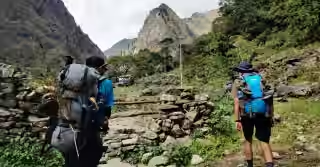
- Trek during the stable weather: Spring (March to May) and autumn (late September to November) have the best weather and mild climate conditions in the Himalayas for any trek. A mild climate makes walking pleasant, and stable weather helps avoid nuances like muddy trails, landslides, storms, etc. You will not be struggling physiologically, which indirectly lowers the risk of altitude sickness.
- Reliable, experienced guide: Once you are in the mountains, you will only have your guide and porter to help you. Moreover, in regions like Manaslu, where there is no crowd, your team is your family for the journey. So, trekking with a reliable and experienced guide who is also friendly and can communicate with you in your language is important. We, Mountain Routes, provide the best English speaking guides for the Manaslu Circuit trek.
- Service: The Manaslu Circuit trek route is not developed like Everest and Annapurna. Therefore, the services on this trek route are minimal. You will not find luxury lodges or an extensive menu. So, kindly prepare yourself mentally. What we can offer is the best Manaslu Circuit trek service. From permits to accommodation, meals, packing list, transportation, guide, porter, etc, we will help you with all these things. It will make the journey less stressful for you.
- Travel insurance with helicopter evacuation coverage: There is no road beyond Machha Khola. So, we have to walk all the way up to Larkya La Pass and descend to Tal to end the trek. In between the trek, if any emergency occurs that may need evacuation, helicopter rescue is the only option. If you have guessed, it costs a lot of money. So, we recommended that everyone who is planning to do the Manaslu Circuit trek in Nepal purchase travel insurance covering helicopter evacuation and medical bills.
Wrapping Up
Altitude sickness is inevitable on high-altitude treks like the Manaslu Circuit. However, if you are well prepared and knowledgeable about it, you can trek without any worries.
Prevention is key. So, follow our tips to avoid altitude sickness during the trek. Note that even if you follow all the guidelines, you may still see symptoms of altitude sickness.
Do not panic. Ask your guide for help. Remember our tips on how to treat altitude sickness and follow them accordingly. Stay safe, be smart, listen to your body, and trek consciously!
FAQs
Can You Get Altitude Sickness at 2000 Feet?
In most cases, altitude sickness does not occur at 2,000 feet because oxygen levels remain close to normal. AMS generally becomes noticeable above 2,500–3,000 meters (8,200–9,800 feet). During the Manaslu trek Nepal, the real AMS risk begins after ascending toward Namrung and Sama Gaun.
Can I trek Manaslu with asthma?
Many trekkers with controlled asthma complete the Manaslu Circuit successfully. However, thin air at 5,000m puts additional strain on your lungs. Get a full medical check before booking, carry your inhaler, and inform your guide before departure.
Can I die from altitude sickness on the Manaslu Circuit?
In rare cases, yes, but only when severe symptoms are ignored for too long. HAPE and HACE are life-threatening conditions. With a trained guide, pulse oximeter monitoring, and early action, serious cases are caught well before they become fatal. Deaths from altitude sickness on guided treks are extremely rare.
How do I know if my headache is just tiredness or altitude sickness?
If your headache appeared after gaining elevation that day, treat it as AMS until proven otherwise. A tiredness headache usually fades after food and water. An AMS headache persists or worsens even after rest and hydration. When in doubt, tell your guide immediately.
Will my guide force me to descend if I have symptoms?
A good guide will strongly recommend descent when symptoms are serious. On a Mountain Routes trek, that recommendation is non-negotiable when oxygen saturation drops to concerning levels. We have this conversation with every trekker before departure so there are no surprises on trail.
How do I prepare my body for altitude before the Manaslu trek?
Spend at least two nights in Kathmandu before starting. Consider an iron supplement course starting one month before departure to improve blood oxygen capacity. Build cardiovascular fitness with hiking, stair climbing, and running in the months before. Consult your doctor about Diamox if you have had AMS before.
Does age increase altitude sickness risk on the Manaslu Circuit?
Altitude sickness affects all ages equally. Older trekkers are not more prone as they often pace themselves more sensibly. What matters is how quickly you ascend, not how old you are.
Is AMS worse during winter trekking on the Manaslu Circuit?
Yes. Cold air reduces breathing efficiency, strong winds increase physical exhaustion, and lower temperatures make the body work harder to stay warm. All of these accelerate oxygen depletion. Spring and autumn remain the recommended seasons for this trek for good reason.
What happens if I get altitude sickness and have to turn back?
Your safety comes first, always. If descent is needed, our guides coordinate everything including helicopter evacuation if required. This is why travel insurance covering helicopter rescue and medical bills is non-negotiable before joining this trek. Evacuation without insurance can cost upwards of $5,000.
Is Diamox necessary for the Manaslu Trek?
Diamox is optional but commonly used by trekkers on the Manaslu Circuit to support acclimatization at high altitude. It is not a replacement for rest days or proper pacing. Consult your doctor before taking it and bring it from home as it is hard to source reliably in Nepal.
No comments yet. Be the first to share your thoughts!