
The Manaslu Circuit Trek in the monsoon is one of Nepal's most underrated trekking experiences.
You might have known about the best seasons to trek, but has anyone told you about challenging seasons?
No, right! Let’s see about this today.
Manaslu Circuit trail runs through remote Gurung and Tibetan villages, thick rhododendron forests, and wide alpine terrain.
Most trekkers skip this Monsoon season because of the rain. The ones who go discover a quieter trail, greener hills, and a more personal connection with the mountains, but also a risky way.
This guide covers everything you need to know before trekking the Manaslu Circuit in the rainy season.
Fewer trekkers on the route, lower costs, and a landscape in full bloom make this season worth serious consideration.
Planning a Manaslu circuit trek in monsoon or visiting in July or August? Here’s the complete guide that help you decide if rainy reason is the right time for your trek or not.
How Many Days Does the Manaslu Circuit Trek Take in Monsoon?
The standard Manaslu Circuit Trek takes 13 days in peak season.
In monsoon, plan for 14 to 17 days.
Reason is that slippery trails slow your daily pace considerably. Landslides can block lower gorge sections for hours or even a full day. Heavy water flow in rivers make crossings slower and more cautious. And sometimes you need to settle in nearest teahouse until conditions settle.
Always, budget 2 to 4 extra buffer days beyond your standard itinerary. It is your safety margin.
Is it possible to trek the Manaslu Circuit during the monsoon?
The short answer is yes, but it helps to understand what monsoon actually means for this trail.
Nepal has four trekking seasons and all offer a different level of experience.
Spring, autumn, monsoon, and summer.
Spring (March–May) and autumn (September–November) are the busiest. Winter (December–February) is quiet and cold. Monsoon (June–August) is the wet season.
Let us help you make it clearer.
During this time, the lower hills of Nepal receive heavy rainfall. Rivers swell. Trails turn muddy. Leeches show up in forests everywhere.
Flights and road transport face delays. It makes the trail extremely difficult to walk and capture the beauty.
However, the Manaslu Circuit has a geographic advantage that many trekkers do not know. The upper sections of the trail lie in the rain shadow of the Himalayan range. It receives less rainfall.
This means areas above 3,500 m, including the route towards Larkya La Pass, receive far less rain than the valleys below. The skies at higher elevations often stay clear, even during peak monsoon months like July and August.
So, while the lower sections of the trail do get wet, the higher sections remain accessible and often scenic.
Fun fact: Monsoon trekking on the Manaslu Circuit is growing in popularity for good reasons. The trail sits partly in the rain shadow of the Himalayas, which means higher sections stay drier than most people expect, making it easy to trek.
If you have the right gear, an experienced guide, and a flexible schedule, trekking the Manaslu Circuit in June, July or August is very much possible. But make sure you are not just a first-time trekker at Manaslu.
What permits are required for trekking the Manaslu Circuit in monsoon?
Three permits are to be mandatorily obtained in order to trek in the Manaslu Circuit during monsoon.
- First is the Restricted Area Permit (RAP) which costs USD 100 per week. This permit is valid for first seven days. Thereafter, a USD 15 is charged for every extra day.
- Second is the Manaslu Conservation Area Permit (MCAP) which costs USD 30.
- Third is the Annapurna Conservation Area Permit (ACAP) which costs another USD 30 because this permit is granted at the end of the trek that enters that zone. The total cost is around USD 160–190.
Note that these permits cannot be obtained alone. A registered trekking agency in Nepal can only handle all paperwork in Kathmandu, which generally takes one to two days. A passport and four passport-sized photos are required to obtain these permits.
Weather Conditions on the Manaslu Circuit in Monsoon
Weather is one of the first things trekkers ask about when planning a Manaslu circuit Trek in monsoon. You cannot simply pack your bags and go. Preparation is needed.
On the Manaslu Circuit, conditions change greatly depending on how high you are on the trail.
You have to understand what to pack right and set realistic expectations before you go.
Let’s see what the factors are:
Temperature During Monsoon in Manaslu Region
The temperature at lower altitudes is between 900m and 2,000m. The air stays warm and humid. Daytime temperatures are between 20°C and 28°C.
If we talk about nights, it is mild but sticky. As you move higher, the temperature drops steadily.
Above 3,500 meters, days feel cool and crisp.
Near Larkya La Pass, daytime temperatures can fall to 5°C or lower, even in July. Nights at this altitude go below freezing.
Because of this wide temperature range, you have to always carry warm layers in your pack, no matter how warm it feels at the start of the day.
Read In Detail: Weather and Temperature Guide for Manaslu Circuit Trek Guide (Updated)
Rainfall in Manaslu Region During Monsoon Season
The amount of rain you experience depends on where you are on the trail. Lower sections from Soti Khola through to Jagat receive the heaviest rainfall.
Afternoon showers are frequent and can last for hours. Mornings are usually calmer and drier, which is why starting your day early matters so much on this route.
But as you move higher up, the picture changes.
Above Sama Gaun and toward the pass, you enter the rain shadow zone. Rainfall drops significantly here. It has less rainfall than the lower sections.
On many days, you can walk under clear skies while the valleys below are hidden in clouds.
This difference between the lower and upper sections is one of the things that makes monsoon trekking on the Manaslu Circuit a genuinely interesting experience for you.
Manaslu Trail Conditions in Rainy Season
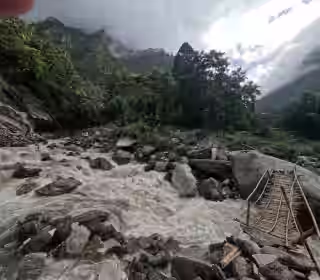
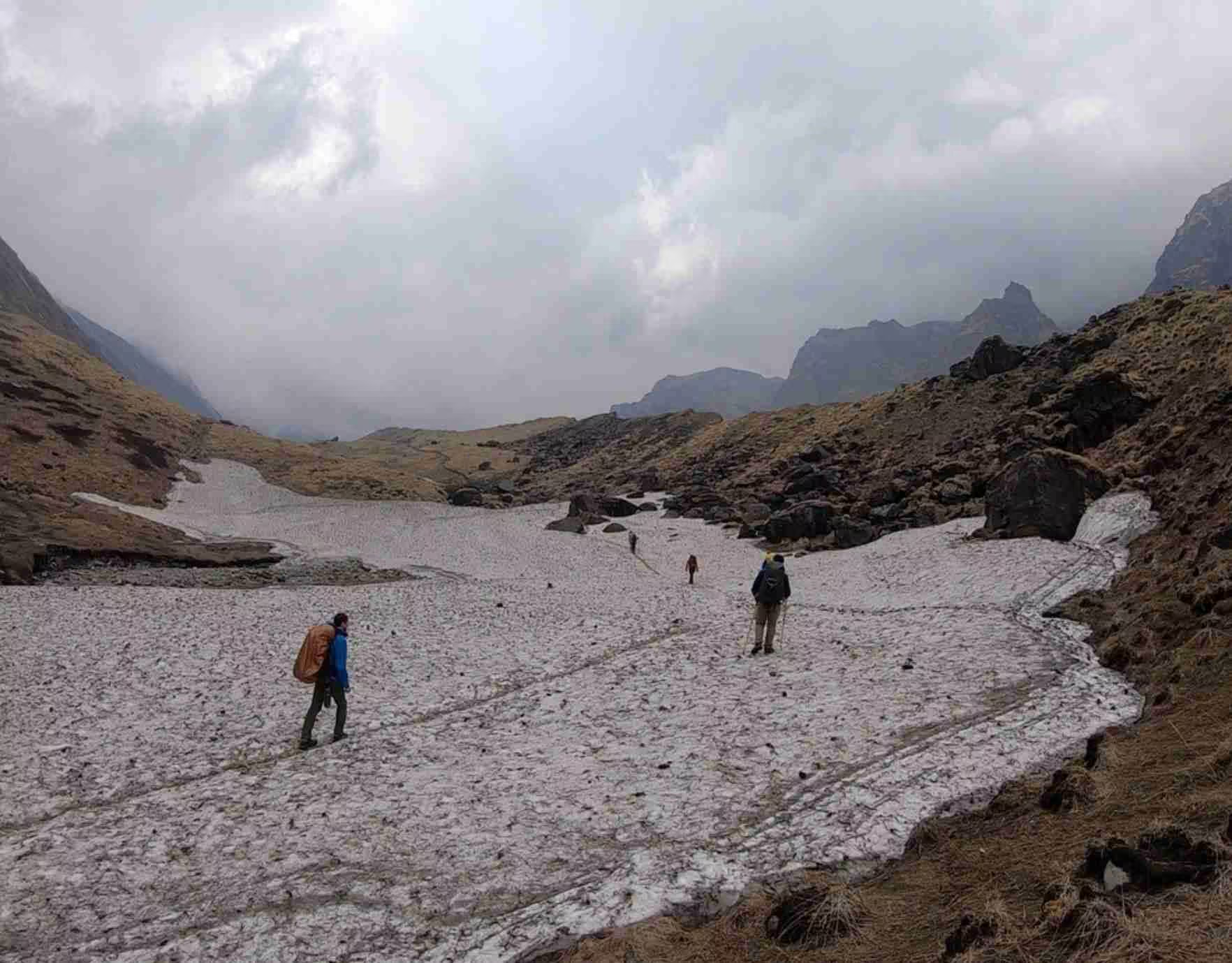
Because of the rain, trail conditions in the lower sections during July and August require extra care. The path between Machha Khola and Deng becomes muddy and slippery after rainfall.
It makes it difficult for you to move forward.
River crossings take longer because water levels are higher. Some bridges also may be damaged or washed out. It might cost you extra time in your day.
Beyond the mud and rivers, landslide risk is the main serious concern on this trail during the monsoon.
Steep hillsides in the lower gorge area are at risk of landslides after heavy rain. These sections can be blocked for hours or even days.
You have to be in touch and informed through your guide and local tea house owners time-to-time. It is your best defense against getting caught in a difficult situation at Manaslu.
Advantages of Trekking the Manaslu Circuit in Monsoon
Despite the challenges you face at Manaslu circuit trek in monsoon listed above, this time even offers genuine rewards for trekkers who prepare well.
If you love to see Mother Nature in all its 100% form, monsoon is your season then. Here are the main reasons people choose July and August months to trek Manaslu Circuit:
Fewer trekkers on the trail
The Manaslu Circuit is already one of Nepal's quieter routes compared to Everest or Annapurna. It is less reached by people. So, fewer crowds lead to more peace.
The trail is quieter still. You may have to walk for hours without seeing another trekking group. Tea houses feel calm and personal.
They treat you in a good way and make your trek worth it.
If you love nature? Love solitude? And have been trying to look for accessible Himalayan Treks in Nepal during monsoon, this is your dream trek!
Green and lush scenery
Rain at Manaslu changes the landscape completely. Forests in the Manaslu Conservation Area turn deep green. It is best for photography.
Wildflowers bloom along the path. Waterfalls pour down hillsides that are dry in other seasons. For those who love nature, this is the trail at its most alive. It is really beautiful.
Clear views at a higher elevation
Above the cloud line, the air is often washed clean after rain. On a good morning near the pass, you can see Manaslu (8,163m) and the surrounding peaks with striking clarity.
These moments give you the worth it seen despite the wetter lower sections.
Lower costs
Monsoon is the off-season out of all four seasons. Some tea houses and local agencies offer discounted rates during this time. Why?
Because it is the off-season throughout the year. The teahouse encounters very few people.
If budget matters to you, this season gives you more room to manage your costs without sacrificing the quality of your trek.
Rich photography opportunities
The clouds you see, the misty ridgelines, the waterfalls, and the bright alpine flowers create scenes that will simply melt your heart away.
Many photographers return from monsoon treks with their most beautiful images and memories.
A more genuine local experience
With fewer tourists on the trail, you can connect more easily with local people. Villages feel like real communities. You will really feel like you belong there. The warm smiles at Manaslu are always welcoming.
This is the Manaslu Circuit in its quieter, more authentic form, which feels amazing.
Challenges of the Manaslu Circuit Trek during the monsoon
Now that you know about the advantage, it is equally important to go in with clear eyes about what problems you will face on Manaslu Circuit Trek during rainy season. Why?
Because Monsoon trekking is not the right choice for everyone.
Slippery trails are the most constant challenge from start to finish. Wet rocks and muddy paths slow your pace every day.
You need to stay focused on each step, especially on descents.
The help you get here is trekking poles. They are worth the extra weight.
Leeches give you another reason not to trek. Especially in forested sections below 2,500 m. Around Jagat and the lower gorge areas, they really make Manaslu their own home. It makes your trek very difficult.
Note: They are not dangerous, but they attach quickly and quietly. No worries, you can use Anti-leech socks to be safe. Also, salt packets are your best tools to use against them.
Flight delays can disrupt both the start and end of your journey. Monsoon clouds frequently affect domestic flights into Kathmandu and onward routes to the trailhead.
Because of this, build at least one or two buffer days into your schedule so delays do not force you to rush on the trail.
Landslide risk builds on the flight delay concern because even if you arrive on time, a blocked trail can delay your progress for a full day or more.
The lower gorge sections are the most difficult. If your guide reports a blocked route, wait it out rather than pushing through.
River crossings become harder as water levels rise after heavy rain. Some temporary bridges wash away during the peak monsoon.
Always check the condition of crossings ahead with your guide before you set off each morning.
Limited visibility at lower elevations is also common throughout the season. Clouds and mist fill the valleys for much of the day, hiding mountain views.
The dramatic Himalayan scenery becomes visible mainly after you climb above the cloud line, something to keep in mind when managing your expectations.
Myths about Manaslu Circuit Trek in Monsoon
Manaslu is a remote trek where you will find very difficult steps to move forward.
But to be honest, myths of "extreme danger" are overstated.
If you have the mandatory licensed guide and restricted-area permit system, you can manage the risks that come your way.
With proper acclimatization, if you make extra days at Sama Gaon or Samdo, have proper hydration, and respect for morning crossings, the trek proves safe and rewarding for prepared trekkers.
Manaslu Circuit vs. Other Treks in Nepal for Monsoon
Aspect | Manaslu Circuit | Other Treks in Nepal |
|---|---|---|
Rain and Views | Higher areas are drier. Best chance of clear mountain views. | Everest Base Camp has thick clouds. Annapurna Base Camp has too many leeches. Langtang has high landslide risk. |
Flights and Delays | Fewer flight problems than Lukla routes. | Lukla flights to EBC get cancelled for 3–5 days straight. |
Trail Safety | Lower parts have leeches and mud, but upper parts are fine. | Annapurna Circuit has less landslides, but Thorong La Pass gets early snow. |
Crowds | Very few people on the trail during monsoon. | Popular treks stay crowded even in bad weather. |
Best Choice | Best standard trek for monsoon travel. | Upper Mustang or Dolpo are drier, but Manaslu beats all other normal treks. |
Manaslu Circuit is the best choice among standard Nepal treks during monsoon because it’s a higher rain shadow zone which often offers drier trails and clearer views. For a completely rain-safe trek, choose Upper Mustang or Dolpo, but for most trekkers, Manaslu wins.
Real Trekker Experiences at Manaslu Circuit in Rains
Global trekkers, who have experienced Manaslu during the monsoon described it as the "greenest and most alive" version.
You will see the beautiful waterfalls at full force, vibrant rhododendrons, and wildflowers. You will also find rare wildlife sightings like red pandas, Himalayan bears, and many more.
Villages feel authentically Tibetan with fewer tourists, allowing a deeper cultural presence.
Poor mountain views and occasional detours may make you not walk, but the solitude and dramatic scenery makes it worthy for experienced hikers.
Many call it "transformative" rather than “dangerous” if guided properly.
How Much Does the Manaslu Circuit Trek Cost in Monsoon?
Monsoon is the off-season. So, the Manaslu circuit trek costs in monsoon are low as compared to peak season. In Fact: Rates at Teahouse, guide and porter fees are often 15 to 30 percent lower than spring or autumn.
Item | Estimated Cost (USD) |
|---|---|
Permits (RAP + MCAP + ACAP) | 160 – 190 |
Guide fee (per day) | 30 – 40 |
Porter fee (per day) | 20 – 25 |
Tea house + meals (per day) | 20 – 35 |
Total (16 days approx.) | 1,100 – 1,500 |
The only cost that cannot be skipped during your Manaslu Circuit visit during July and August is getting a travel insurance with helicopter evacuation cover. On a remote high-altitude route, evacuation can cost USD 3,000 to 5,000 without it. Make sure your policy covers trekking above 5,000 m before you depart.
Essential Tips for a Safe Rainy Season Manaslu Circuit Trek
For trekking in June, July and August, these practical tips will help you stay safe and get the most from your monsoon hiking.
1 - Start trekking early each morning
Mornings are full of energy. The weather is calm. But rain is heaviest in the afternoon. Setting off at dawn gives you calmer, drier hours on the trail. It also reduces your exposure to afternoon landslide risk.
2 - Hire an experienced local guide
Make sure you take a professional guide with you. A good guide knows the Manaslu trail not just on the monsoon but for every season. They can read about conditions, choose safer paths, and alert you to risks that are not obvious to first-time visitors.
3 - Carry full waterproof gear
Monsoon is full of rain. So, your rain jacket, pants, boots, and backpack covers must all be properly waterproof. You know what, a damp base layer at high altitude can quickly become a real problem.
4 - Wear proper trekking boots
Ankle support and grip are more important on wet terrain than in dry conditions. Break your boots in before the trek so blisters do not add to your difficulties.
5 - Pack Anti-leech socks
Wear anti-leech socks through all forested sections below 2,500 m. Tuck your pants into the top of your socks. Leeches suck the blood out of you, so check yourself at every rest stop.
6 - Carry water purification tablets or a filter
Monsoon runoff muddies many water sources on the trail. Please do not drink untreated water. Purification tablets are the most reliable option. Even if the streams look clean, do not drink it.
7 -Check trail conditions every morning
When you are on your long trek journey, ask your guide or the tea house owner about the path ahead. Landslide reports and river conditions can change overnight. Better safe than sorry.
8 - Slow down on wet descents
Downhill sections on wet rock are where most monsoon trekking injuries happen. You have to take shorter steps and keep your poles in front of you.
9 Add buffer days to your schedule
Make sure you add one or two extra days for protection. It will protect you from delays caused by blocked trails, flight disruptions, or bad weather at the pass.
10 Get travel insurance that covers trekking
Make sure you have your insurance policy. Imagine you are stuck at the top because of some problems. The evacuation cost is very expensive. Your insurance policy includes emergency helicopter evacuation. On a remote high-altitude route like this, it is not optional, it is mandatory.
Read More – Manaslu Circuit Trek Safety Guide (Updated)
Packing List for Nepal’s Manaslu Circuit Trek in Rainy Season
Unlike other seasons, every item you carry needs to handle wet conditions of Monsoon at Manaslu circuit too.
Use this list as your starting point.
Clothing and rain protection:
- Waterproof rain jacket with sealed seams
- Waterproof rain pants
- Quick-dry trekking shirts and pants
- Warm mid-layer, such as a fleece or down jacket
- Thermal base layers for cold nights at altitude
- Waterproof trekking boots with ankle support
- Gaiters for muddy trail sections
- Anti-leech socks
- Warm hat and gloves for high-altitude sections
Gear and equipment:
- Waterproof backpack cover
- Dry bags or zip-lock bags for electronics and documents
- Trekking poles for support on slippery terrain
- Headlamp with spare batteries
- Sleeping bag rated to -10°C
Health and safety:
- Water purification tablets or a portable filter
- First aid kit including blister care and basic pain relief
- Altitude sickness medication, such as Diamox — speak to your doctor before the trek.
- Insect repellent
- Salt packets for removing leeches
- Sunscreen and lip balm. The UV levels are high at altitude even on cloudy days. It protects you.
Documents and money:
- Manaslu Restricted Area Permit
- Manaslu Conservation Area entry permit
- Copies of your passport and travel insurance
- Enough cash for the full trek. The route has no ATMs above.
Read More: Complete and Detailed Packing List for Manaslu Circuit Trek, Nepal
Emergency Exit Plan for Manaslu Circuit Trek in Monsoon
The Manaslu Circuit is remote. So, it’s important to know your rescue options beforehand.
Helicopter evacuation is the primary emergency exit. Rescue helicopters can reach most points on the upper trail including Sama Gaun and Samdo. Response typically takes 4 to 8 hours depending on weather. Your guide carries emergency contacts and coordinates the call.
Walking evacuation is possible from lower sections toward Arughat, where road access to Kathmandu begins.
Always carry your insurance documents and emergency contact numbers on the Manaslu trail. Your agency should have a 24-hour emergency line. Make sure to confirm this before departure.
Is Monsoon a Good Time for the Manaslu Circuit Trek?
After looking at both the benefits and the challenges, the honest answer is this: it depends on the kind of trekker you are.
Monsoons work well for experienced trekkers who are comfortable in wet, uneven terrain. If you can read trail conditions, adapt to changing weather, and stay calm when plans shift, this season will suit you.
The challenges are real, but they are manageable. With the right preparation and the right mindset. It is also a strong choice for nature lovers and photographers.
Wanting to discover something different, a different kick and thrill over a challenging trail? Manaslu circuit trek in monsoon offers a visual experience that dry-season trekkers simply do not see.
If capturing the Himalayas in a different light is your goal, the rainy season is an ideal pick.
Mountain Routes has guided 4,000+ trekkers over two decades on this exact route including solo travelers, couples, and groups from across North America, Europe, and Australia. If you want to trek the Manaslu Circuit in monsoon safely, with an experienced team that knows every section of this trail in every condition, Mountain Routes is your best choice.
Plan your monsoon trek with Mountain Routes today.
Frequently Asked Questions
Is the Manaslu Circuit safe during the monsoon?
Yes, with the right preparation, it is safe. The key steps you need to know are hiring a licensed guide, carrying proper waterproof gear, starting each day early, and staying updated on trail conditions. The upper sections of the Manaslu trail above 3,500 m are generally drier and less exposed to landslide risk than the lower gorge areas. Always follow your guide's advice on route safety and avoid trekking during heavy afternoon rain.
Are tea houses open during the monsoon?
Yes, most tea houses on the Manaslu Circuit remain open through the monsoon season. Some may operate with a smaller team and a shorter menu than in peak season. Basic meals and a bed are available along the main trail. It is worth confirming availability with your guide before you set out, especially for the more remote sections closer to the pass.
Do I need a permit for the Manaslu Circuit on the monsoon?
Yes. Permit requirements stay the same throughout the year, no matter what the season is. You need both a Manaslu Restricted Area Permit and a Manaslu Conservation Area entry permit. Mountain Routes will arrange all permits before your departure.
What is the hardest part of the Manaslu Circuit in the monsoon?
Most trekkers find the lower gorge sections the most difficult in the monsoon. The trail near Jagat and through the forest zones below 2,500 m gets slippery, muddy, and leech-filled after rain. River crossings in this area also require more care and patience. At the other end of the trek, the Larkya La Pass crossing itself can be tough if early snow or low cloud reduces visibility.
Can beginner trek in the Manaslu Circuit during the monsoon?
No, it is discouraged. The monsoon makes the trail potentially harder so it is better for beginners to instead trek in spring or autumn seasons. For beginners trekking Manaslu circuit, it is best advised to go plan in group and preferably during the months of October or April for a safer trekking experience.
Are there any bridge closures on the Manaslu Circuit during the monsoon?
Yes. The temporary bridges are sometimes washed off or removed during the monsoon. This often causes difficulties with closures as they may be up for repairs. The best way to not waste time is to always check with a guide or local tea house before starting the day's walk.
Does mobile network work on the trail during the monsoon?
Mobile signals are weaker during the monsoon due to cloud cover and terrain interference and this is seen especially in lower gorge sections. So, trekkers must be ready to face this challenge. It is a good idea to inform close ones in advance as trekkers might be unreachable for several days.
Are there any medical facilities or dispensaries on the trail during the monsoon?
Basic medical facilities exist in villages like Samagaun during the monsoon but most health posts have limited monsoon staffing. It is best suggested to carry a self-usable first aid kit and any personal medicines that are required. Also, if the health is not good, it is advised to not take the risk of trekking Manaslu Circuit during rainy season.
Are children and elderly people also able to do Manaslu trek in the monsoon?
We at Mountain Routes do not recommend trekking the Manaslu circuit for elderly and children in monsoon. The reason is that during rain time trail becomes too slippery and risky for children under 12 or elderly people with mobility issues. Hence, consider visiting during spring or autumn when the trails are much safer and easier.
Is the Manaslu Circuit in monsoon cheaper than that in the peak season?
Yes, during the monsoon the tea house prices and guide fees are often negotiable and this helps in saving around 20-30 percent for the trekkers. This makes monsoon a budget-friendly option for experienced trekkers who don't mind the rain.
Is July good time to visit Manaslu Circuit Trek, Nepal?
Most of the trekking agencies do not recommend trekking during July as it is the peak of monsoon season. During this time, the Manaslu region receives heavy rainfall, high humidity, risk of leech infestation and puts you at risk of landslides, overflowing rivers and mudslides.
Is late August good for Trekking Manaslu Circuit?
The trekkers going for trekking in Late August and early September still find the trail heavily muddy and slippery. Sometimes clouds just obstruct the entire view. Always check the weather conditions of the year or speak to Mountain Routes to assist you with your planning.

No comments yet. Be the first to share your thoughts!