
Everest Base Camp Altitude Guide for First-Time Trekkers is essential for anyone planning to hike to the world's most famous base camp. The trek takes you from Lukla at 2,860 meters (9,383 feet) to Everest Base Camp at 5,364 meters (17,598 feet), with an optional hike to Kala Patthar at 5,545 meters (18,192 feet) for the best views of Mount Everest. As the altitude increases, oxygen levels decrease, making proper acclimatization one of the most important factors for a safe and successful trek. By following a gradual ascent, taking scheduled acclimatization days, and recognizing the early symptoms of altitude sickness, first-time trekkers can greatly improve their chances of reaching Everest Base Camp safely while enjoying the incredible scenery of the Khumbu region.
Everest Base Camp altitude sits at 5,364 m (17,598 feet) above sea level. At that height, the air holds roughly half the oxygen you breathe at sea level. You know what, your body feels the difference with every step you take above 3,500 m. This guide will give you every key altitude point on the classic Lukla route. It explains what happens to your body as you gain height.
It also covers how to spot altitude sickness early, how to prevent it, and how to stay safe from start to finish.You have to know the altitude of Everest Base Camp before you go. It is one of the most important steps in preparing for this trek. Most first-timer trekkers who struggle on the trail do so because they underestimated the height, not because they lacked fitness. The right knowledge gives you a real advantage on the trail.
Everest Base Camp Altitude Overview
The EBC altitude of 5,364 m makes it one of the highest trekking destinations in the world. Most people live and work close to sea level.
Even a flight to a high-altitude city does not prepare your body for what it experiences at this elevation.
Each breath you take fills your lungs with oxygen-rich air at the sea level.
At Everest Base Camp height, that same breath delivers far less oxygen to your blood. Your body begins making more red blood cells to carry what little oxygen is available.
This process takes days, which is exactly why the trek itinerary is built the way it is.
The good news is that the route from Lukla to EBC is made with acclimatization in mind.
Each day adds a manageable amount of altitude gain. Rest days are placed at the right points along the trail. With a proper plan, your body has time to adapt at each stage before moving higher.
Day-by-Day Altitude Gain on the Everest Base Camp Trek
The classic Lukla route to EBC takes 12 to 14 days for the full round trip.
Here is the altitude for each major stop on the route:
Day | Location | Altitude |
|---|---|---|
Day 1 | Fly to Lukla/Trek to Phakding | 2,860 m/9,383 ft |
Day 2 | Phakding to Namche Bazaar | 3,440 m /11,286 ft |
Day 3 | Acclimatization Day - Namche Bazaar | 3,440 m/1,286 ft |
Day 4 | Namche to Tengboche | 3,860 m /13,664 ft |
Day 5 | Tengboche to Dingboche | 4,410 m/ 14,469 ft |
Day 6 | Acclimatization Day- Dingboche | 4,410 m /14, 469 ft |
Day 7 | Dingboche to Lobuche | 4,940/ 16,207 ft |
Day 8 | Lobuche to Gorak Sheep / EBC | 5,140m / 5,364 m |
Day 9 | Kala Patthar/ Begin Descent | 5,545 m/ 18, 192 ft |
Climb High , Sleep low Rule
You do not push yourself up above on your rest days. Instead, you take short hikes to higher ground and return to sleep lower.
This pattern is called "climb high, sleep low." . It is one of the most effective tools for safe acclimatization on the EBC trek.
Why Altitude is challenging on the Everest Base Camp Trek ?
The challenge of high altitude is not about steepness or distance. It is about oxygen. As you climb higher, air pressure drops. Your body, which is used to a steady oxygen supply, has to work harder to function normally.
The body responds to this change in several ways. Your breathing rate increases to pull in more air. Your heart beats faster to push oxygen-rich blood to your organs and muscles. Over several days, your kidneys adjust your blood chemistry to help carry more oxygen. Your body produces additional red blood cells to improve oxygen transport.
These changes take time. That is the core reason altitude sickness happens.
When trekkers move too fast and gain too much height too quickly, the body cannot keep up. The result is a range of symptoms that can go from minor discomfort to a medical emergency.
At EBC altitude, the oxygen level in the air is about 53% of what you breathe at sea level.
That is a very small drop, and your body needs every rest day on the itinerary to handle it well.
Everest Base Camp Altitude Sickness Symptoms
Altitude sickness is also called Acute Mountain Sickness (AMS). It can affect trekkers of any age or fitness level. This is caused by going too high too fast. So, you have to know the symptoms early, which helps you act before the situation gets worse.
Symptoms include headache, fatigue, loss of appetite, nausea, dizziness, and difficulty sleeping. A mild headache at Namche or Dingboche is not unusual. But it improves with rest and water. However, if these symptoms do not improve after a rest day, or if they get worse, do not ignore it.
Serious symptoms include a severe headache that does not respond to rest or medication, persistent vomiting, loss of balance, confusion, shortness of breath while resting, chest tightness, and coughing up fluid, among many more.
These symptoms point to either High Altitude Pulmonary Edema (HAPE) or High Altitude Cerebral Edema (HACE). Both conditions are life-threatening if not treated.
How to Prevent Altitude Sickness on the EBC Trek ?
Prevention starts before you even reach the trailhead. The decisions you make in the days leading up to the trek and during the trek determine how well your body handles the altitude gain on the EBC route.
Ascend gradually.
Above 3,000 m, limit your sleeping altitude gain to 300 to 500 per day. The EBC itinerary already follows this rule. Stick to it. Do not try to move faster than the schedule allows.
Never skip acclimatization days.
The rest days at Namche Bazaar and Dingboche are not optional breaks. They are mandatory. Skipping them to save time is the most common reason trekkers turn back before reaching Base Camp.
Drink enough water.
Drink at least 3 to 4 liters of water per day on the trail. Dehydration thickens your blood and makes it harder for your body to deliver oxygen to your tissues.
Avoid alcohol and sleeping pills.
Both suppress your breathing during sleep. At high altitude, your body already struggles to maintain oxygen levels at night. Alcohol and sedatives make this worse and increase the risk of AMS.
Eat regular meals.
Your body burns more calories at altitude than it does at sea level. Eating well keeps your energy steady and supports your immune system throughout the trek.
Talk to your doctor about Diamox.
Acetazolamide, commonly known as Diamox, is a prescription medication that speeds up acclimatization. It is not a cure for altitude sickness, but it can reduce the symptoms. Consult your doctor well before the trek to see if it is suitable for you.
Tell your guide how you feel.
Your guide is trained to spot altitude sickness. If something feels off, speak up. Waiting and hoping it improves puts you at risk.
Acclimatization Tips for First-Time Trekkers
Acclimatization is the process by which your body adjusts to reduced oxygen at altitude. It does not happen overnight.
It builds slowly over days as your body changes its chemistry, breathing patterns, and blood composition.
The two key acclimatization stops on the EBC route are Namche Bazaar and Dingboche.
Namche Bazaar Acclimatization (3,440 m / 11,286 ft)
Namche Bazaar is the first major altitude checkpoint on the route. After two days of trekking from Lukla, your body has already started adjusting to the thinner air. The rest day here gives it more time to complete that process before you continue higher.
On your acclimatization day, you can hike up to the Everest View Hotel at 3,880 m. The higher you go during the day, the stronger the acclimatization signal you send to your body.
Return to Namche to sleep at the lower elevation.
Dingboche Acclimatization (4,410 m / 14,469 ft)
Dingboche sits at a higher elevation than Namche. By the time you arrive here, the altitude is serious, and the body is under real strain. The rest day at Dingboche is arguably the most important one on the entire trek.
On your acclimatization day, you can hike up to Nangkartshang Peak at 5,083 m. This takes you well above your sleeping altitude and gives your body a strong relief. Come back down to Dingboche to sleep.
You can also rest in the afternoon and drink water steadily throughout the day.
Note : The trekkers who skip this day or cut it short are the ones most likely to struggle at Lobuche and beyond. Give this day the full attention it deserves.
Everest Base Camp Altitude vs Other Treks
There are other popular treks not just in Nepal but out of Nepal too. Every trek is exciting. But not all high-altitude treks are equal in terms of elevation, acclimatization time, and risk.
Let’s see the other treks below, too:
Trek | Highest Point | Altitude |
|---|---|---|
Everest Base Camp, Nepal | EBC/ Kala Patthar | 5,364 m/5,545 m |
Annapurna Base Camp(ABC), Nepal | Annapurna Base Camp | 4,130 m |
Kilimanjaro , Tanzania | Uhuru Peak | 5,895 m |
Langtang Valley, Nepal | Tserko Ri | 4,984 m |
Tour du Mont Blanc , Europe | Col des Fours | 2,665 m |
Annapurna Base Camp reaches 4,130 m. It is over 1,200 lower than EBC. The altitude gain is more forgiving, and the trek is shorter. For this reason, many first-time high-altitude trekkers use ABC as a stepping stone before going to EBC.
Likewise ,Kilimanjaro is higher than EBC at 5,895 m, but it is a summit climb rather than a trek to a base camp. The ascent is faster, with fewer built-in acclimatization days.
Many climbers on Kilimanjaro report stronger AMS symptoms than EBC trekkers. It is because the schedule moves faster.
At the end , EBC stands out because the classic itinerary is specifically built with acclimatization.
The gradual daily gains and two dedicated rest days give first-time high-altitude trekkers the best chance for this adventure safely.
Is Everest Base Camp Altitude Safe for Beginners?
EBC is safe for beginners who prepare well and follow the itinerary.
Many first-time trekkers reach Base Camp every year during the spring and autumn seasons. The route is well-managed and well-marked. It is also supported by a network of tea houses at every major stop.
The trail itself does not require technical climbing skills or mountaineering experience. What it does require is good physical fitness, a slow and steady pace, and the urge to turn back if your body gives clear warning signs.
These are things any prepared beginner can manage.
Several factors make EBC a realistic goal for first-timers. The route has an established itinerary with rest days built in at the right elevations.
Experienced local guides are available and know how to spot AMS early.
The Himalayan Rescue Association maintains a clinic at Pheriche (4,371 m), staffed by doctors who specialise in altitude-related illness.
Tea houses along the route provide warm shelter, meals, and a place to rest at every stage.
Note :Get a medical check-up before departure. Especially if you have any heart or lung conditions.
Take out travel insurance that covers high-altitude trekking and helicopter evacuation.
Essential Tips to Handle High Altitude on the EBC Trek
There are a few things you need to do before and on the trek. Let’s check them below:
Before the trek:
- Complete a full medical check-up with your doctor.
- Train for at least 6 weeks . Focus on hiking, running, and stair work.
- Discuss Diamox with your doctor and get a prescription if recommended.
- Purchase travel insurance that covers helicopter evacuation above 5,000 m.
On the trail:
- Follow the "climb high, sleep low" way on acclimatization days.
- Never skip the rest days at Namche Bazaar and Dingboche.
- Drink 3 to 4 liters of water every day, even when you are not thirsty.
- Eat three full meals daily to keep your energy and immune system strong.
- Walk at a slow, steady pace . The Nepali phrase is ‘bistare bistare', meaning slowly, slowly.
- Report any symptoms to your guide, no matter how minor they seem.
- Avoid alcohol during the first several days above 3,000 m.
- Use a pulse oximeter each morning to track your blood oxygen (SpO2) levels.
Gear to pack for altitude:
- Warm base, mid, and outer layers . The temperatures at night above 4,000 m can drop well below freezing.
- High-SPF sunscreen and UV-blocking sunglasses . The UV radiation is stronger at altitude.
- Lip balm and a good moisturiser . The air above 4,000 m is extremely dry.
- A sleeping bag rated to at least -10°C for nights at higher elevations.
Frequently Asked Questions
How high is Everest Base Camp in feet?
Everest Base Camp elevation in feet is 17,598 feet (5,364 m) above sea level. Kala Patthar, the viewpoint just above EBC, is at 18,192 ft (5,545 m) . It offers the best views of Mount Everest's south face.
What is the oxygen level at Everest Base Camp altitude?
At EBC altitude, the oxygen level is approximately 53% of what you breathe at sea level. This significant drop is why the trek itinerary includes two full rest days along the route.
How long does it take to reach Everest Base Camp from Lukla?
The classic route from Lukla to EBC takes 8 to 9 days of walking. The full round trip, including the descent back to Lukla, normally takes 12 to 14 days.
Can altitude sickness be life-threatening on the EBC trek?
Severe forms of altitude sickness, like High Altitude Pulmonary Edema (HAPE) and High Altitude Cerebral Edema (HACE), can be life-threatening if left untreated.
Both conditions require immediate descent and medical attention.
What is the highest point on the EBC trek?
Most trekkers visit Kala Patthar at 5,545 meters (18,192 feet) for the best views of Everest. This is higher than Base Camp itself and is considered the true high point of the classic EBC route.
Do I need prior trekking experience for EBC?
Technical climbing experience is not required for EBC. You can have good physical fitness and mental preparation, more than prior high-altitude experience.
What is the best time of year to do the EBC trek?
Spring (March to May) and autumn (September to November) are the best seasons for the EBC trek. You will find skies clear, the trail conditions stable, and the risk of severe weather is lower during these windows.
How do I know if I am acclimatizing well?
A pulse oximeter helps you with daily readings. A healthy SpO2 reading at Namche Bazaar is typically between 88% and 93%. A reading below 85% at rest is a reason to speak to your guide or a doctor. Beyond numbers, positive signs include a normal appetite, restful sleep, no persistent headache, and steady energy levels throughout the day.
Conclusion
The Everest Base Camp altitude is one of the most demanding aspects of this trek. At high points, your body operates under conditions different from everyday life.
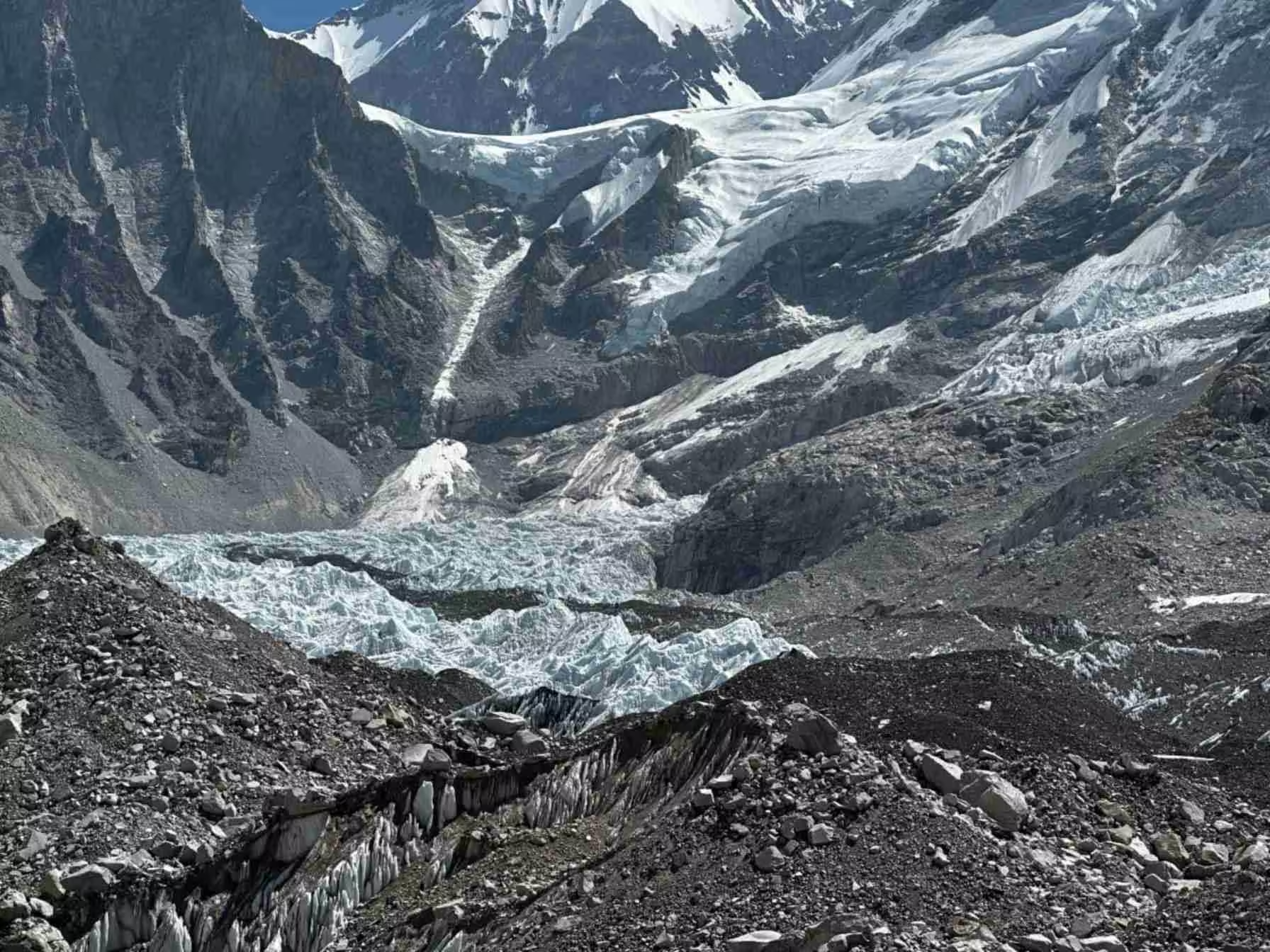
However, the EBC route is designed to give every prepared trekker a real chance of reaching that rocky mountain beneath the Khumbu Icefall.
The trekkers who succeed are not always the fittest or the most experienced. They are the ones who respect the altitude, stick to the itinerary, hydrate well, and move at a pace their bodies can handle.
If you are a first-time trekker, definitely follow the above principles. Be patient, listen to your body, and continue your journey.
No comments yet. Be the first to share your thoughts!